
A library indexes local-history scans for AI retrieval. Which data management practice best enables correct access decisions?
Select an answer to reveal the explanation.
Short Explanation
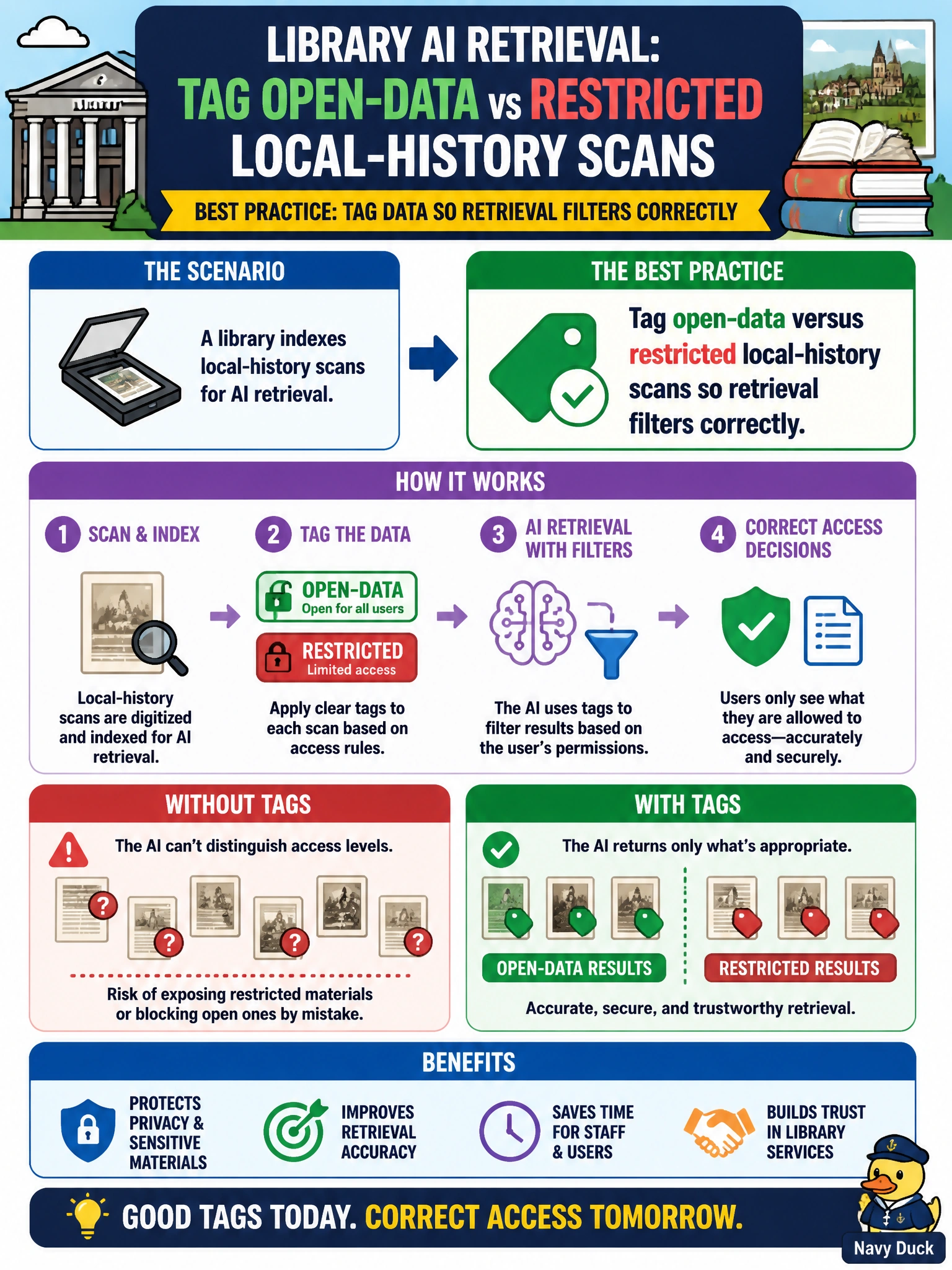
Retrieval only filters what you label. Tag open-data versus restricted local-history scans so the assistant doesn’t cheerfully surface what should stay behind the desk.
Full Explanation
Library local-history corpora often mix open-data scans with restricted materials such as donor-limited collections, privacy redactions, or rights-constrained items. Tagging open-data versus restricted scans so retrieval filters correctly enables the AI index to enforce access decisions consistently at query time rather than hoping operators remember undocumented exceptions. Tagging high-resolution versus low-resolution scans so retrieval controls access accordingly confuses file quality with permission, because resolution does not mark which scans are restricted, so the index cannot enforce access decisions at query time. Inferring open-data versus restricted status from keywords so retrieval filters automatically substitutes guessed labels for authoritative tags, so misclassified restricted items can still surface in retrieval without any reliable access filter. Adding common open-access tags to local-history scans so retrieval shares holdings broadly marks restricted items as open, so it eliminates the distinction needed to support correct allow-or-deny decisions. Exam caveat: AI retrieval systems inherit classical access-control needs; metadata that distinguishes open versus restricted civic content is a data-management prerequisite for correct filtering. Operational check: inventory library history scans, apply authoritative sensitivity tags, bind RAG filters to those tags, test both positive and negative retrieval cases, and audit denied versus allowed results for restricted collections.
Prefer to study offline? Printable PDF study book + test engine ($7.50, unofficial). These questions stay free here.