
An assessor’s office learns of a statute change requiring greater algorithmic transparency for valuation helpers. Which risk action best follows?
Select an answer to reveal the explanation.
Short Explanation
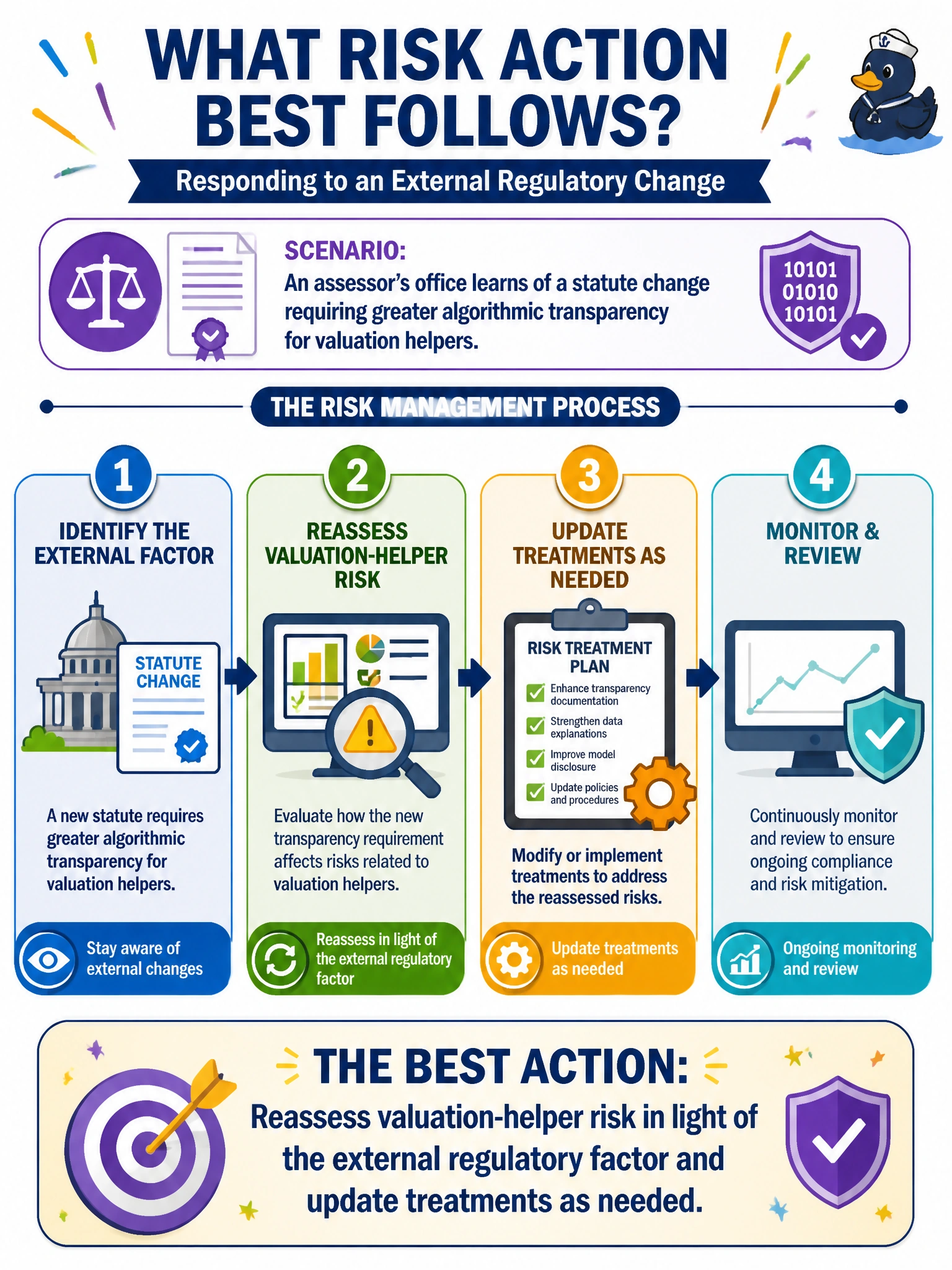
New transparency rules change the risk picture even if the model weights didn’t. Reassess the valuation helper and refresh treatments. You'll miss the real issue if you just review performance and tweak accuracy thresholds, since it's the transparency risk and treatments that changed.
Full Explanation
Statute changes that require greater algorithmic transparency for valuation helpers are external regulatory factors that alter AI risk even when model weights are unchanged. Reassessing valuation-helper risk and updating treatments—documentation, explainability outputs, appeal pathways, vendor contract clauses—keeps the assessor's office aligned with the new legal duty and with enterprise risk oversight that boards expect for property-tax facing systems.
Reassessing valuation-helper performance in light of the external regulatory factor and updating accuracy thresholds as needed confuses performance tuning with risk management; a transparency statute changes explainability, documentation, and appeal duties even when accuracy is unchanged. Reassessing valuation-helper risk in light of the internal control deficiency and updating treatments as needed misidentifies the risk driver; the statute is an external regulatory factor, not an internal control failure, so the analysis would start from the wrong source. Reassessing valuation-helper risk in light of the external regulatory factor and updating only procurement checklists as needed is too narrow; transparency treatments must also cover documentation, explainability outputs, and appeal pathways, not just procurement paperwork.
Exam caveat: reassessment may conclude that residual risk remains acceptable after added transparency controls; the required act is reassessment and documented update, not automatic shutdown. Operational check: open a risk-change record citing the statute, revise the valuation-helper risk entry, and assign owners for any new transparency treatments with due dates before the statutory effective date.
Prefer to study offline? Printable PDF study book + test engine ($7.50, unofficial). These questions stay free here.