
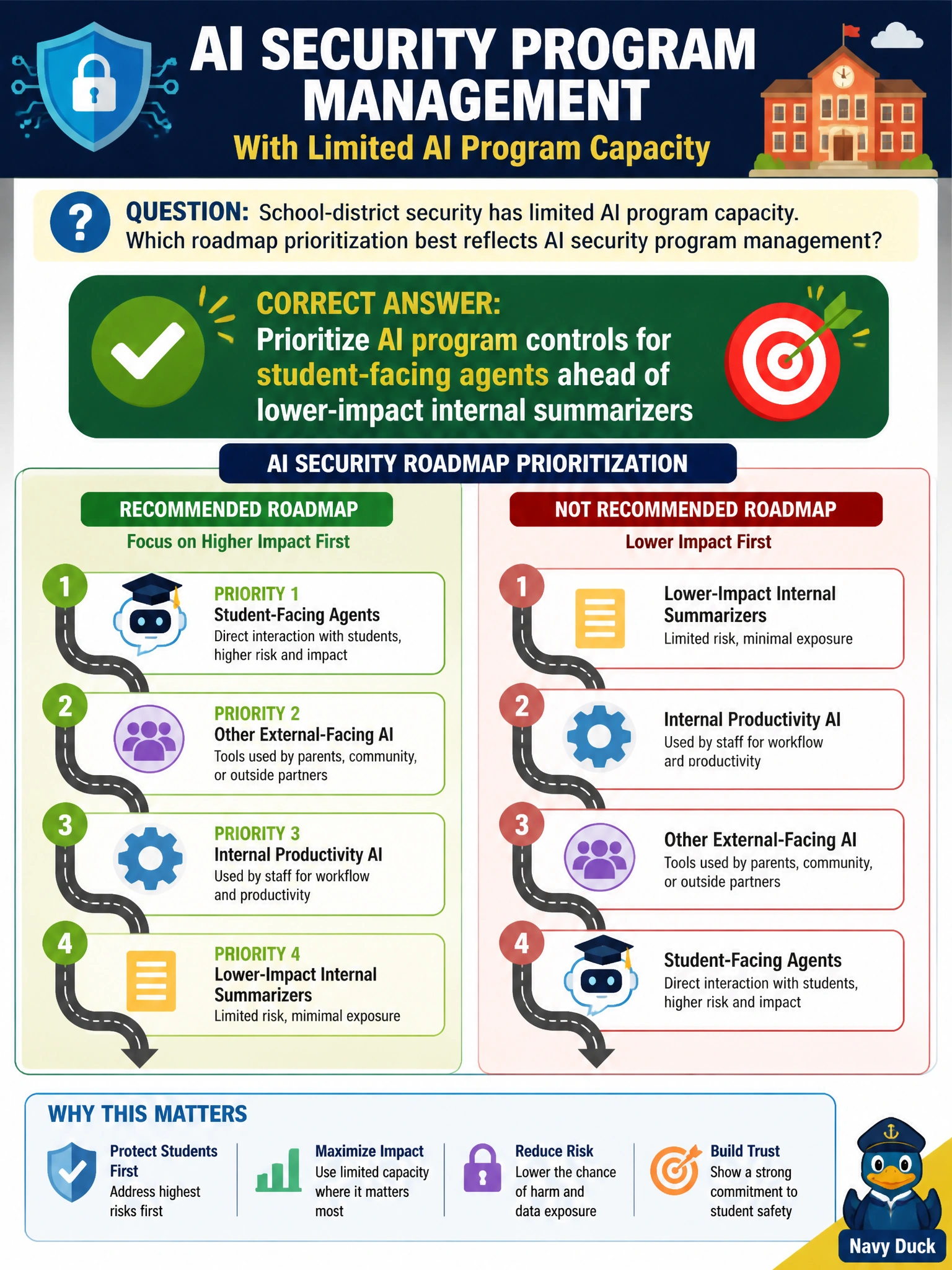
School-district security has limited AI program capacity. Which roadmap prioritization best reflects AI security program management?
Select an answer to reveal the explanation.
Short Explanation
Put the kids’ systems first when capacity is tight. Student-facing agents touch more sensitive data and higher harm potential than an internal meeting summarizer. Risk-based roadmap order is smart program management, not favoritism.
Full Explanation
With limited AI program capacity, school-district security should prioritize AI program controls for student-facing agents ahead of lower-impact internal summarizers. Student-facing systems touch minors’ data, higher harm potential, and stricter regulatory expectations; risk-based sequencing concentrates scarce controls where impact is greatest for families and schools. Prioritizing internal staff meeting summarizers first because they seem more novel elevates curiosity over residual risk to students. Funding only branding overlays while deferring security controls indefinitely spends capacity on appearance rather than protection. Sequencing work alphabetically by school name ignores data sensitivity and audience risk across the district. Capacity limits make sequencing a security decision, not a project-management preference. Exam caveat: within student-facing scope, further prioritize by data types (IEP, health, discipline) and whether the agent can take actions versus answer FAQs. Operational check: rank AI use cases by data sensitivity and harm potential, lock the roadmap to student-facing controls first (inventory, access, monitoring, acceptable use), and document deferred internal summarizer risk acceptance with a revisit date.
Prefer to study offline? Printable PDF study book + test engine ($7.50, unofficial). These questions stay free here.