
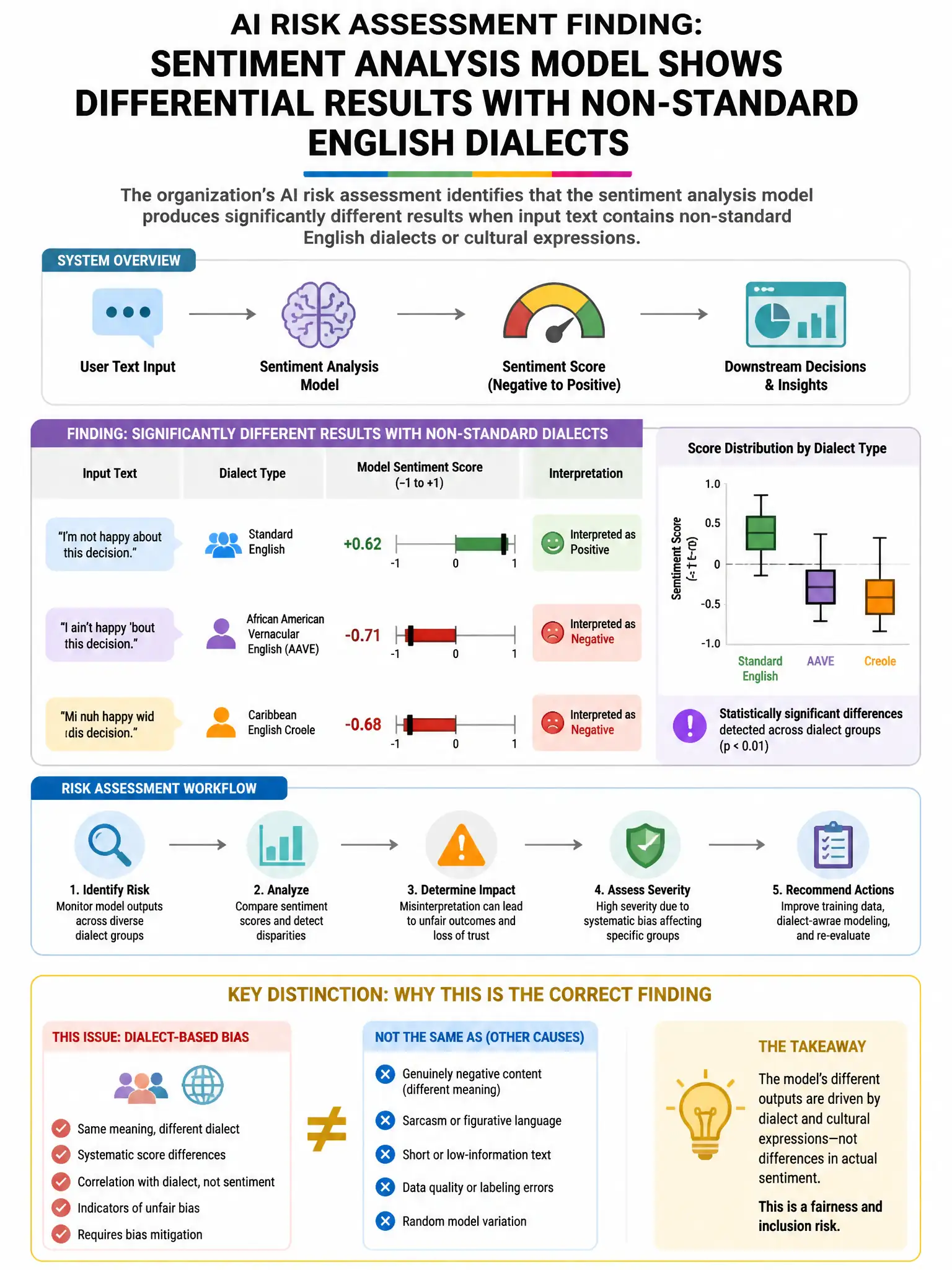
An organization's AI risk assessment identifies that a sentiment analysis model produces significantly different results when input text contains non-standard English dialects or code-switching. How should this risk be classified?
Select an answer to reveal the explanation.
Short Explanation
You should classify this as differential performance risk because the model works worse for people using non-standard dialects or code-switching. That can create disparate impact for groups who often share those language patterns, making it a fairness and potential legal compliance issue.
Full Explanation
The correct classification is differential performance risk creating potential disparate impact for users who communicate in non-standard dialects. Systematic performance differences tied to dialects or code-switching can correlate with demographics, making this a fairness and potential legal compliance issue. The operational framing that the model is not optimized for all input encodings is too generic and hides the fairness dimension. The security framing about unsanitized Unicode inputs causing processing errors is wrong because the issue is unequal performance, not input validation. The Computer Fraud and Abuse Act framing is wrong because it addresses cybercrime, not model bias.