
An organization is developing an AI risk taxonomy. Which classification BEST organizes AI risks for comprehensive enterprise risk management integration?
Select an answer to reveal the explanation.
Short Explanation
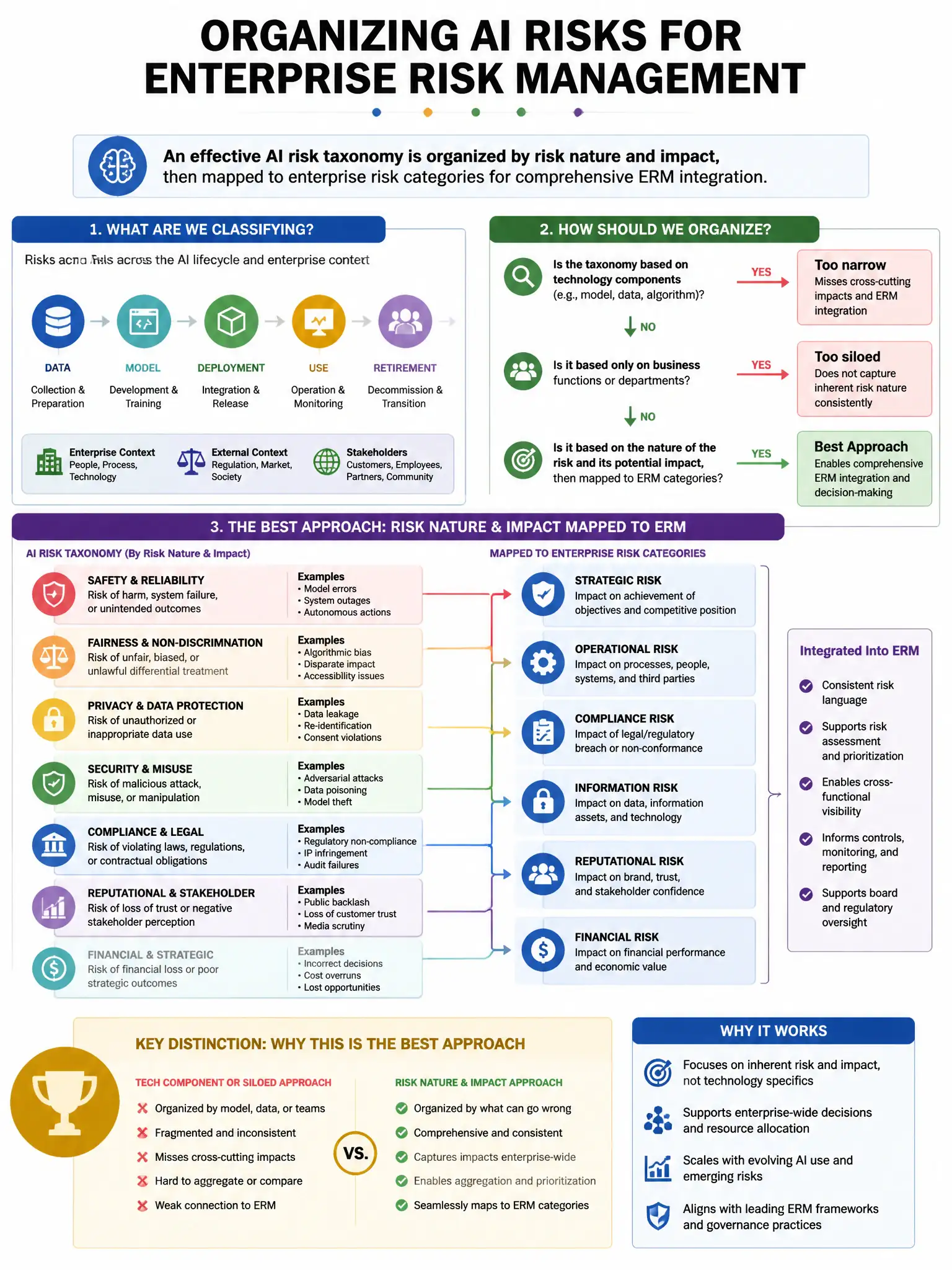
Here's the deal — you need grouping by AI lifecycle phase and risk type because it covers every stage and maps cleanly into enterprise risk categories. Alphabetical sorting is arbitrary, regulatory-only grouping misses cross-cutting risks, and department ownership creates gaps.
Full Explanation
Grouping AI risks by lifecycle phase (data, model development, deployment, monitoring, retirement) and risk type (technical, governance, ethical, regulatory) gives comprehensive coverage. Lifecycle phases ensure no stage is overlooked, and risk types map to enterprise risk management categories like operational, compliance, and reputational risk. Alphabetical sorting by technical terminology is arbitrary. Regulatory-only classification is incomplete because many AI risks span multiple frameworks. Department-based ownership can create gaps when risks fall between departments.