
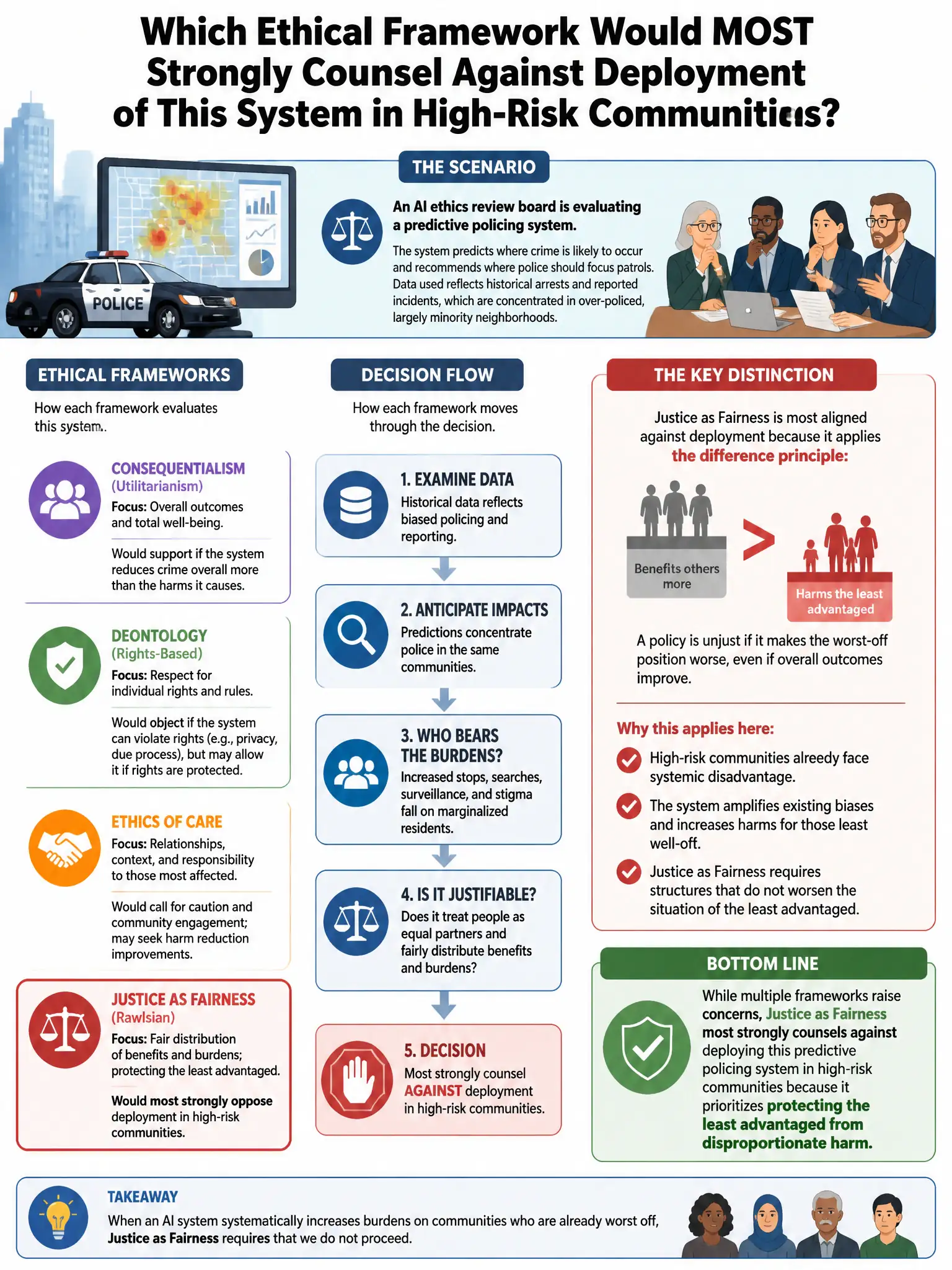
An AI ethics review board is evaluating a predictive policing system. Which ethical framework would MOST strongly counsel against deployment of this system in high-risk communities?
Select an answer to reveal the explanation.
Short Explanation
Here's the deal — you'd lean on the justice-based framework because it puts non-discrimination and protecting vulnerable groups from compounded harm first. In high-risk communities, predictive policing can feed over-policing loops and repeat old injustices, so it counsels against deployment.
Full Explanation
The justice-based framework emphasizing non-discrimination and protection of vulnerable groups from compounded harm is strongest; Rawlsian or critical theory approaches ask if deployment deepens inequities. In high-risk communities, predictive policing feedback loops amplify over-policing, disparate impact on minority communities, and compounded historical injustices, counseling against deployment. The utilitarian calculus focused solely on aggregate crime reduction rates might justify deployment if aggregate crime statistics improve. The libertarian framework prioritizing economic efficiency of law enforcement and the virtue ethics framework focused on individual officers' character do not directly address systemic discrimination.