
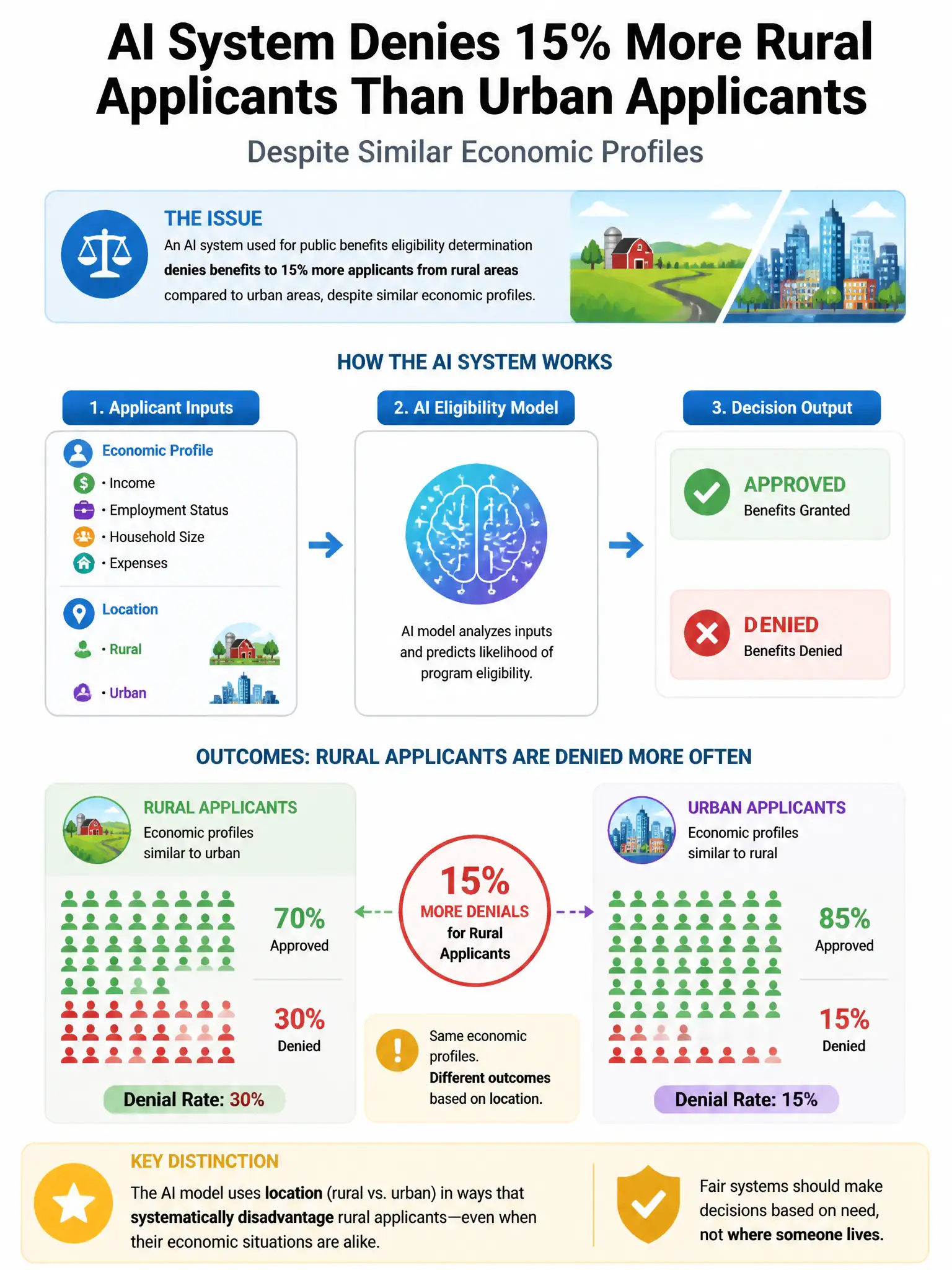
An AI system used for public benefits eligibility determination denies benefits to 15% more applicants from rural areas compared to urban areas, despite similar economic profiles. The model was trained exclusively on urban data. What governance failure does this MOST directly represent?
Select an answer to reveal the explanation.
Short Explanation
Here's the deal — you're looking at a governance failure because the model was trained only on urban data and then deployed to rural applicants without checking whether the training data represented them. That lack of representativeness testing is what directly caused the unfair rural-urban disparity.
Full Explanation
The correct governance failure is the failure to ensure training-data representativeness before deployment to diverse populations. Deploying a model trained only on urban data to serve rural populations without assessing representativeness is a governance failure in data quality and pre-deployment testing, and it is the root cause of the disparate outcome. The inadequate rural internet access option is an infrastructure issue, not the governance failure shown here. The insufficient model complexity option may be a technical contributing factor, but the governance failure is the lack of representativeness assessment. The lack of encryption option is a security concern unrelated to the disparate impact.