
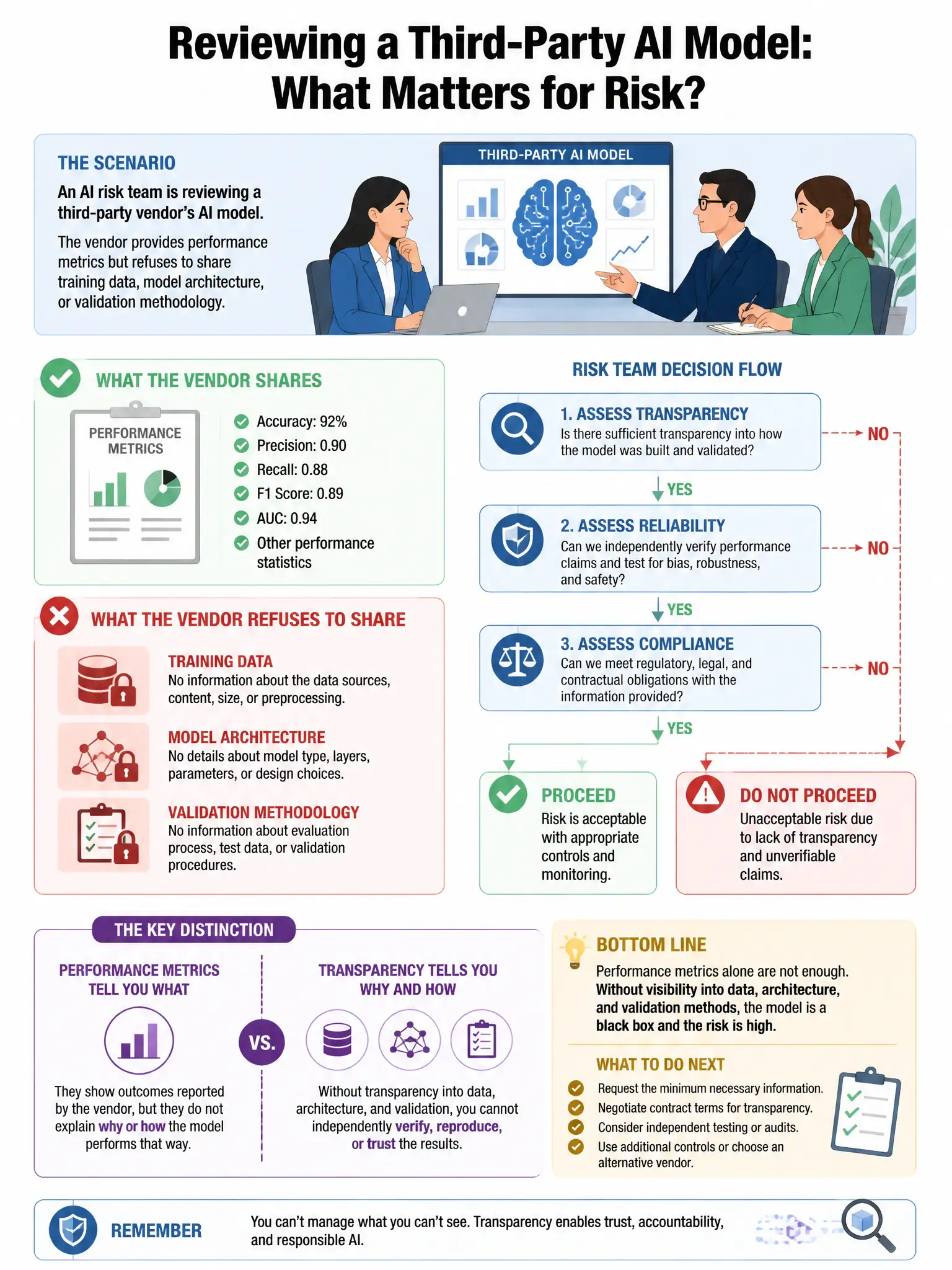
An AI risk team is reviewing a third-party vendor's AI model. The vendor provides performance metrics but refuses to share training data, model architecture, or validation methodology. How should the team assess this situation?
Select an answer to reveal the explanation.
Short Explanation
Here's the deal — when a vendor's model is a black box, you need independent third-party audit results and contractual performance reporting with access to performance logs. That gives you assurance without forcing full proprietary disclosure.
Full Explanation
The correct approach is to request independent third-party model audit results and contractually mandate ongoing performance reporting with access to model performance logs. When a vendor's model is a black box, independent third-party audits of the vendor's practices and contractual performance reporting requirements are the most practical mechanisms to obtain assurance without requiring full proprietary disclosure. This balances vendor IP protection with organizational due diligence obligations. Accepting the vendor's performance metrics as sufficient and proceeding with procurement is insufficient due diligence. Rejecting all third-party vendors who do not provide full model transparency may be impractical and overly restrictive. Implementing additional monitoring post-deployment to compensate for the due diligence gap is compensating but does not fulfill pre-deployment due diligence.