
An AI auditor is asked to evaluate the robustness of a recommendation system used in a streaming platform. Which test would BEST assess the model's vulnerability to adversarial manipulation?
Select an answer to reveal the explanation.
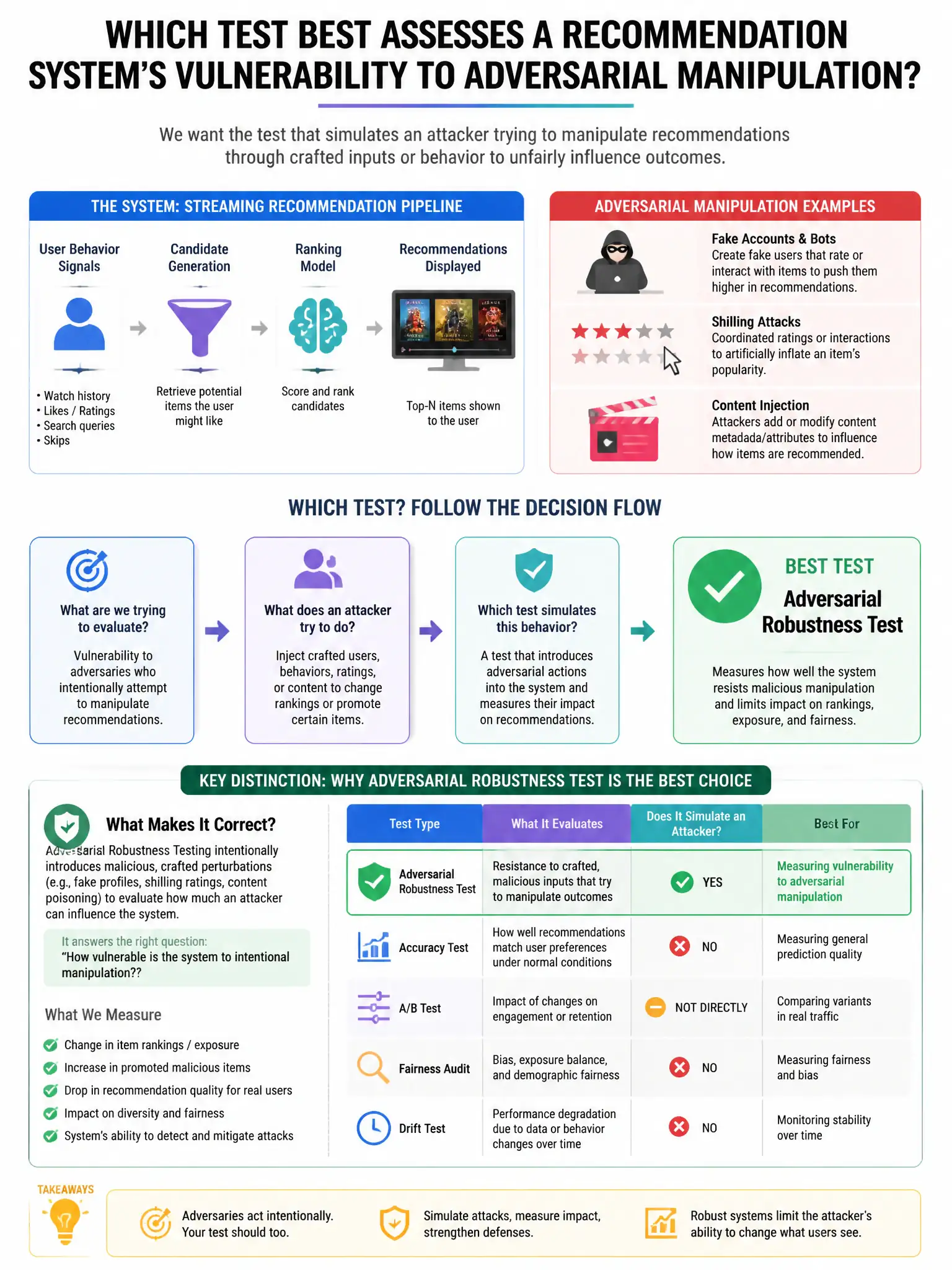
Short Explanation
You want adversarial input testing because it feeds the model crafted user profiles meant to push recommendations toward specific content. That directly tests whether shilling-style manipulation can skew outputs.
Full Explanation
Adversarial input testing using crafted user profiles designed to manipulate recommendation outputs toward specific content is correct because it directly probes whether crafted inputs can manipulate the model. In recommendation systems, this can involve injecting fake user behavior to promote or suppress specific content, a shilling attack. Hold-out test set evaluation to measure recommendation accuracy on unseen users measures accuracy, not robustness to manipulation. An online split-test comparing the model against a simpler baseline measures comparative performance under normal conditions. User satisfaction surveys to assess the perceived quality of recommendations are subjective and would not capture adversarial vulnerabilities.