
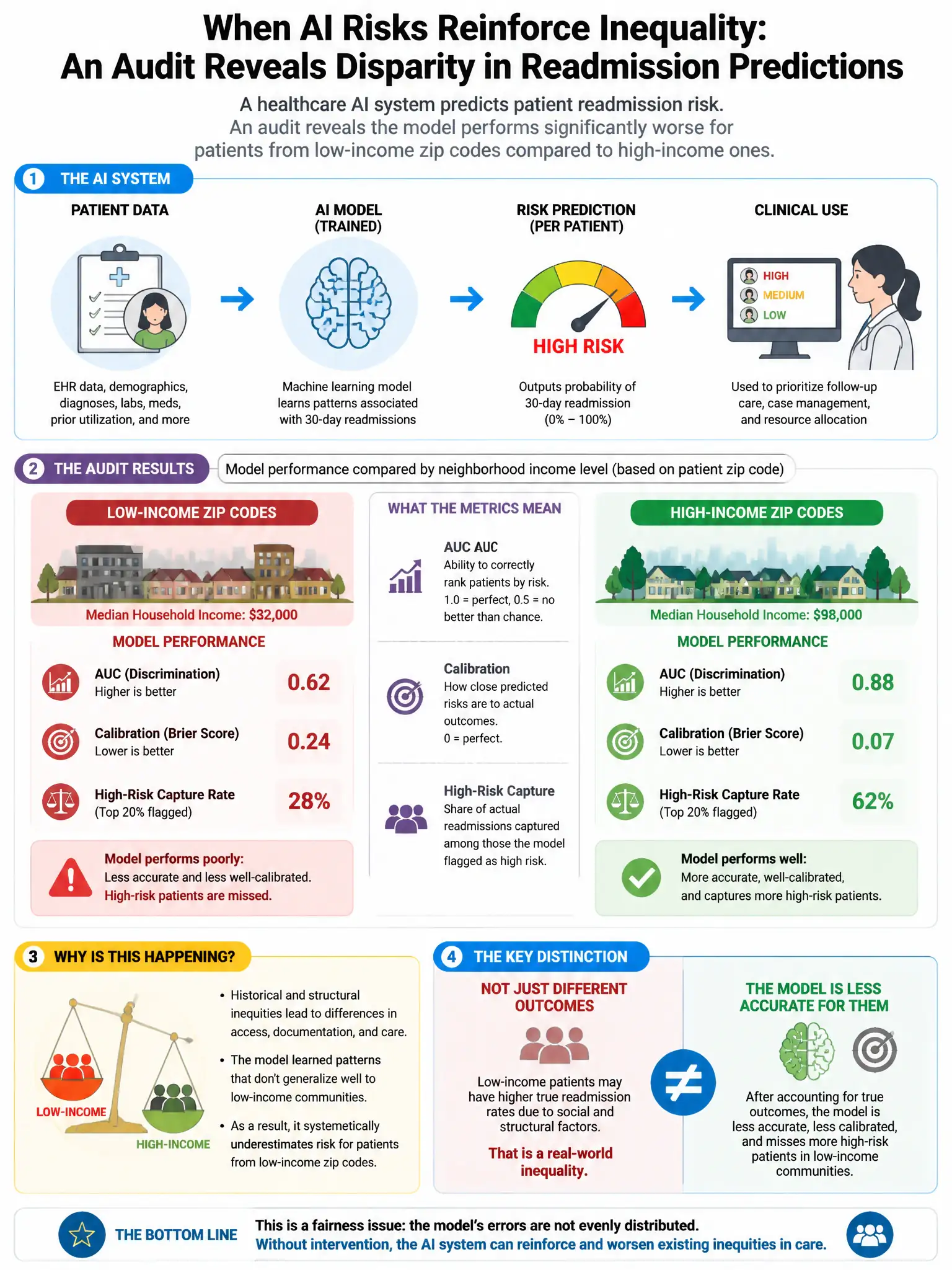
A healthcare AI system predicts patient readmission risk. An audit reveals the model performs significantly worse for patients from low-income zip codes compared to high-income ones, though both groups are represented in the training data. What type of bias is MOST likely present?
Select an answer to reveal the explanation.
Short Explanation
Here's the deal — measurement bias is right because proxy variables like zip code can carry systematic errors that hit low-income patients differently. You see worse performance even with representation because the features themselves are noisy or behave differently than assumed.
Full Explanation
Measurement bias from proxy variables introducing differential error is correct because features such as zip code as a proxy for healthcare access can contain systematic errors that differ across groups. Low-income zip codes may have lower data quality or proxies that behave differently than assumed. Sampling bias from underrepresentation of low-income patients in the training set is less likely since both groups are represented. Label bias where clinicians documented different outcomes for low-income patients would show accuracy parity but label correctness issues. Deployment bias from applying the model outside its intended use case does not apply since low-income patients are within scope.