
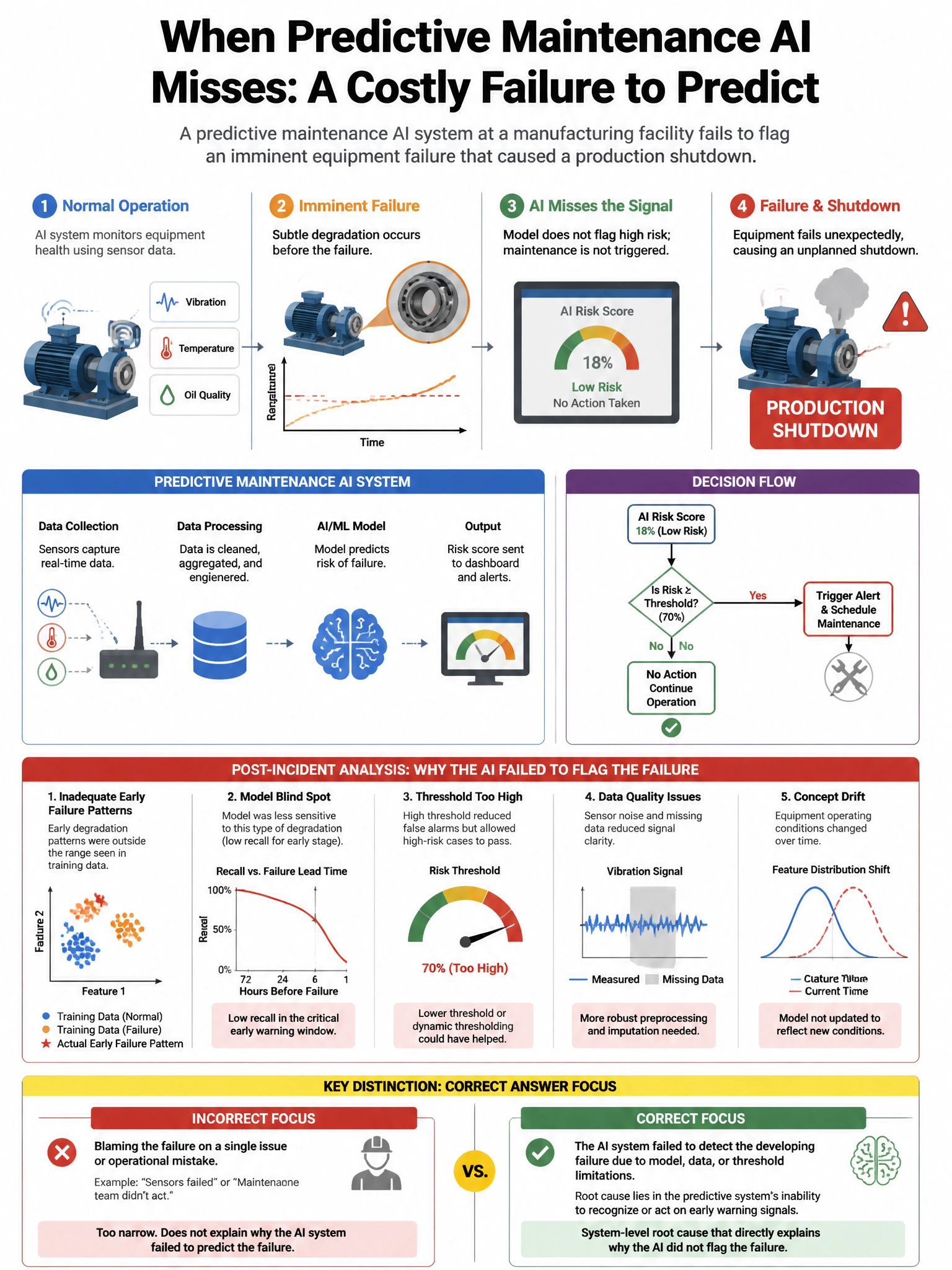
A predictive maintenance AI system at a manufacturing facility fails to flag an imminent equipment failure that caused a production shutdown. Post-incident analysis finds the failure mode was underrepresented in training data. How should this risk be classified?
Select an answer to reveal the explanation.
Short Explanation and Infographic
Here's the deal — a is correct because the model's failure to detect a rare but catastrophic failure mode reflects tail risk — the training data distribution underrepresents low-frequency, high-severity events, causing the model to be blind to them. B is the opposite — overfitting to common patterns would still cause the model to miss rare events, but the root cause classification is tail risk from data gaps.
Full explanation below image
Full Explanation
A is correct because the model's failure to detect a rare but catastrophic failure mode reflects tail risk — the training data distribution underrepresents low-frequency, high-severity events, causing the model to be blind to them. B is the opposite — overfitting to common patterns would still cause the model to miss rare events, but the root cause classification is tail risk from data gaps. C requires evidence of deliberate manipulation. D requires evidence of a change in the underlying process.