
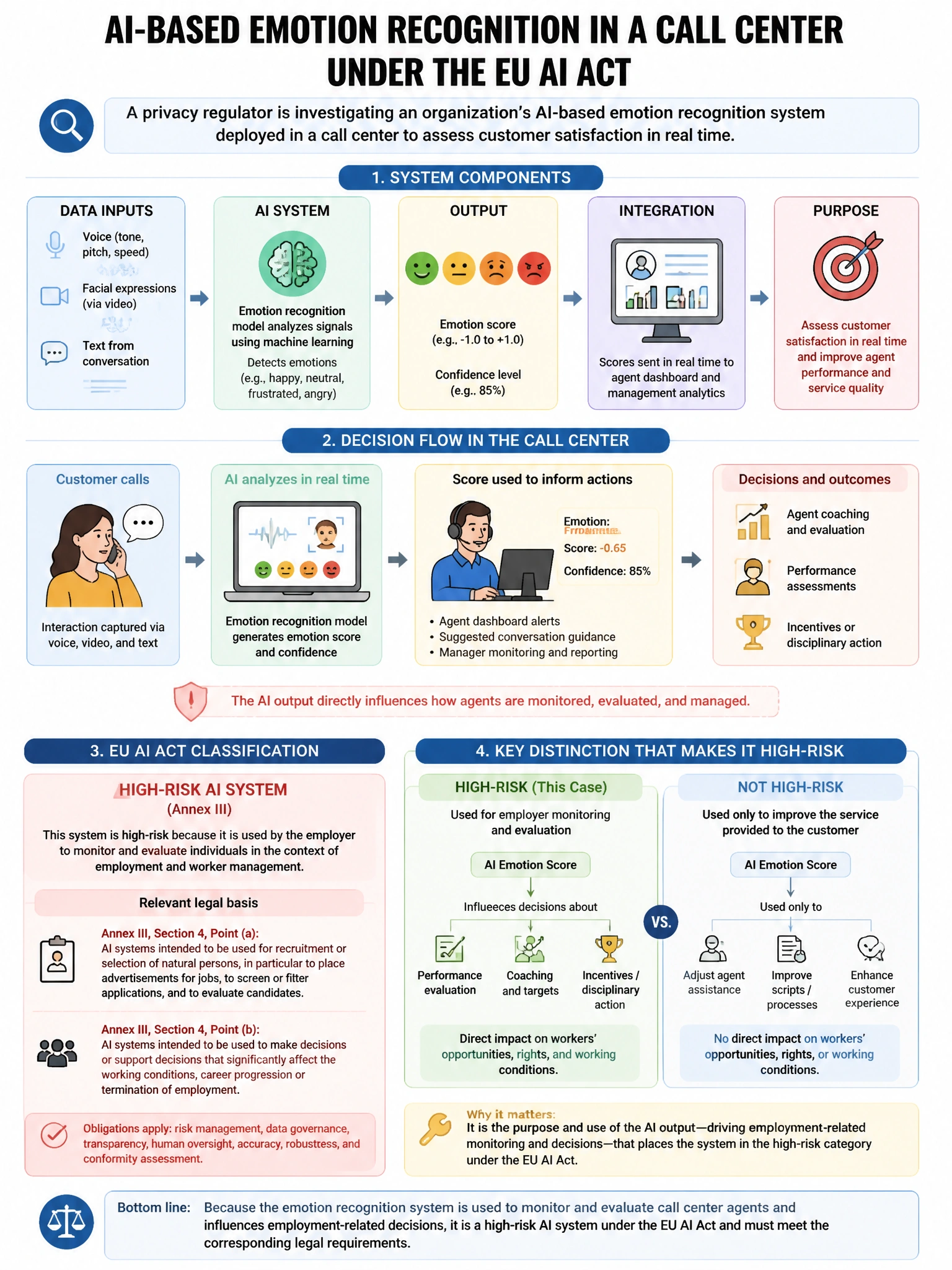
A privacy regulator is investigating an organization's AI-based emotion recognition system deployed in a call center to assess customer satisfaction in real time. Under the EU AI Act, which provision is MOST directly applicable to this system?
Select an answer to reveal the explanation.
Short Explanation and Infographic
Here's the deal — c is correct because EU AI Act Article 52(3) requires deployers of emotion recognition systems to inform the natural persons exposed to such systems, unless for legitimate or justified security purposes. Article 5 prohibits emotion recognition in workplaces and educational institutions specifically—if the call center agents (employees) are subject to it, it may be prohibited, but customer-facing emotion recognition requires transparency notification.
Full explanation below image
Full Explanation
C is correct because EU AI Act Article 52(3) requires deployers of emotion recognition systems to inform the natural persons exposed to such systems, unless for legitimate or justified security purposes. Article 5 prohibits emotion recognition in workplaces and educational institutions specifically—if the call center agents (employees) are subject to it, it may be prohibited, but customer-facing emotion recognition requires transparency notification. B is not directly applicable here as emotion recognition is addressed through Article 52, not Annex III. D is incorrect; emotion recognition is a specific application, not a GPAI issue.