
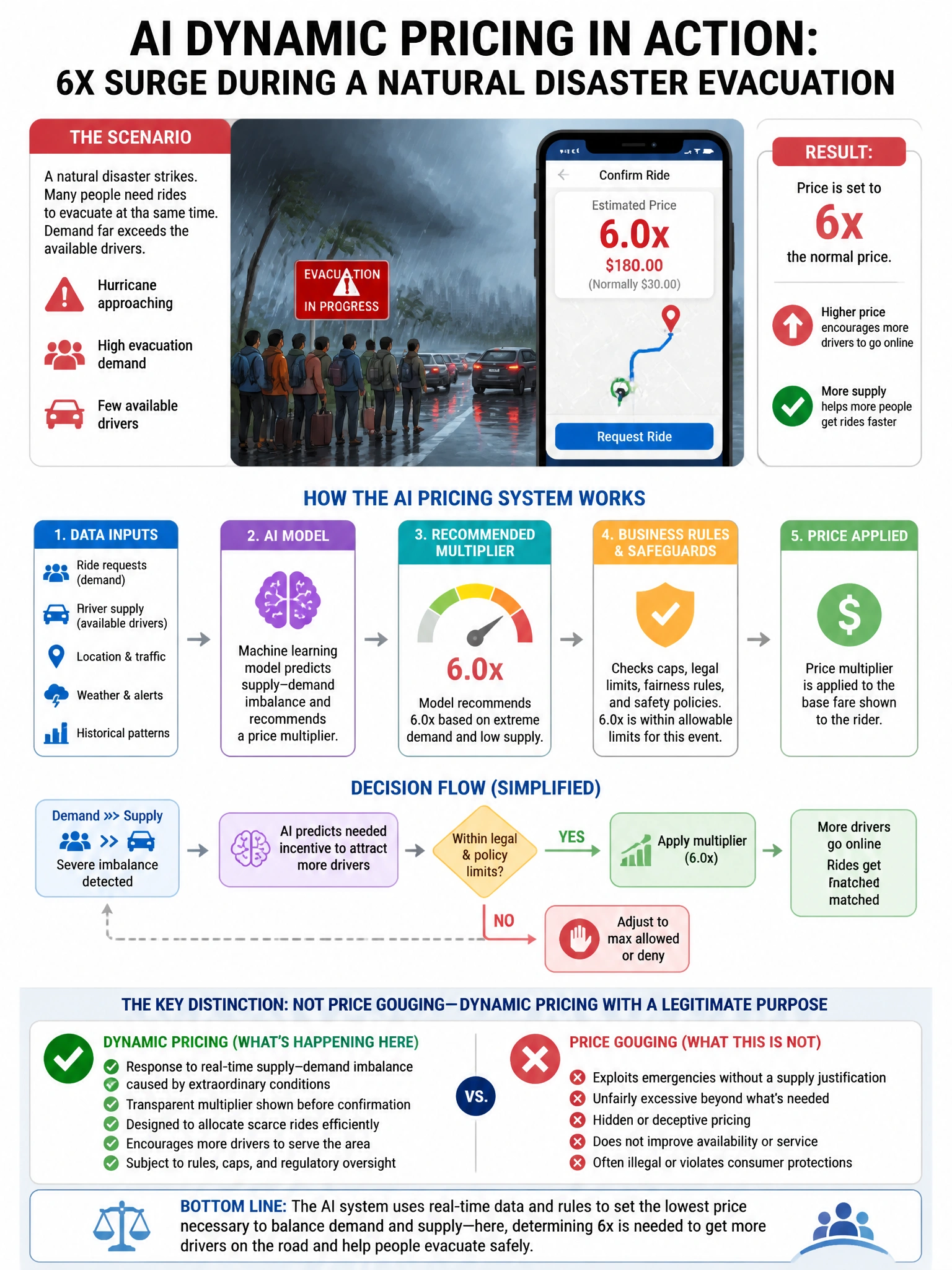
A company uses an AI system to dynamically price ride-sharing services during periods of high demand. During a natural disaster evacuation, the system prices rides at 6x the normal rate, triggering public backlash. Which AI risk category does this MOST represent?
Select an answer to reveal the explanation.
Short Explanation and Infographic
Here's the deal — b is correct because the core issue is that the model is optimizing for what it was designed to optimize (revenue through dynamic pricing) but the output conflicts with human values, ethical norms, and societal expectations during an emergency. This is an AI value alignment failure: the model's objective function does not reflect the organization's broader values.
Full explanation below image
Full Explanation
B is correct because the core issue is that the model is optimizing for what it was designed to optimize (revenue through dynamic pricing) but the output conflicts with human values, ethical norms, and societal expectations during an emergency. This is an AI value alignment failure: the model's objective function does not reflect the organization's broader values. While regulatory risk (C) and operational risk (D) may also be present, the root cause is value misalignment between the optimization objective and ethical norms. Model accuracy (A) is not the issue; the model is doing what it was designed to do.