
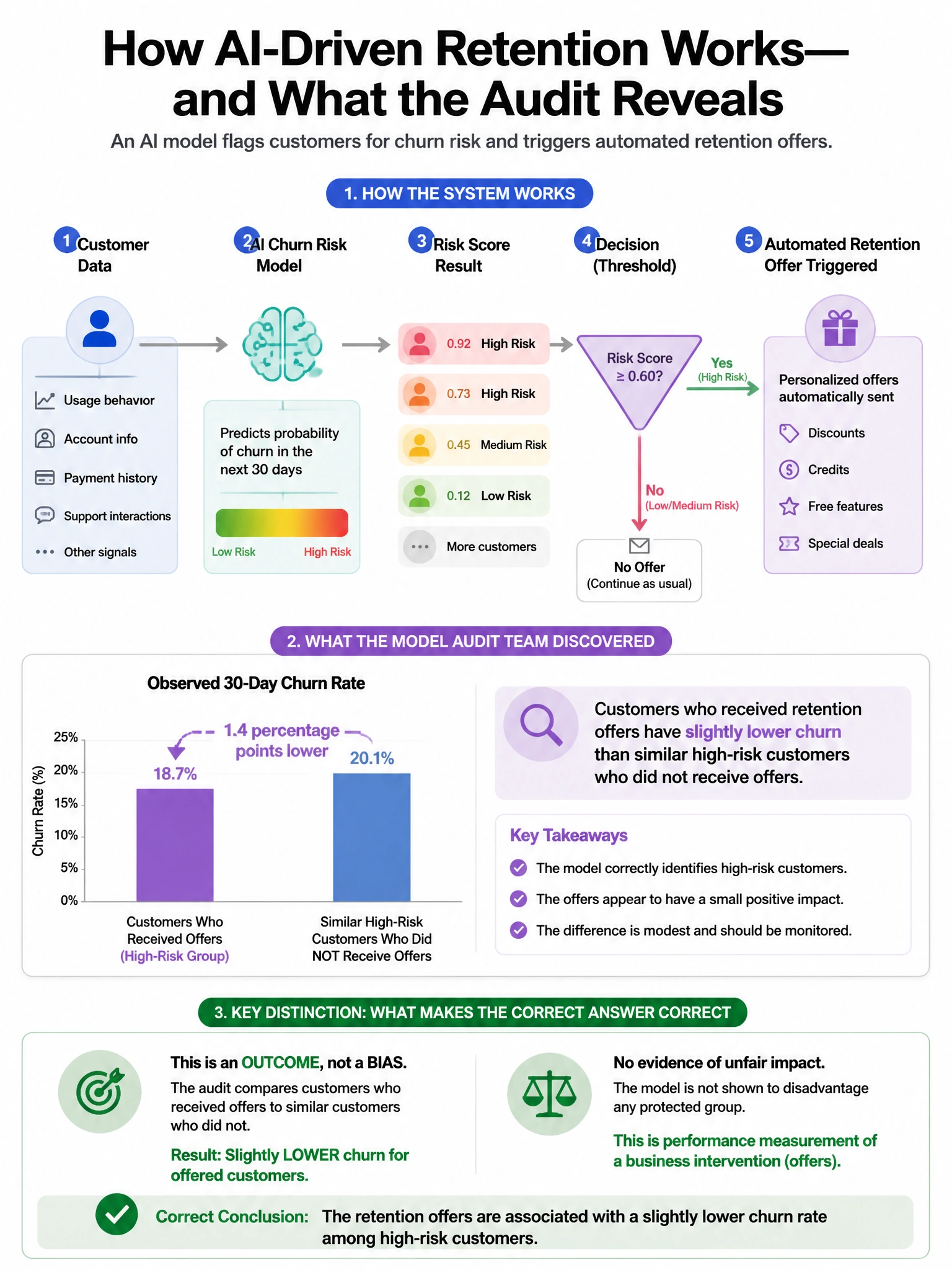
An AI model flags customers for churn risk and triggers automated retention offers. The model audit team discovers that customers who received retention offers have slightly lower churn rates, but wealthier customers receive more generous offers (higher discounts) because their historical lifetime value is used as a feature. What ethical concern should be prioritized in the audit report?
Select an answer to reveal the explanation.
Short Explanation and Infographic
Here's the deal — b is correct because using a proxy for wealth (lifetime value, which correlates with income) to determine the generosity of retention offers creates a two-tiered service quality that may discriminate against lower-income customers. In regulated industries (banking, insurance, telecommunications), this can trigger consumer fairness and unfair business practices concerns, even when commercially rational from a narrow business perspective.
Full explanation below image
Full Explanation
B is correct because using a proxy for wealth (lifetime value, which correlates with income) to determine the generosity of retention offers creates a two-tiered service quality that may discriminate against lower-income customers. In regulated industries (banking, insurance, telecommunications), this can trigger consumer fairness and unfair business practices concerns, even when commercially rational from a narrow business perspective. While C reflects a business logic argument, the audit must assess regulatory and ethical dimensions beyond immediate profitability. Accuracy (A) is a secondary concern here. Expanding automation (D) would amplify the ethical issue.