
An AI governance team is reviewing whether their organization's AI development practices align with the 'accountability' principle of the OECD AI Principles. Which practice MOST demonstrates accountability alignment?
Select an answer to reveal the explanation.
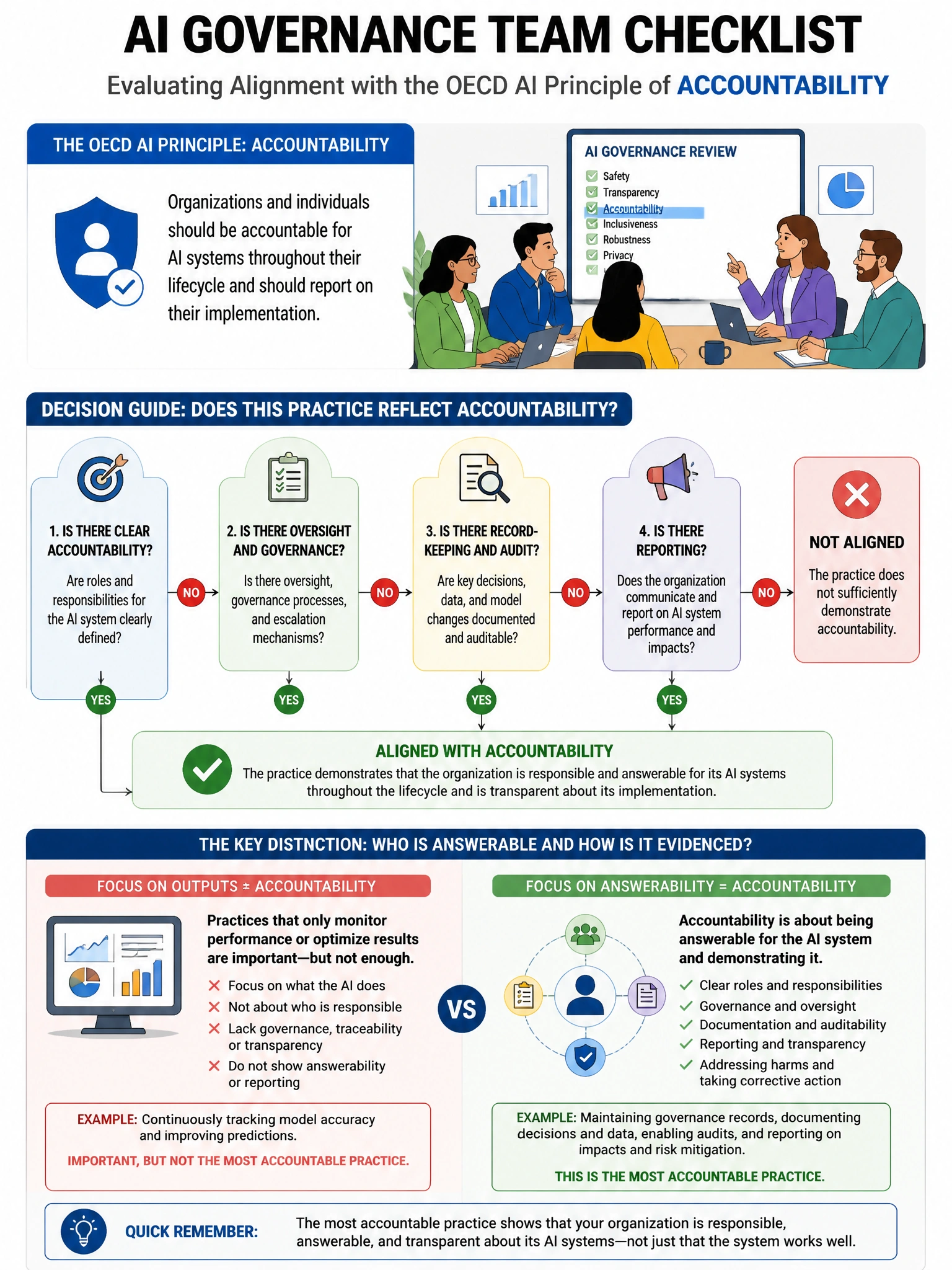
Short Explanation and Infographic
Here's the deal — b is correct because the OECD accountability principle requires that AI actors be responsible for the functioning of AI systems throughout their lifecycle. Maintaining traceable records of design decisions, approvals, and ongoing ownership directly operationalizes this principle by ensuring that specific individuals can be held accountable for AI outcomes at every stage.
Full explanation below image
Full Explanation
B is correct because the OECD accountability principle requires that AI actors be responsible for the functioning of AI systems throughout their lifecycle. Maintaining traceable records of design decisions, approvals, and ongoing ownership directly operationalizes this principle by ensuring that specific individuals can be held accountable for AI outcomes at every stage. Open-sourcing code (A) is a transparency measure, not accountability. Vendor selection (C) transfers some accountability to vendors but does not fulfill the organization's own accountability obligations. Ethics training (D) builds capability but does not establish accountability structures.