
A board of directors is being briefed on AI risks. Which framing of AI risk MOST effectively connects AI risk to the board's existing fiduciary responsibilities?
Select an answer to reveal the explanation.
Short Explanation and Infographic
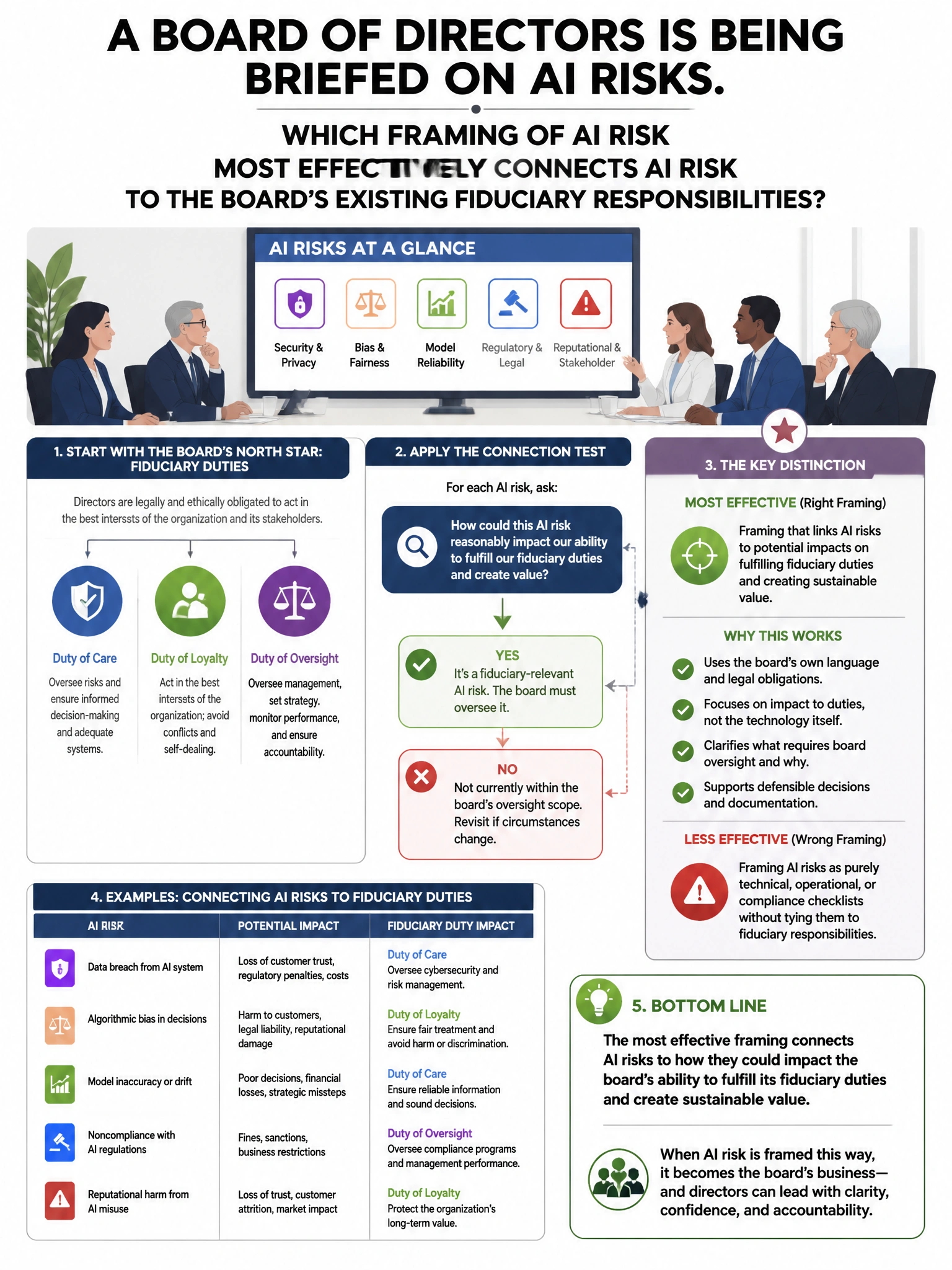
Here's the deal — b is correct because boards govern through the lens of enterprise risk and shareholder value. Mapping AI risks to established categories (operational risk, legal/regulatory risk, reputational risk) that the board already oversees is the most effective way to integrate AI risk into board governance without requiring technical expertise.
Full explanation below image
Full Explanation
B is correct because boards govern through the lens of enterprise risk and shareholder value. Mapping AI risks to established categories (operational risk, legal/regulatory risk, reputational risk) that the board already oversees is the most effective way to integrate AI risk into board governance without requiring technical expertise. Describing models as black boxes (A) may alarm the board without providing actionable framing. Cybersecurity framing (C) is only one aspect of AI risk. A technology-specialist-only committee (D) would exclude the business judgment the board provides.