
An insurance company deploys a telematics-based AI model that sets auto insurance premiums based on real-time driving behavior. A regulator inquires about the model's compliance with the California Consumer Privacy Act (CCPA). Which CCPA concern is MOST relevant?
Select an answer to reveal the explanation.
Short Explanation and Infographic
Here's the deal — b is correct because under CCPA (as amended by CPRA), California consumers have the right to know what personal information is collected and how it is used, and CPRA adds rights related to automated decision-making and profiling that has significant effects. Real-time telematics data used for premium pricing falls squarely within these provisions.
Full explanation below image
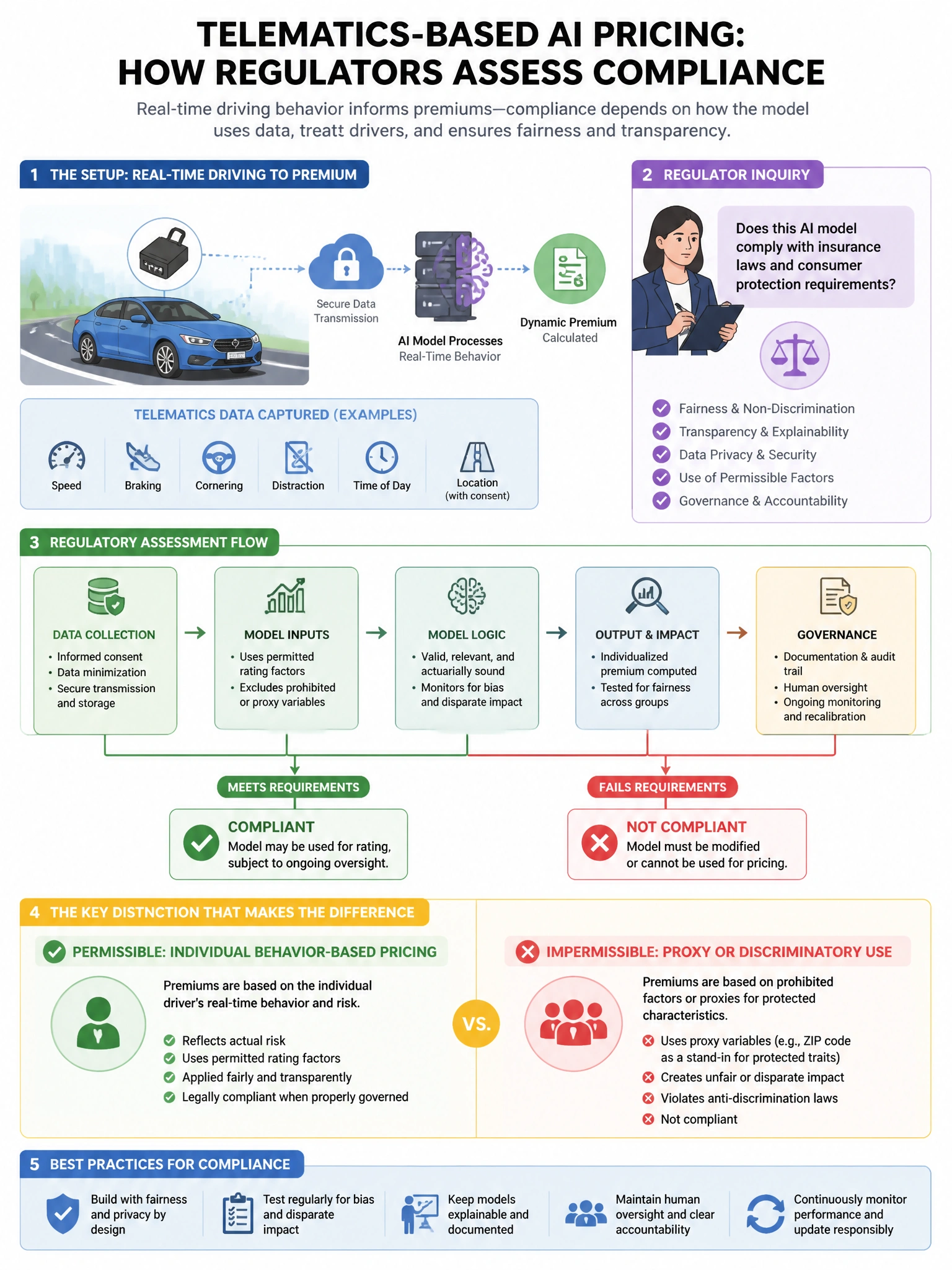
Full Explanation
B is correct because under CCPA (as amended by CPRA), California consumers have the right to know what personal information is collected and how it is used, and CPRA adds rights related to automated decision-making and profiling that has significant effects. Real-time telematics data used for premium pricing falls squarely within these provisions. The right to opt out of sale (A) applies specifically to sale to third parties, not to the company's own use. CCPA does not require anonymization of all training data (C). Geolocation collection is not prohibited under CCPA (D), but consent and disclosure requirements apply.