
An AI model for predicting equipment failure in a nuclear facility is flagged for review because its training data was collected over only six months, during summer operations. The facility also operates during winter with significantly different temperature and load conditions. What risk does this introduce?
Select an answer to reveal the explanation.
Short Explanation and Infographic
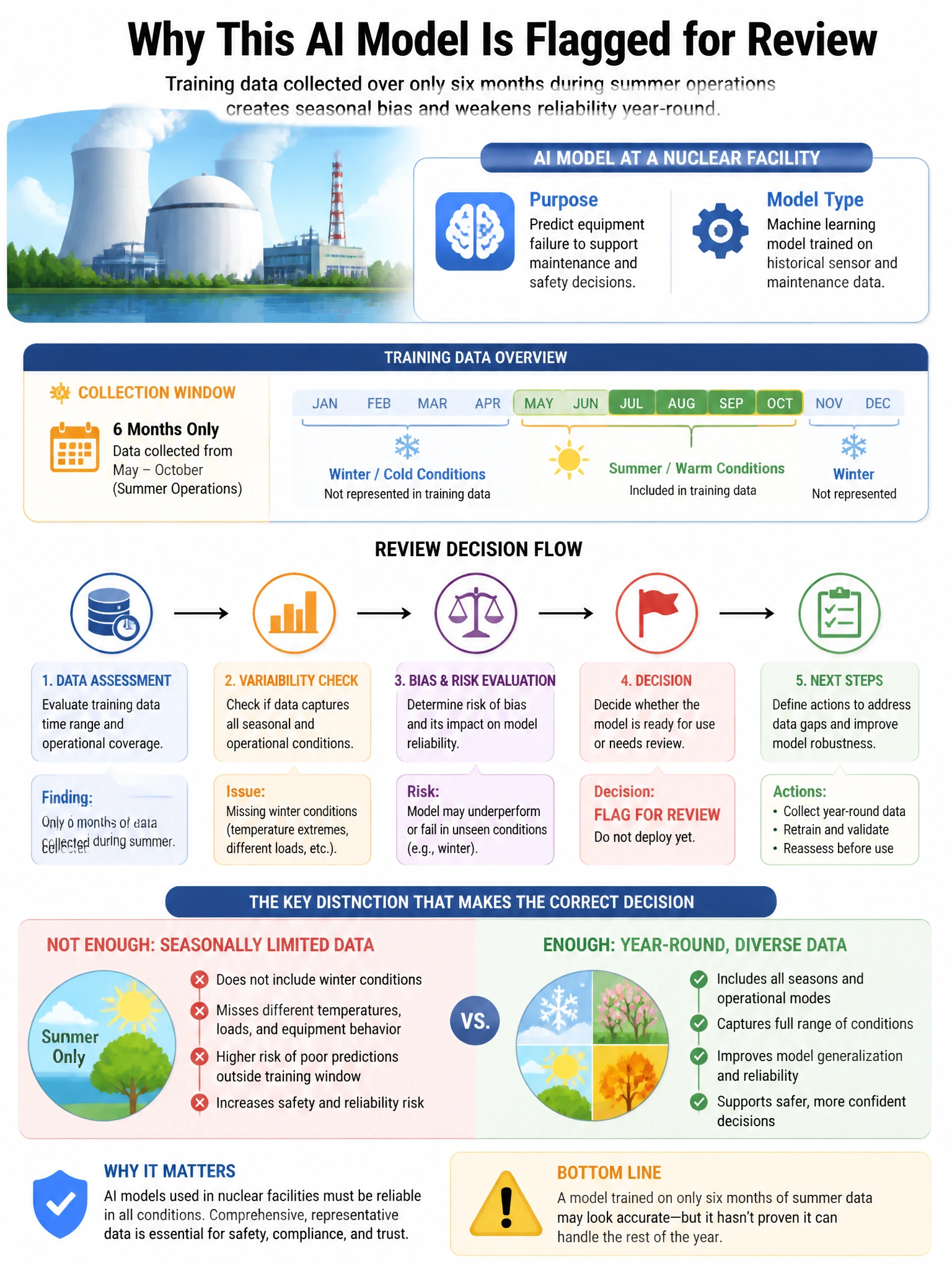
Here's the deal — a is correct because the model trained only on summer data has learned patterns specific to summer operating conditions and will encounter distributional shift in winter, when temperature, load profiles, and failure mechanisms may differ substantially. This is a form of temporal/contextual sampling bias that creates systematic underperformance in winter.
Full explanation below image
Full Explanation
A is correct because the model trained only on summer data has learned patterns specific to summer operating conditions and will encounter distributional shift in winter, when temperature, load profiles, and failure mechanisms may differ substantially. This is a form of temporal/contextual sampling bias that creates systematic underperformance in winter. Data leakage (B) is a different concern involving inadvertent use of test data information during training. Model drift (C) relates to post-deployment changes, not training data limitations. Label imbalance (D) is a valid general concern for rare events but is not the specific risk identified by the summer-only training window.