
Which fairness metric measures whether a model's positive prediction rate is equal across demographic groups, regardless of actual outcomes?
Select an answer to reveal the explanation.
Short Explanation and Infographic
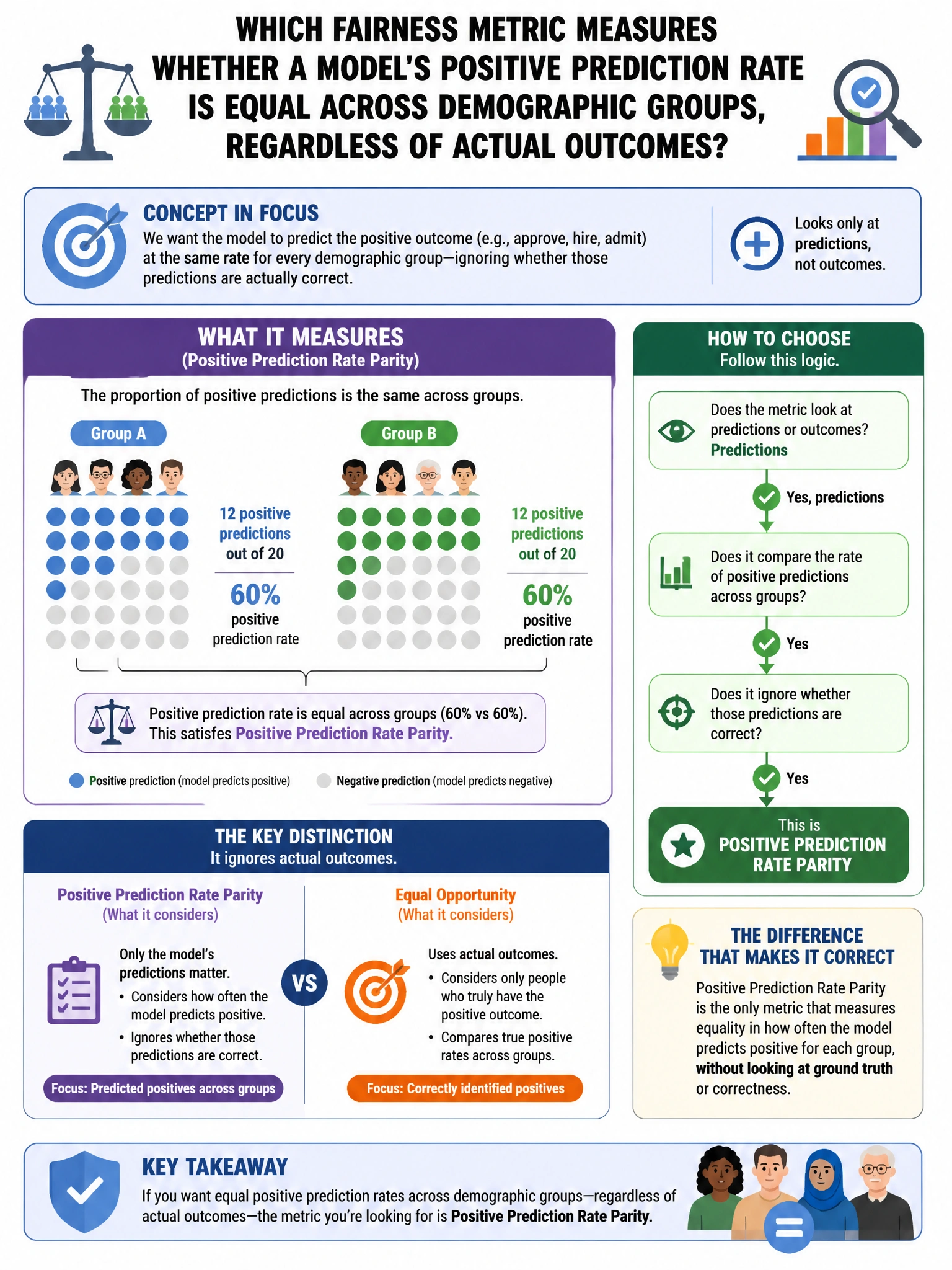
Here's the deal — c is correct because demographic parity requires that the proportion of positive predictions be equal across all demographic groups, regardless of whether those predictions are accurate. Equalized odds (A) requires equal true positive rates AND equal false positive rates across groups, conditioning on actual outcomes.
Full explanation below image
Full Explanation
C is correct because demographic parity requires that the proportion of positive predictions be equal across all demographic groups, regardless of whether those predictions are accurate. Equalized odds (A) requires equal true positive rates AND equal false positive rates across groups, conditioning on actual outcomes. Calibration (B) requires that predicted probabilities match actual outcome rates within groups. Individual fairness (D) requires that similar individuals receive similar predictions.