
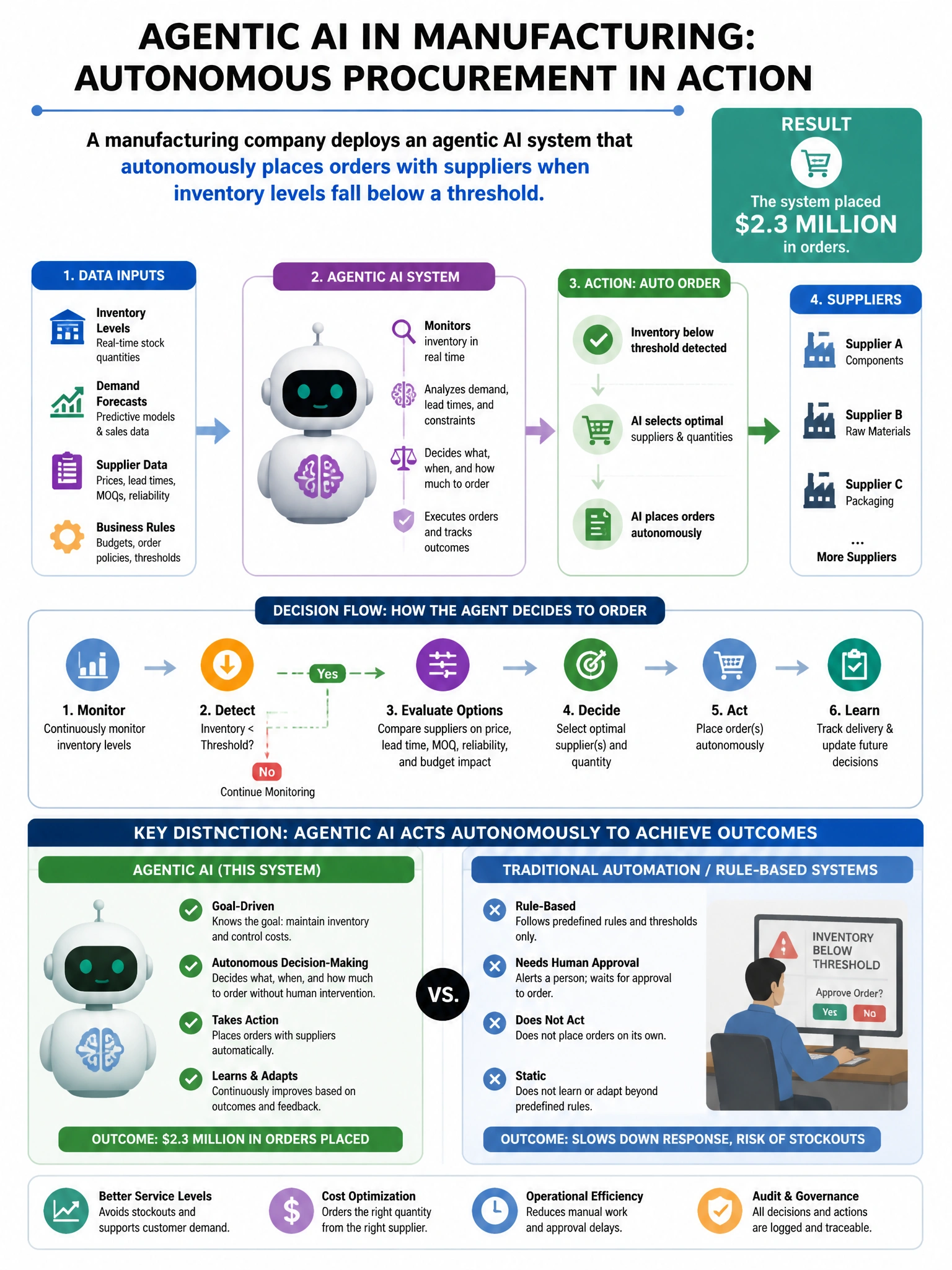
A manufacturing company deploys an agentic AI system that autonomously places orders with suppliers when inventory levels fall below a threshold. The system placed $2.3 million in orders incorrectly due to a sensor data error. Which control would MOST effectively prevent this type of incident?
Select an answer to reveal the explanation.
Short Explanation and Infographic
Here's the deal — b is correct because a human approval gate for high-value transactions is a direct risk control that catches both AI errors and data errors before consequential action is taken. This addresses the core governance risk of autonomous action without human oversight.
Full explanation below image
Full Explanation
B is correct because a human approval gate for high-value transactions is a direct risk control that catches both AI errors and data errors before consequential action is taken. This addresses the core governance risk of autonomous action without human oversight. Sensor improvement (A) reduces one input risk but does not prevent similar errors from other causes. Anomaly detection training (C) is a mitigation but not a sufficient control for high-value autonomous action. Switching to rule-based systems (D) may introduce other risks and is not the most proportionate response.