
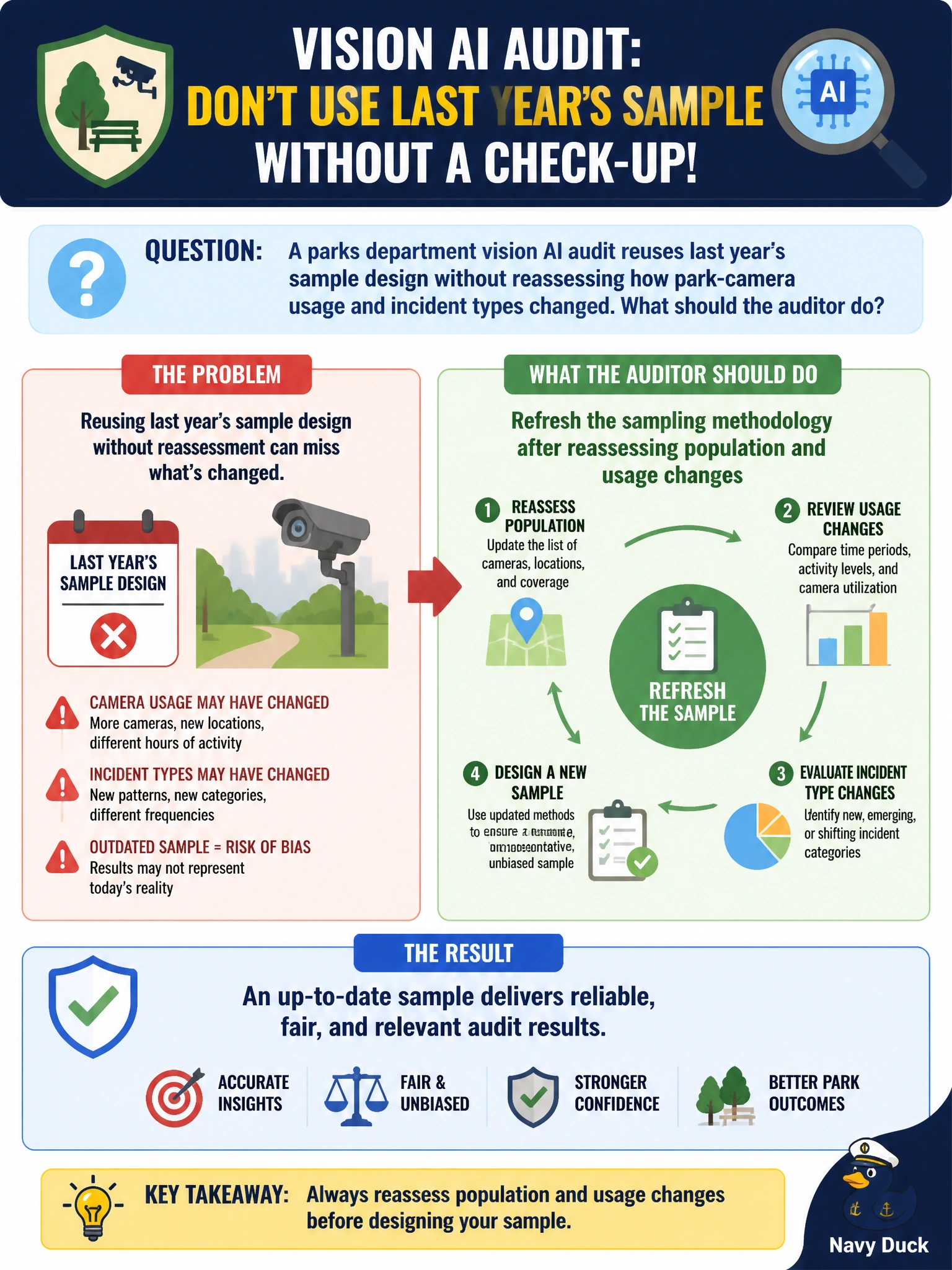
A parks department vision AI audit reuses last year's sample design without reassessing how park-camera usage and incident types changed. What should the auditor do?
Select an answer to reveal the explanation.
Short Explanation
Last year's sample is stale if the camera traffic and incident mix moved. Sampling has to keep up with how the parks AI is actually used. A bigger sample from last year's camera list is not the same as a refreshed population.
Full Explanation
Refreshing the sampling methodology after reassessment works because parks vision AI populations are not static: camera coverage, seasonal visitor patterns, and incident-type mixes shift year to year. An auditor who redefines the population, strata, and sample sizes against current usage can support representative conclusions about detection performance and false-alert risk. Blind reuse of last year’s design treats a changed civic system as if it were unchanged and undermines the reliability of AI audit inferences.
Retaining the prior sampling plan for consistency to enable year-over-year comparison fails by concept: municipal camera estates expand, relocate, and retune, and incident taxonomies evolve with park programming and public-safety priorities, so last year’s design no longer matches the current population. Simply increasing the sample size while still drawing from last year's camera list and incident categories still samples a population that no longer matches which cameras are active or what incidents actually occur now; a bigger sample from a stale population does not fix the underlying design problem. Assessing accuracy using vendor lab validation results from controlled test datasets fails because controlled lab results are not objective, reperformable evidence of operating effectiveness in the actual park environment.
Exam caveat: a refreshed sample design still requires documented population definitions and inclusion rules; a larger sample that ignores new camera clusters or rare incident classes can create false comfort. Operational check: inventory active park cameras and alert classes, compare current usage and incident distributions to the prior year’s design assumptions, document material changes, and re-approve the sampling plan before selecting cases for substantive AI tests.