
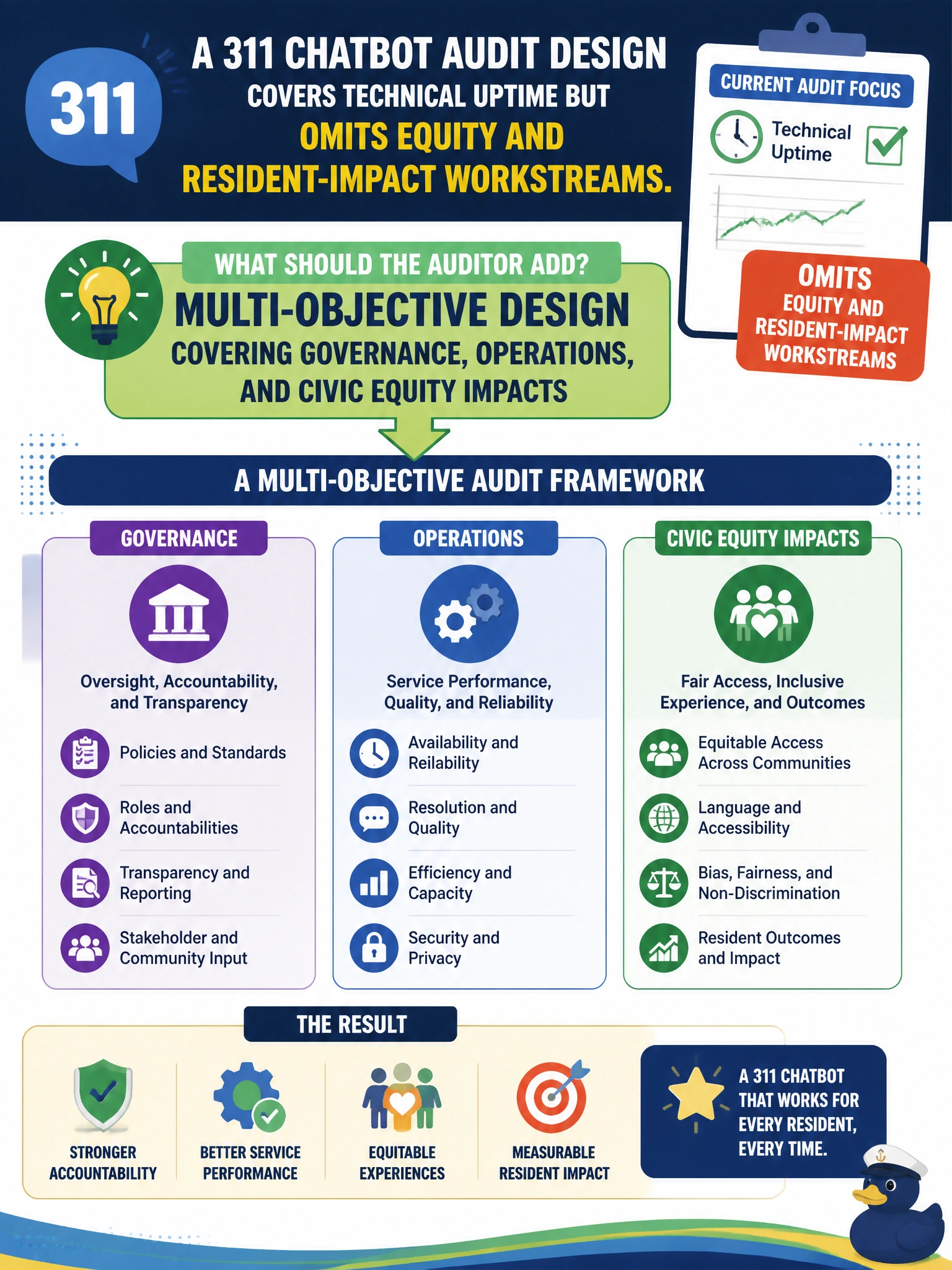
A 311 chatbot audit design covers technical uptime but omits equity and resident-impact workstreams. What should the auditor add?
Select an answer to reveal the explanation.
Short Explanation
Uptime alone does not tell you if the 311 bot treats neighborhoods fairly. Audit design needs equity and resident-impact lanes too. Access control reviews miss civic harm.
Full Explanation
Adding a multi-objective design covering governance, operations, and civic equity impacts works because 311 chatbots mediate resident access to services; uptime alone can mask unequal treatment, unsafe guidance, or weak oversight. Municipal AI audits should test whether governance exists, operations meet service levels, and outcomes are equitable across neighborhoods and languages. Omitting equity and resident-impact workstreams leaves a technically “available” bot that may still harm civic fairness.
Adding only expanded load testing for throughput, latency, and peak traffic capacity fails because performance capacity testing does not address governance or equity of chatbot answers. Reviewing only access controls covering permissions, logging, and encryption fails conceptually: security configuration is unrelated to AI decision quality or disparate resident impact. Reviewing only vendor costs covering hosting fees, license usage, and billing fails by focusing on financial administration while ignoring whether the GenAI channel treats communities fairly under load.
Exam caveat: equity testing needs defined attributes and lawful data sources; auditors must avoid constructing fairness tests that themselves violate privacy rules. Operational check: redesign the 311 AI audit program with three workstreams (governance/policy, operational reliability, equity/resident impact), map procedures and samples to each, and report findings so boards see availability and fairness—not uptime alone.