
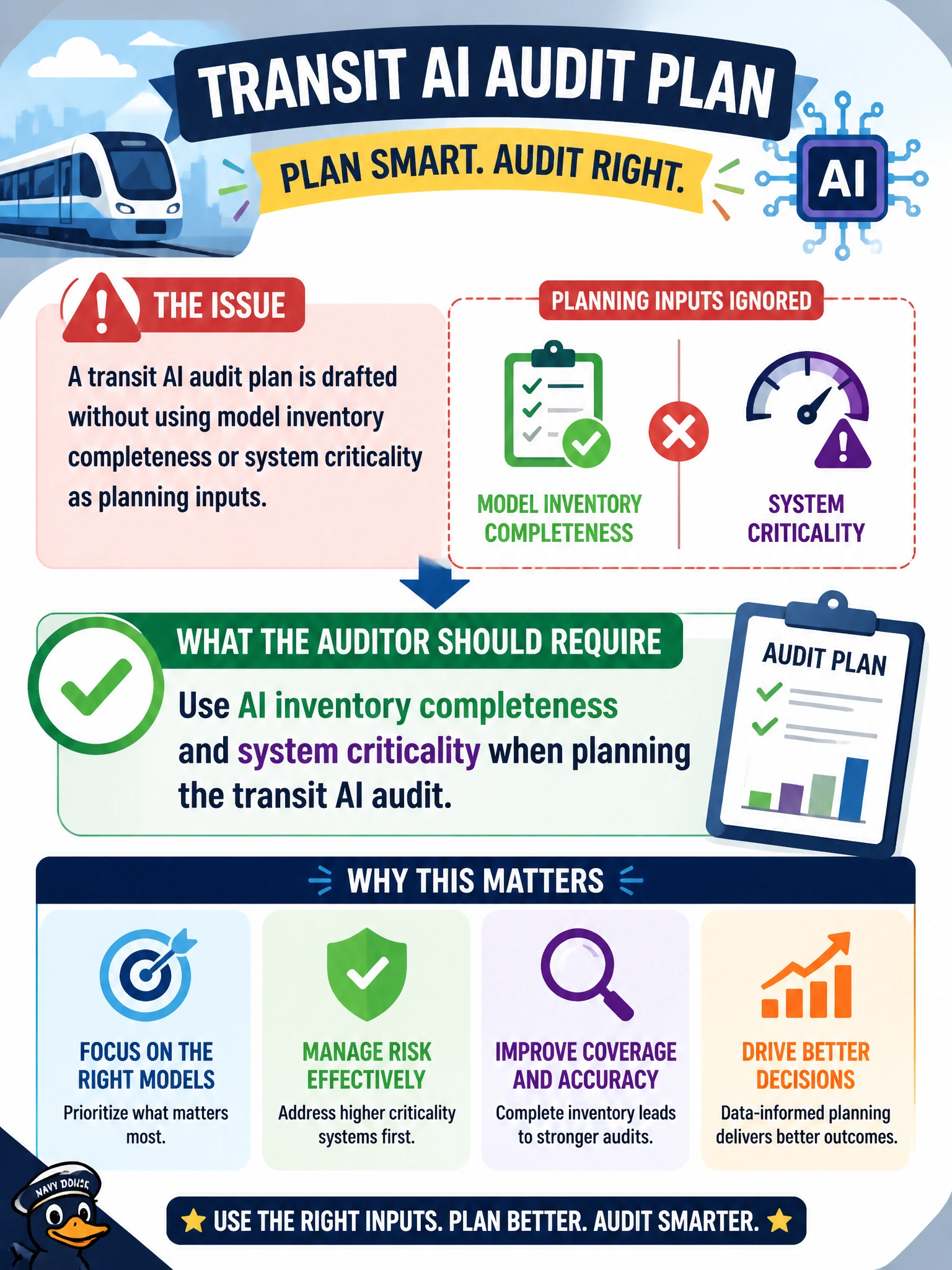
A transit AI audit plan is drafted without using model inventory completeness or system criticality as planning inputs. What should the auditor require?
Select an answer to reveal the explanation.
Short Explanation
You cannot plan a transit AI audit if you do not know which models exist or which ones can strand riders. Inventory and criticality are planning fuel. Vendor talking points are not.
Full Explanation
Using AI inventory completeness and system criticality when planning the transit AI audit works because scope priority depends on knowing which models exist, where they run, and which ones can strand riders, misprice fares, or disrupt scheduling. Incomplete inventories create blind spots: unaudited shadow models can be more material than the systems on last year's plan. Criticality scoring then allocates limited audit hours to high-impact transit AI first.
Basing the transit AI audit scope on vendor marketing claims about model maturity substitutes promotional self-description for an actual inventory and criticality assessment, so unaudited or higher-risk systems can still hide outside the vendor's talking points. Prioritizing the transit AI audit plan using procurement spend and contract renewal timelines fails conceptually: contract size and renewal dates track commercial terms, not which models exist or how critical they are to riders, fares, or scheduling. Scoping the transit AI audit from the general IT asset register and helpdesk ticket volumes fails because a generic IT register was never built to capture AI-specific inventory attributes, and ticket volume reflects support load, not system criticality or completeness of the AI model inventory.
Exam caveat: inventories age quickly—planning should note inventory as-of dates and require updates when new vendor models appear mid-cycle. Operational check: obtain the transit AI inventory with owners and criticality ratings, reconcile it to change tickets and vendor contracts, document gaps, and set the audit plan's coverage based on completeness status plus criticality—not advertising calendars or helpdesk ticket counts.