
A water utility sensor stream feeding anomaly AI lacks schema-change detection. What control should be added?
Select an answer to reveal the explanation.
Short Explanation
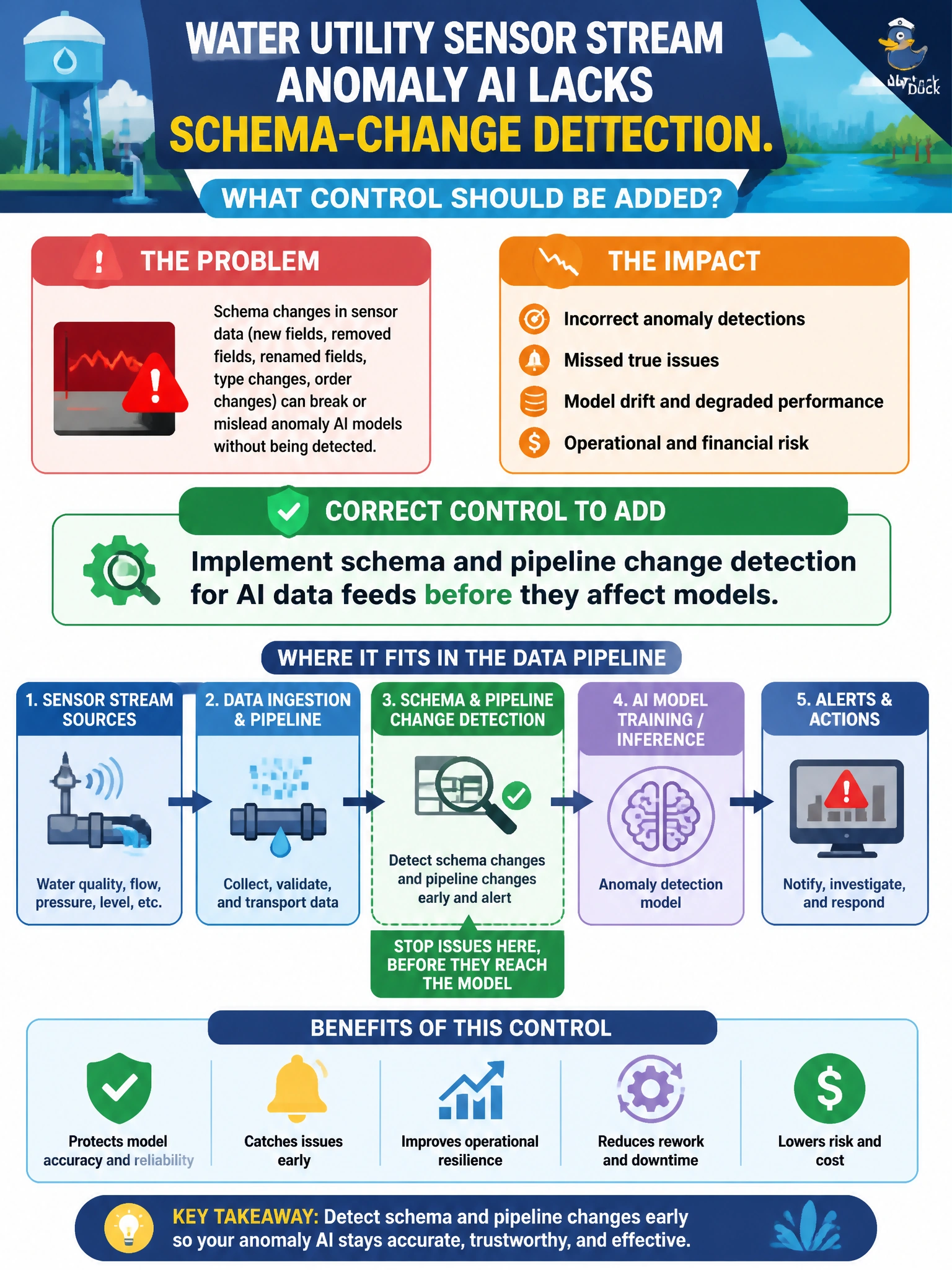
When sensor columns quietly rearrange, anomaly AI starts guessing wrong. Catch schema and pipeline changes before they hit the model. Checksum validation only confirms the payload arrived intact—it won't catch schema drift before it hits your model.
Full Explanation
A water utility sensor stream feeding anomaly AI without schema-change detection allows silent column, type, or unit drifts to corrupt features and degrade anomaly detection before anyone notices. The control to add is implementing schema and pipeline change detection for AI data feeds before they affect models so drifts are caught, reviewed, and versioned rather than relying on checksum validation at ingestion, which confirms transmission integrity but does not detect schema or pipeline changes. Validating sensor payload checksums at ingestion to confirm transmission integrity fails by concept: checksums verify that bytes were transmitted correctly, not that the schema or pipeline is unchanged, so schema drift can still silently reach the model. Monitoring model prediction latency dashboards for anomaly scoring delays in production fails by concept: latency dashboards reveal scoring delays after they occur, but they do not detect schema changes in the feed before those changes corrupt features and anomaly outputs. Archiving versioned training datasets in object storage to support audit traceability reviews fails by concept: archived training data helps with audits, but it does not detect or prevent schema changes in live sensor streams from reaching anomaly models. Exam caveat: AAIA AI operations items on sensor/AI feeds expect detection and governed handling of schema and pipeline changes—not checksum validation for transmission integrity, latency-dashboard monitoring for scoring delays, or archiving training datasets for audit traceability. Operational check: deploy schema and pipeline change monitors on the sensor-to-model path, alert owners on drift, require approved schema versions before retrain or promote, and verify anomaly model inputs match the contracted schema after maintenance.