
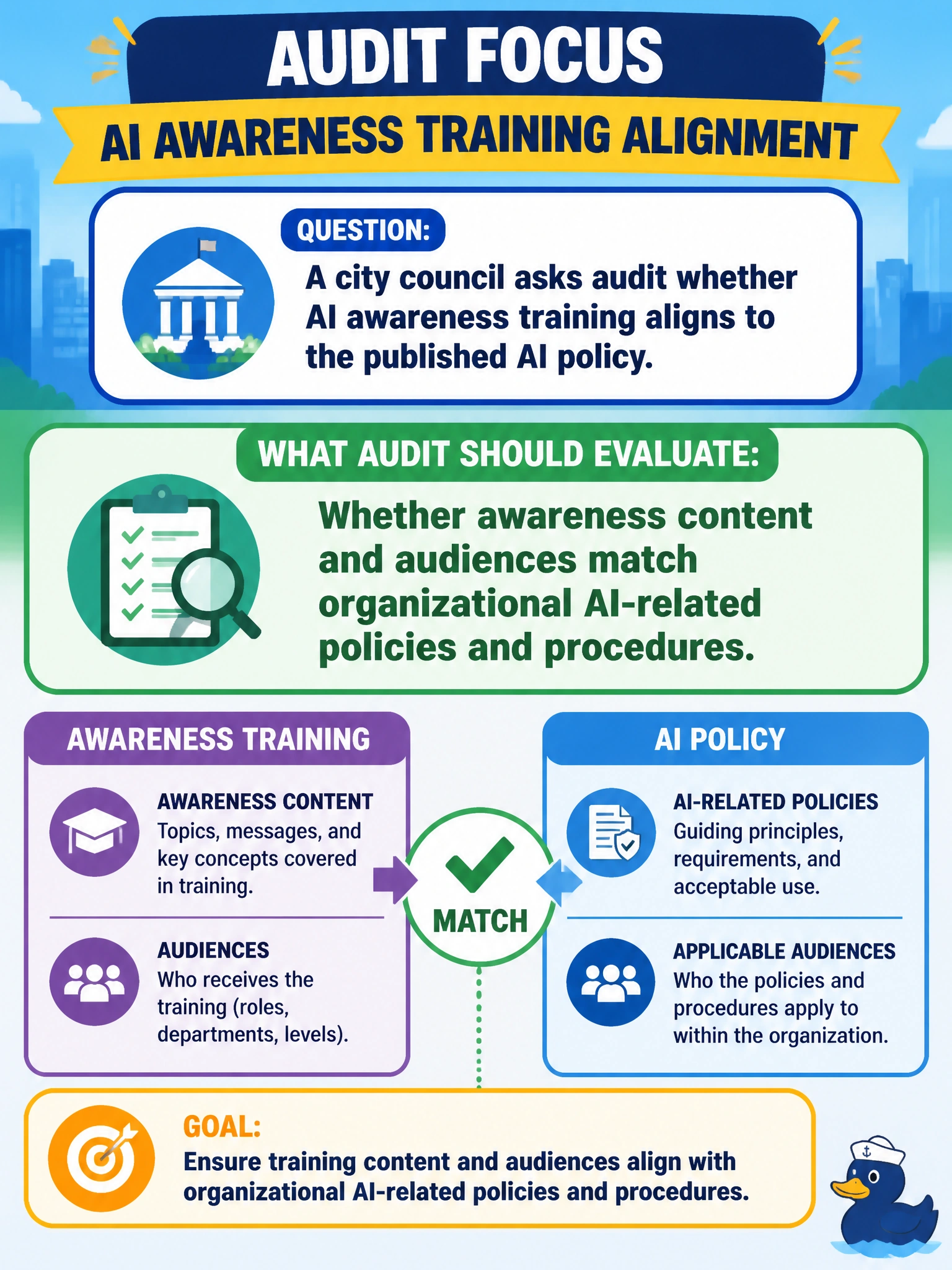
A city council asks audit whether AI awareness training aligns to the published AI policy. What should audit evaluate?
Select an answer to reveal the explanation.
Short Explanation
You’ve got to teach the city’s actual AI rules—not just assign generic AI literacy modules through the LMS or consolidate attendance records for HR. Scheduling sessions around departmental availability doesn’t show the content matches policy either. Audit checks that the message matches the policy people are supposed to follow.
Full Explanation
When city council asks whether AI awareness training aligns to the published AI policy, audit should evaluate whether awareness content and audiences match organizational AI-related policies and procedures. Training effectiveness for governance purposes means the right people learn the actual rules for approved tools, prohibited data uses, escalation paths, disclosure, and documentation—not merely delivering generic AI literacy modules through the learning management system. Misaligned training creates false assurance that staff “were trained on AI.”
Coordinating training session timing around departmental operational availability needs does not evidence content alignment or behavioral change. Simply delivering generic AI literacy modules through the learning management system fails the content-match test even if completion rates are high. Consolidating attendance records for HR compliance reporting purposes does not prove understanding or that procedures for civic AI use are followed when staff draft resident communications or paste sensitive data into tools.
Exam caveat: training assurance looks at relevance, audience coverage, and linkage to policy—not vanity completion metrics alone. Operational check: map policy clauses to training modules by role (developers vs. business users vs. executives), verify curricula update when AI procedures change, sample comprehension checks, and interview staff on prohibited uses named in policy.