
After completing classroom hazardous-materials emergency response training, a chemical warehouse schedules an unannounced spill drill with local fire department observers to test how operators isolate a leaking tote and activate alarms. Which outcome best demonstrates the primary purpose of this drill?
Select an answer to reveal the explanation.
Short Explanation
An emergency drill is a dress rehearsal for your response team, showing what works smoothly and what breaks down before a real spill happens. Watch out for the trap of treating drills as a replacement for annual refresher training or a reason to punish hesitant workers instead of fixing gaps.
Full Explanation
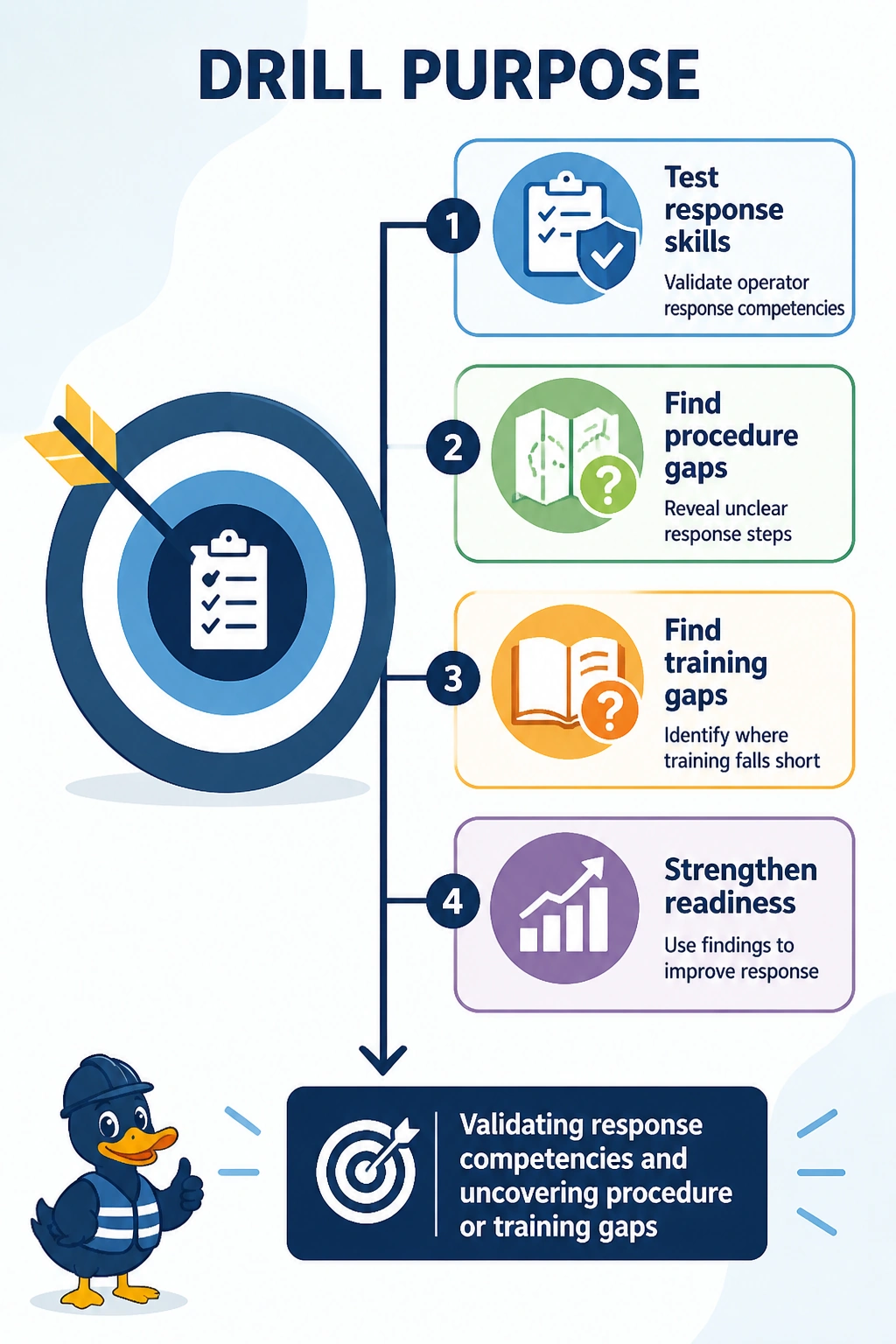
Practical emergency exercises test whether classroom knowledge translates into coordinated action under realistic time pressure. Validating response competencies and uncovering procedure or training gaps is the core objective of drills, allowing managers to observe communication flow, equipment readiness, and decision-making before a real release occurs. Replacing the entire annual refresher with one walk-through does not meet 29 CFR 1910.120(q)(8) or 40 CFR 262.17(a)(7). HAZWOPER requires annual refresher training of sufficient content and duration or a yearly competency demonstration. RCRA requires an annual review of the initial training, which may be classroom, online, or on-the-job. A drill may be part of that training, but neither rule mandates a separate classroom session plus a practical exercise. Issuing disciplinary citations to workers who hesitate during simulated alarms undermines psychological safety and discourages honest participation, whereas drills should coach personnel and refine procedures. Certifying facility operators to perform off-site municipal firefighting duties oversteps industrial site boundaries, as facility personnel are typically limited to defensive or site-specific response roles unless formally trained and equipped as an industrial brigade. As an exam caveat, unannounced drills still require clear safety boundaries and a designated controller who can halt unsafe actions immediately. For an operational check, document an after-action corrective plan within thirty days of the drill and track each training or equipment gap to closure.
Prefer to study offline? Printable PDF study book + test engine ($7.50, unofficial). These questions stay free here.