
A chemical blending facility revises its plant layout, relocates two emergency exits, and assigns new evacuation wardens to guide workers during chemical releases. Under OSHA Emergency Action Plan requirements, when must the facility train affected employees on these updated procedures?
Select an answer to reveal the explanation.
Short Explanation
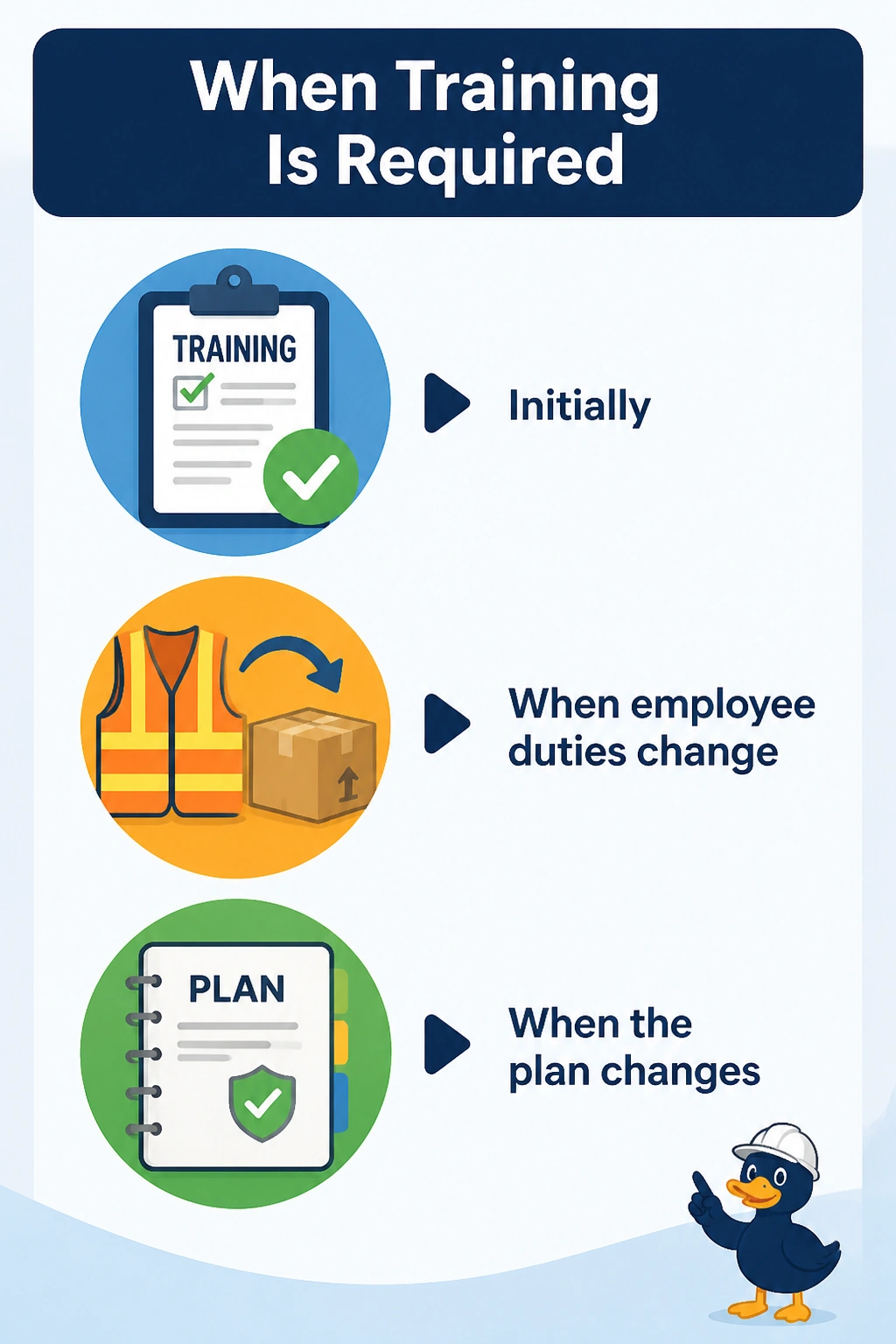
An emergency exit map that lives only in a binder will not help anyone when an alarm sounds. Under OSHA Emergency Action Plan rules, you must retrain workers whenever the plan or their duties change, rather than waiting for an unrelated compliance calendar.
Full Explanation
Under OSHA 29 CFR 1910.38, employers must review the Emergency Action Plan with each employee covered by the plan initially, when employee duties change, or when the plan changes. Relocating emergency exits and assigning new evacuation wardens directly alters escape routes and response roles, so affected personnel need prompt training before an emergency occurs. Waiting to train workers only during the next scheduled triennial DOT hazardous materials refresher cycle conflates transportation training under 49 CFR 172.704 with workplace evacuation rules and leaves employees unprepared for years. Delaying training until within ninety days after completing the annual local fire department facility walkthrough invents an arbitrary window not found in the OSHA standard and leaves workers using outdated exit routes. Providing training exclusively for newly hired maintenance supervisors during onboarding omits the broader workforce who must also recognize alarms and evacuate safely. As a caveat, employers with ten or fewer employees may communicate the plan orally, whereas larger facilities must maintain a written plan. As an operational check, document attendance rosters and conduct a walk-through drill to verify everyone can locate the relocated exits.
Prefer to study offline? Printable PDF study book + test engine ($7.50, unofficial). These questions stay free here.