
A chemical distributor ships small 500-milliliter bottles of Class 3 Packing Group II flammable solvent packed inside a strong outer fiberboard box weighing 20 kilograms total gross weight by highway under the DOT Limited Quantity exception in 49 CFR 173.150. Assuming the material is not a hazardous waste, which marking must appear on the outer package to qualify for relief from hazard labels and shipping papers?
Select an answer to reveal the explanation.
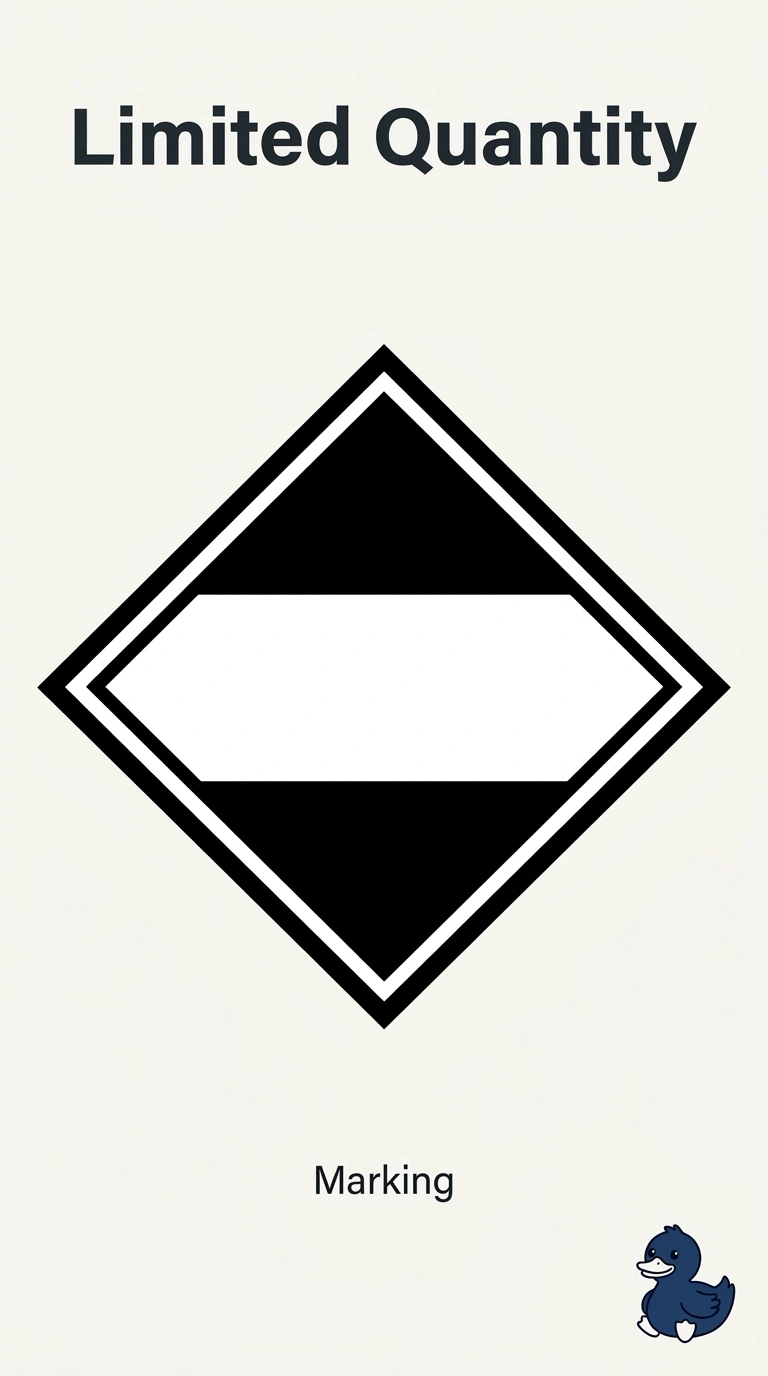
Short Explanation
When you ship small inner bottles in a sturdy box under 30 kilograms, DOT lets you skip full hazard labels and shipping papers—if you use the right diamond! The trap is slapping on full Class 3 labels or bulk orange panels when a simpler mark is required. You must apply the standardized black-and-white square-on-point limited quantity marking.
Full Explanation
Under DOT Hazardous Materials Regulations in 49 CFR 173.150 and 172.315, small inner packagings of eligible Class 3 flammable liquids in strong outer packagings not exceeding 30 kilograms gross weight qualify for Limited Quantity relief during surface transport. Applying the standardized black-and-white square-on-point limited quantity marking communicates the reduced-quantity status. A conforming highway limited-quantity package is relieved from hazard labels and placarding, and from shipping papers unless it is a hazardous substance, hazardous waste, or marine pollutant; aircraft and vessel shipments also keep shipping-paper requirements, and air shipments keep labeling requirements. Using "A red Class 3 flammable liquid hazard label on all four sides of the box" describes standard hazard labeling, not limited-quantity relief. "The four-digit UN identification number in four-inch orange rectangular panels" applies to bulk packagings such as cargo tanks, not small fiberboard boxes. "A Toxic Inhalation Hazard placard affixed to the exterior of the outer box" is incorrect because placards go on vehicles, not individual boxes, and Class 3 solvents are not automatically inhalation hazards. As an operational check, weigh each completed outer package to verify it stays at or below 30 kilograms gross weight before applying the diamond marking.
Prefer to study offline? Printable PDF study book + test engine ($7.50, unofficial). These questions stay free here.