
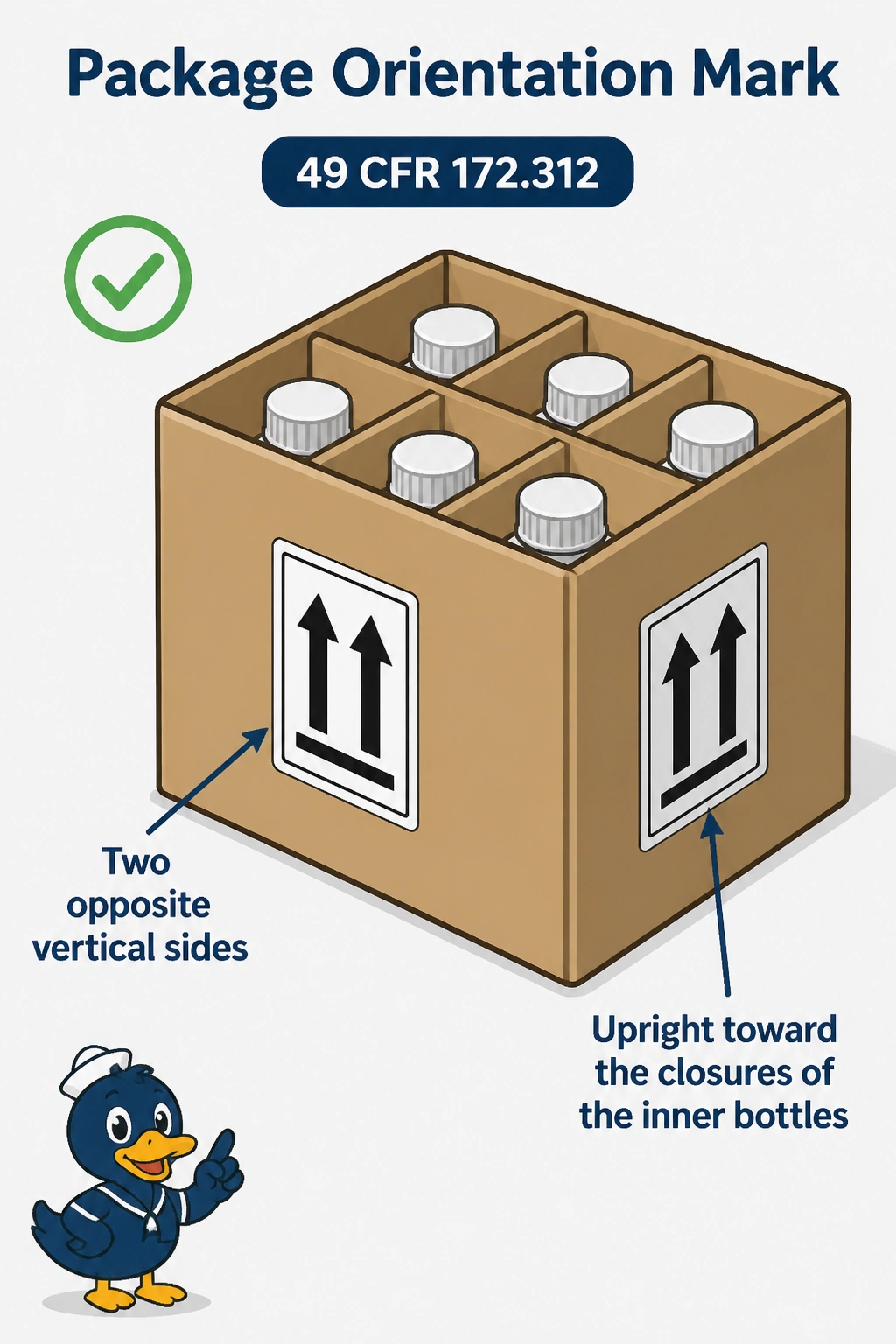
A laboratory chemical supplier packs four 1-gallon glass bottles of nitric acid inside a fiberboard outer box with cushioning and absorbent material for highway shipment. Under DOT 49 CFR 172.312, which marking must appear on two opposite vertical sides of the outer box?
Select an answer to reveal the explanation.
Short Explanation
Whenever you pack inner liquid bottles inside a fiberboard box, the carrier needs to know at a glance which way is up so closures stay upright and leak-free. Under DOT rules, orientation arrows on two opposite vertical sides do that job. The trap is reaching for a marine pollutant or HOT mark that does not apply.
Full Explanation
Under DOT 49 CFR 172.312, combination packagings containing inner packagings with liquid hazardous materials must display Package orientation arrows pointing upright toward the closures of the inner bottles on two opposite vertical sides so handlers keep the closures upright and minimize leakage or venting during transit. A marine pollutant mark regardless of whether the acid meets marine pollutant criteria fails because the marine pollutant mark applies only to materials specifically listed or meeting marine pollutant criteria in 49 CFR 172.101 Appendix B, not as a default substitute for orientation markings. An elevated-temperature HOT mark indicating the liquid is shipped above ambient heat fails because the HOT mark is reserved for elevated-temperature materials shipped at or above regulatory temperature thresholds, not ambient nitric acid. A limited-quantity diamond border marking without any inner-bottle closure arrows fails because Class 8 Packing Group I or II nitric acid does not qualify for limited-quantity exceptions in standard 1-gallon glass bottles and still omits the required orientation arrows. As a shipping caveat, ensure arrows are not contradicted by other markings on the box. As an operational check, inspect two opposite vertical faces of every sealed fiberboard box before carrier pickup.
Prefer to study offline? Printable PDF study book + test engine ($7.50, unofficial). These questions stay free here.