
A motor carrier driver is preparing to depart a chemical distribution hub with a placarded load of corrosive liquids under DOT Hazardous Materials Regulations. Where must the driver keep the hazardous materials shipping papers during highway transport?
Select an answer to reveal the explanation.
Short Explanation
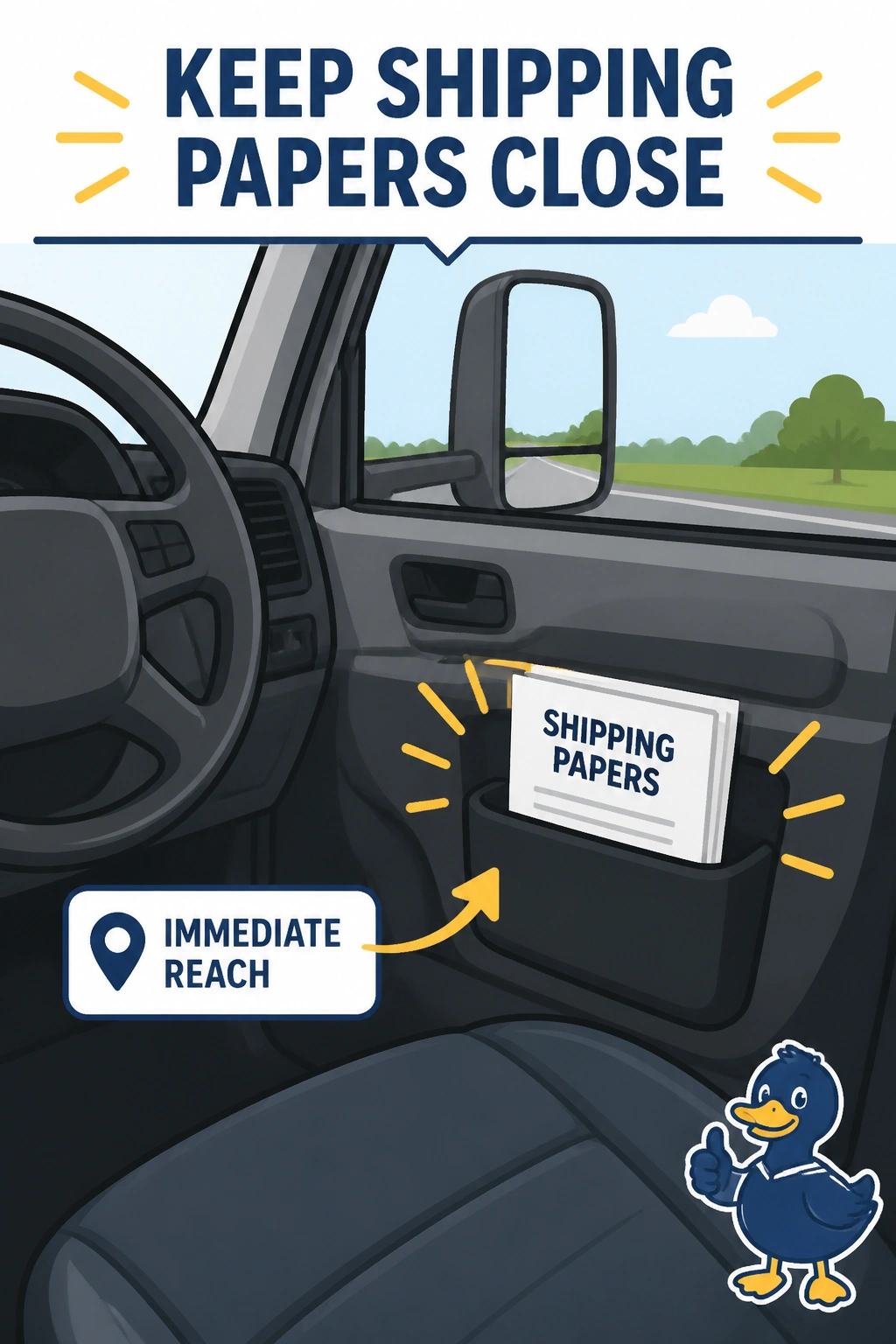
In a highway crash, first responders look inside the cab first to find out what is in the trailer—you cannot make them hunt through the cargo. The trap is thinking electronic copies or locked rear storage satisfy DOT accessibility rules.
Full Explanation
Under DOT 49 CFR 177.817(e), a driver transporting hazardous materials by highway must Keep shipping papers within the driver's immediate reach or door pouch while at the controls, and leave them in a clearly visible location on the seat or in the driver's door pouch when leaving the vehicle. Immediate cab accessibility ensures that emergency responders can quickly identify the material's proper shipping name, hazard class, and emergency response telephone number without entering a damaged cargo area. Choosing to Seal the shipping papers inside a locked cargo box in the rear trailer defeats emergency accessibility and violates 49 CFR 177.817(e). Choosing to Email the manifest to the consignee without keeping a copy in the cab leaves the vehicle without required physical documentation in the cab for roadside inspections or crash response. Choosing to Stow the shipping papers in a document holder inside the cargo trailer buries critical hazard information inside the freight itself where responders cannot safely retrieve it. As a practical caveat, when hazardous materials papers are carried alongside non-hazardous bills, the hazmat paper must be tabbed or placed on top so it stands out immediately. For an operational check, inspect the driver's door pouch and seat area during pre-trip gate checks before releasing the truck.
Prefer to study offline? Printable PDF study book + test engine ($7.50, unofficial). These questions stay free here.