
A motor carrier plans to load drums of a Division 5.1 oxidizer and drums of a Class 3 flammable liquid onto the same closed dry-van trailer for highway transport. Under DOT Hazardous Materials Regulations (49 CFR 177.848), what must the shipper and carrier verify before dispatching the load?
Select an answer to reveal the explanation.
Short Explanation
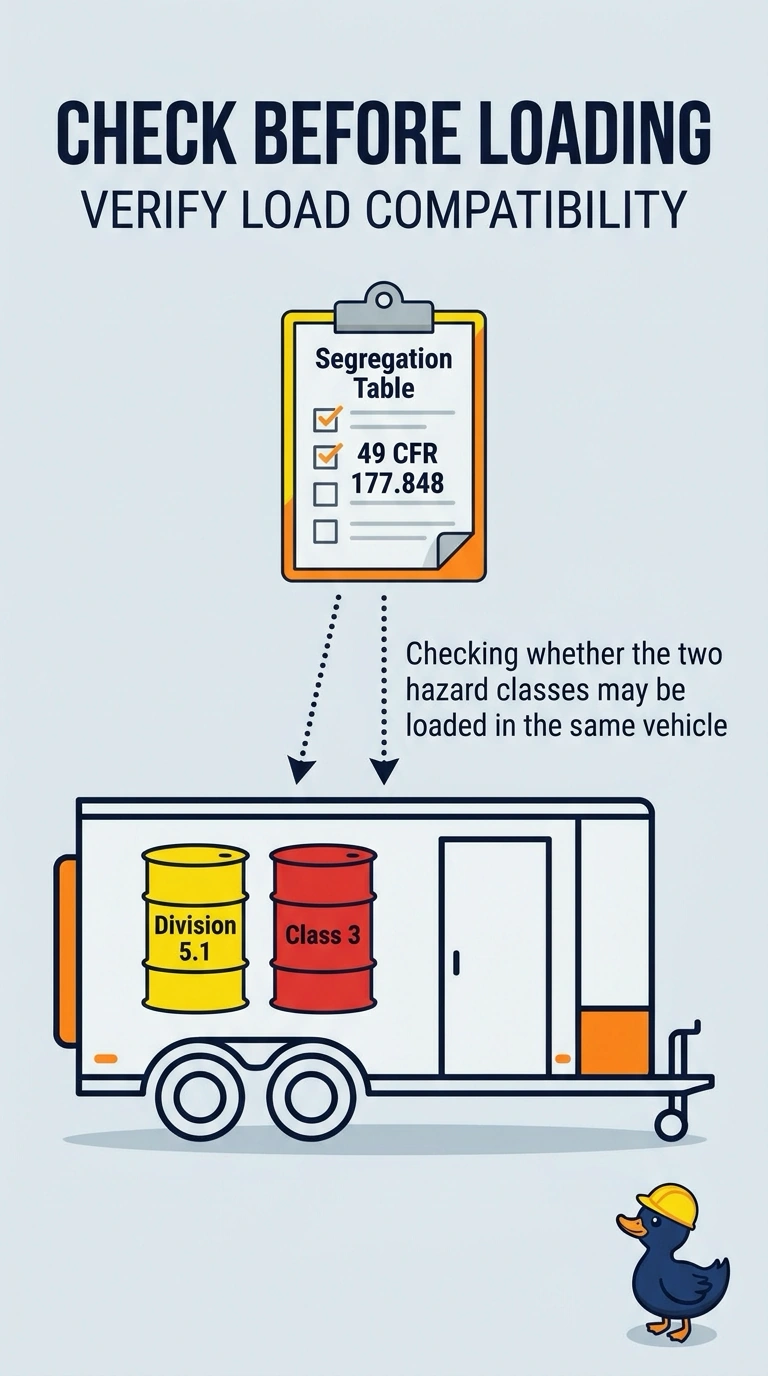
Putting oxidizers and flammable liquids in the same trailer without checking compatibility is like packing matches next to gasoline. Before the truck rolls, you must consult the DOT Segregation Table to verify whether those hazard classes can share a vehicle. The trap is thinking extra placards or combined paperwork can fix an incompatible load.
Full Explanation
DOT Hazardous Materials Regulations at 49 CFR 177.848 restrict loading incompatible hazardous materials together because a leak or container failure during transit could cause a fire, explosion, or toxic gas release. Checking whether the two hazard classes may be loaded in the same vehicle using the Segregation Table for Hazardous Materials determines if the materials are prohibited from co-loading or require physical separation to prevent commingling. Adding a secondary corrosive placard on both sides of the trailer does not address chemical incompatibility and can violate placarding rules if neither material carries a corrosive subsidiary hazard. Listing both materials under a single generic shipping description violates 49 CFR 172.202 shipping-paper rules, which require accurate individual basic descriptions for each regulated material. Loading the two classes together whenever both packages display a primary hazard label confuses hazard communication with compatibility because labels identify each package hazard but do not authorize co-loading without a segregation check. As a caveat, even when the Segregation Table allows co-loading with separation, packages must be blocked, braced, and segregated from incompatible non-regulated freight as required. For an operational check, cross-reference every hazard class and division on the load manifest against the 49 CFR 177.848 table before the trailer doors are sealed.
Prefer to study offline? Printable PDF study book + test engine ($7.50, unofficial). These questions stay free here.