
A plant shipping coordinator prepares a bill of lading for an outbound truckload of packaged corrosive liquids and notices the carrier driver waiting at the dock. Under DOT 49 CFR 172.204, what must the person who offers the hazardous material for transportation execute on the shipping paper before release?
Select an answer to reveal the explanation.
Short Explanation
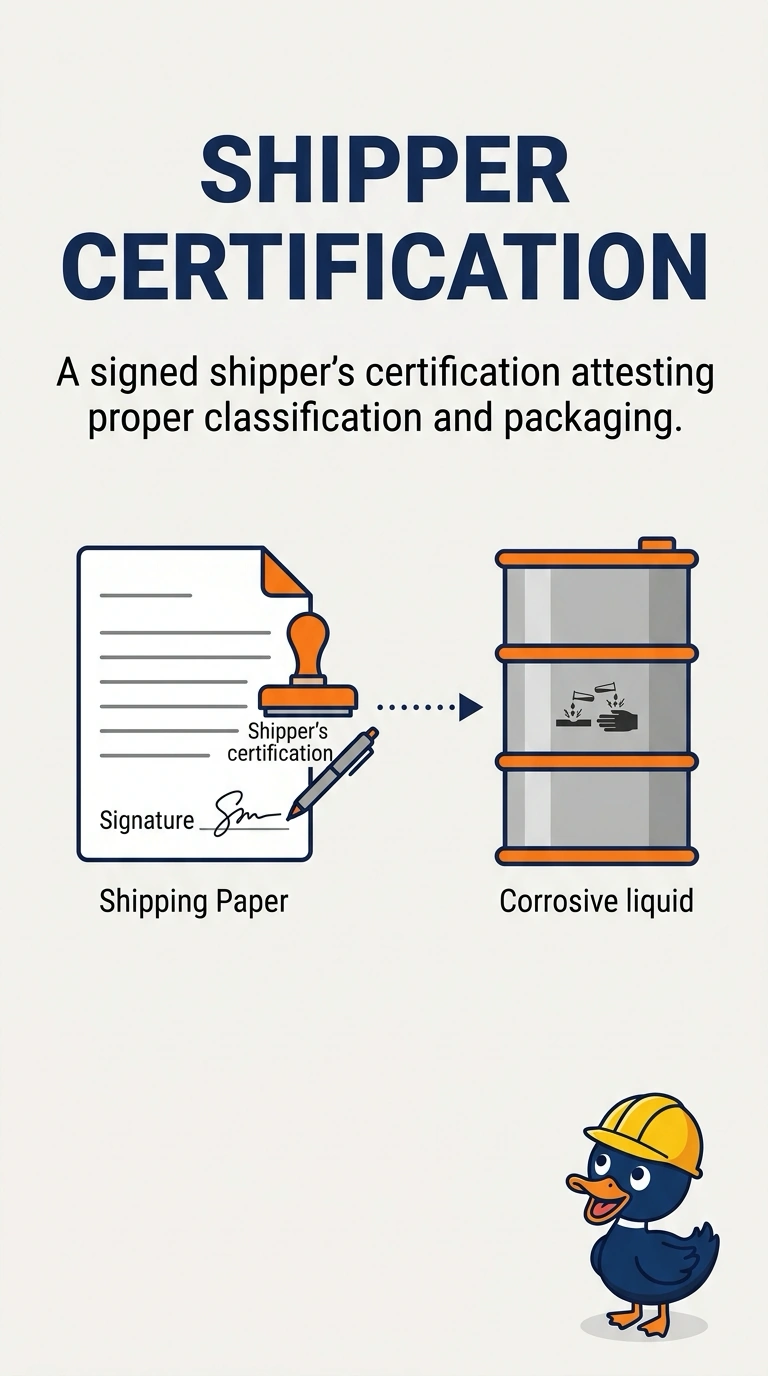
Before your hazmat load leaves the dock, DOT requires the person offering it to sign the shipping paper. A carrier checklist, delivery receipt, or Safety Data Sheet does not replace the required shipper’s certification.
Full Explanation
Under DOT 49 CFR 172.204, the offeror must execute a signed shipper’s certification attesting proper classification and packaging on the shipping paper. This legally certifies that the materials are properly classified, described, packaged, marked, labeled, and in proper condition for transportation. A carrier-signed vehicle inspection checklist confirming the trailer floor is free of nails reflects good loading practice, but it is not the offeror’s regulatory certification. A consignee delivery receipt confirming the customer has an active EPA ID number confuses commercial receiving paperwork with RCRA hazardous waste generator-to-TSDF tracking, rather than DOT hazmat offering rules. A notarized Safety Data Sheet attachment signed by the chemical manufacturer is not required by DOT shipping-paper regulations; emergency response information must accompany the shipment, not a notarized SDS. Exam caveat: a driver’s signature as carrier does not satisfy the shipper’s certification unless the driver is explicitly acting as the offeror’s authorized agent. As a practical check, verify that the certification wording matches 49 CFR 172.204 and is legibly signed before releasing the driver.
Prefer to study offline? Printable PDF study book + test engine ($7.50, unofficial). These questions stay free here.