
Before a motor carrier arrives at a chemical plant loading dock, a shipping technician notices a slow liquid seep around the chime of a closed steel drum containing a Class 8 corrosive liquid. What action is required under DOT Hazardous Materials Regulations (49 CFR Part 173)?
Select an answer to reveal the explanation.
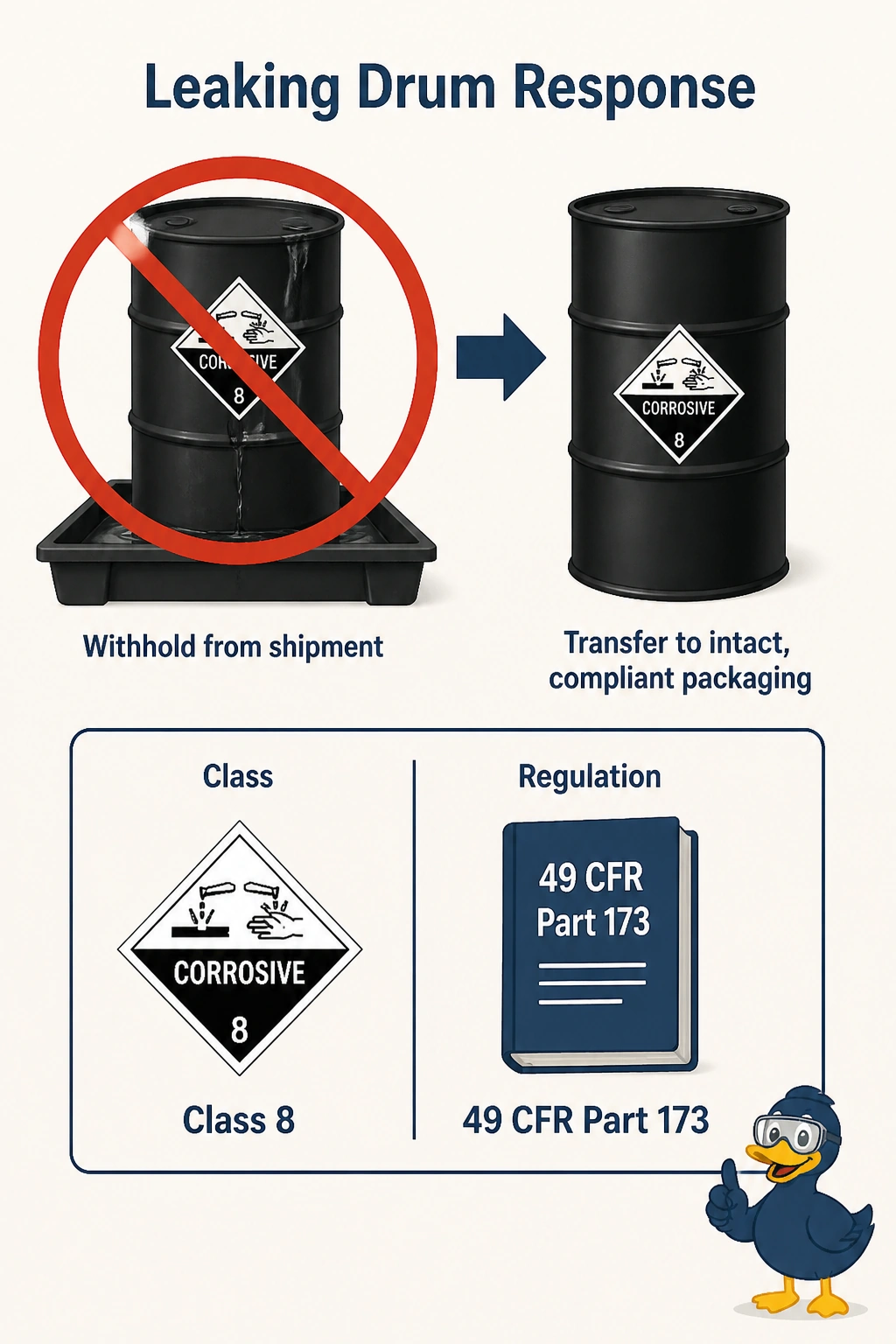
Short Explanation
When you spot a seep at the loading dock, keep the drum off the truck to prevent a highway spill and a serious DOT violation. Repackaging the material in intact, compliant packaging is the safe response—not covering the leak, adding a label, or offering it as a limited quantity shipment.
Full Explanation
Withhold the leaking drum from shipment and transfer the material into intact, compliant packaging. Under DOT 49 CFR Part 173, you may not offer hazardous material for transportation in damaged or leaking packaging that cannot retain its contents under normal transport conditions. Placing an absorbent pad over the leaking seam and loading the drum upright at the rear of the trailer does not restore package integrity or prevent corrosive liquid from escaping in transit. Applying an additional corrosive hazard label over the seam and documenting the seep on the bill of lading also fails: labels and shipping-paper notes communicate hazards but do not authorize shipment in a compromised container. Offering the drum as a limited quantity shipment does not solve the problem, because limited quantity exceptions still require leak-free, intact packaging; you cannot reclassify the existing drum quantity to bypass safety rules. Exam caveat: if the damaged container cannot be safely opened for transfer, use a qualified salvage drum or an overpack designed for damaged packages in accordance with 49 CFR 173.3. Practical check: inspect closures, chimes, and gaskets on every hazardous materials container before signing the shipper’s certification on the shipping paper.
Prefer to study offline? Printable PDF study book + test engine ($7.50, unofficial). These questions stay free here.