
An EHS manager at a chemical manufacturing plant is updating the retention schedule for occupational health surveillance files, including air monitoring results and respirator medical evaluations for long-term operators. Under OSHA 29 CFR 1910.1020(d)(1)(i), how long must the employer preserve each employee's medical record?
Select an answer to reveal the explanation.
Short Explanation
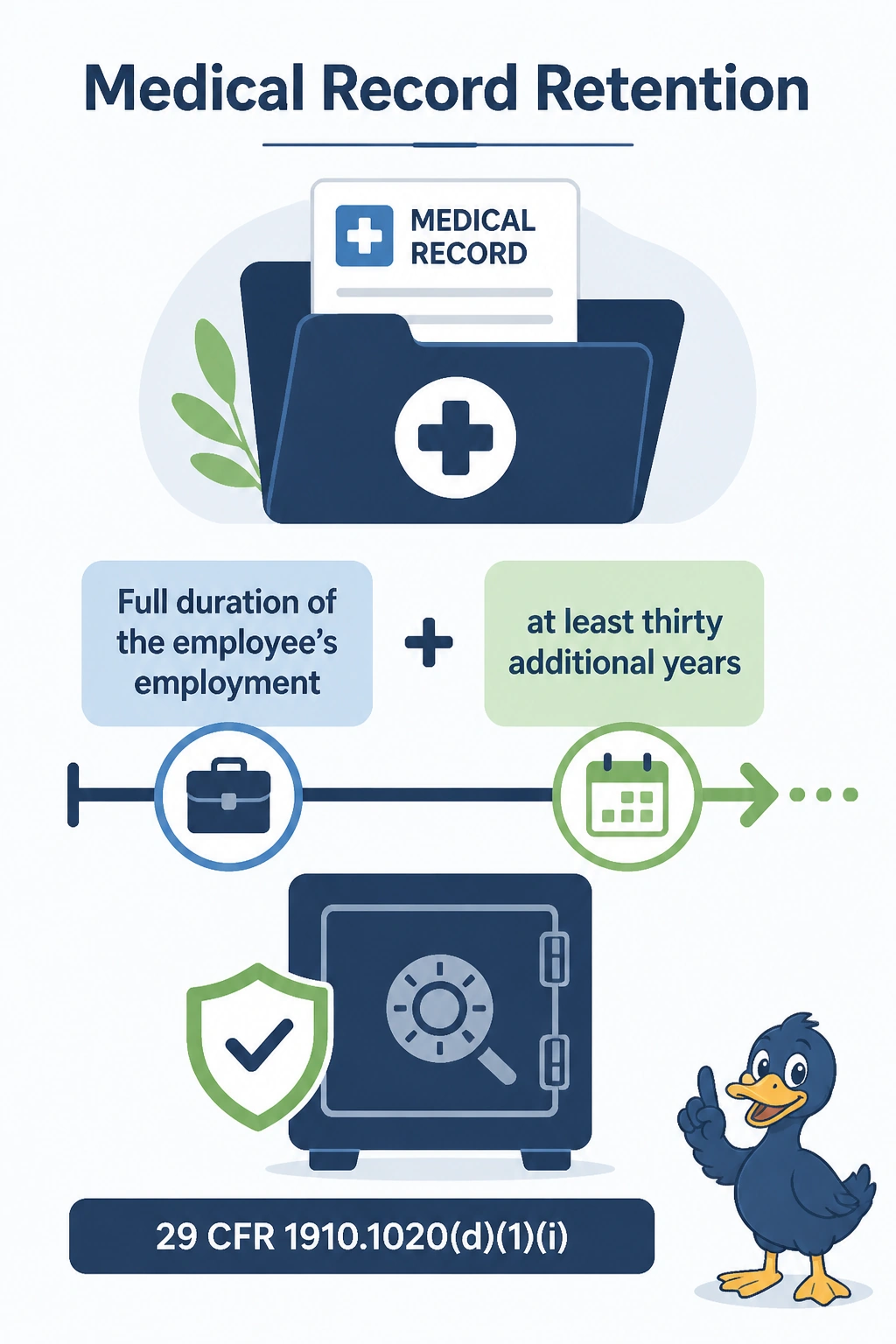
Medical records outlast the job by decades, so you can distinguish them from exposure monitoring files. The trap is choosing a flat thirty-year clock from creation: OSHA 29 CFR 1910.1020 requires medical records to be kept for the full employment period plus thirty years.
Full Explanation
Under OSHA 29 CFR 1910.1020(d)(1)(i), employers must preserve each employee’s medical record for the full duration of employment plus at least thirty additional years, allowing long-latency occupational illnesses to be evaluated decades after exposure. Three years from the date of the last annual physical examination confuses medical-record retention with short-term RCRA manifest retention and could prematurely destroy an employee’s health history. Ten years after the hazardous chemical process is permanently shut down is not the OSHA requirement and could erase records while former workers are still alive. Thirty years from the date each medical record was originally created applies to employee exposure monitoring records under the same standard; medical records require adding the entire employment period before the thirty-year retention period. One caveat is that when an employee worked for less than one year, OSHA allows the employer to provide the medical record to that employee upon termination instead of retaining it. As a practical check, keep exposure records separate from confidential medical files in your retention system and verify record-transfer procedures if the business is sold.
Prefer to study offline? Printable PDF study book + test engine ($7.50, unofficial). These questions stay free here.