
A chemical blending facility stores several OSHA-defined hazardous chemicals in bulk tanks at quantities exceeding federal reporting thresholds throughout the calendar year. Under EPCRA Section 312 (40 CFR Part 370), which annual inventory report must the facility submit to the State Emergency Response Commission, Local Emergency Planning Committee, and local fire department?
Select an answer to reveal the explanation.
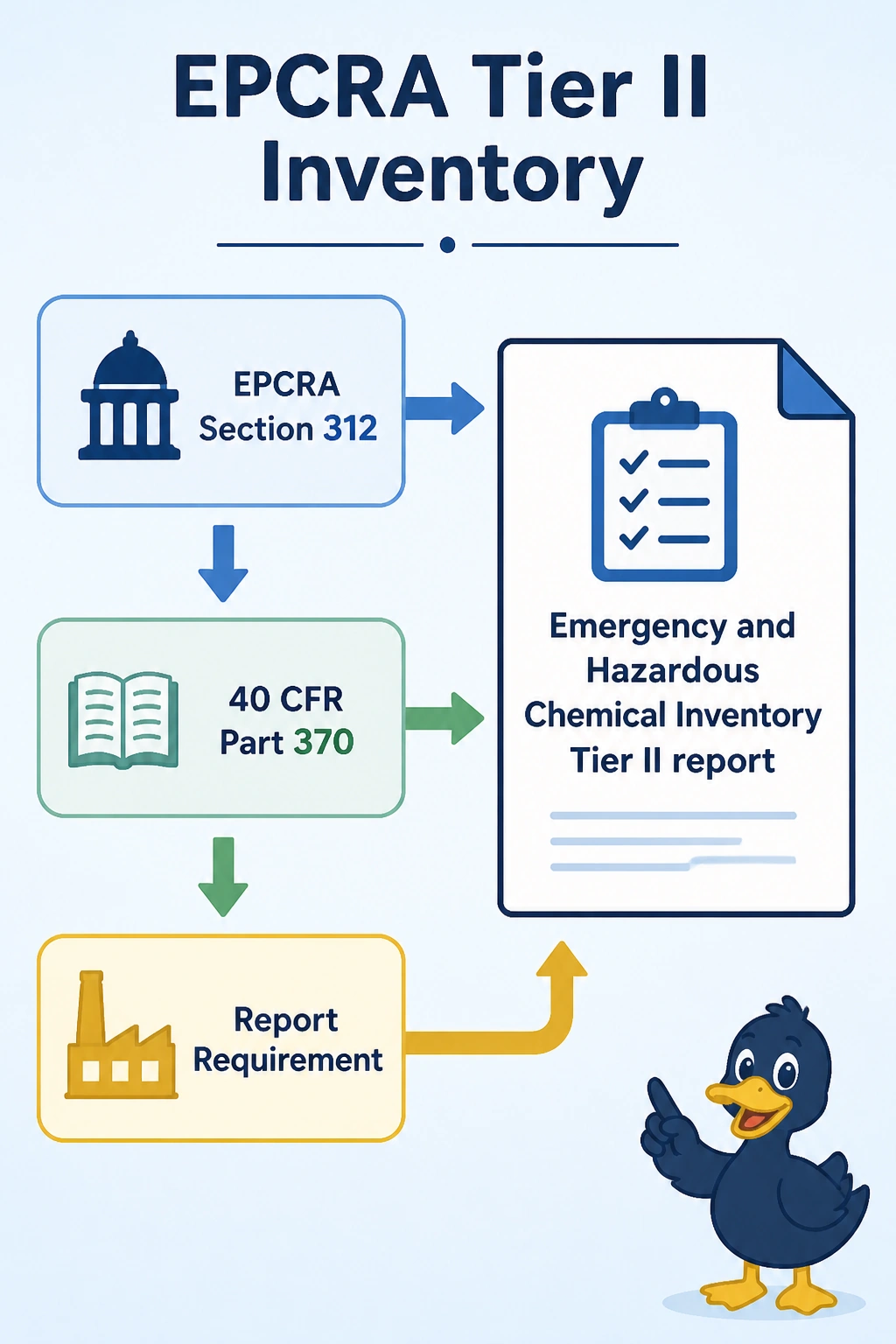
Short Explanation
Local firefighters do not want to guess what is inside your tanks when an alarm sounds at midnight—they need an annual map of what you store on-site. EPCRA Section 312 requires you to file an annual Tier II inventory report with state and local planners plus your fire department. The trap is confusing storage inventory reporting with Form R release reporting, which tracks chemical releases rather than stored quantities.
Full Explanation
EPCRA Section 312, implemented at 40 CFR Part 370, gives state and local emergency responders visibility into hazardous chemicals stored at facilities above threshold quantities. Submitting An Emergency and Hazardous Chemical Inventory Tier II report provides the State Emergency Response Commission, Local Emergency Planning Committee, and local fire department with chemical identities, maximum and average daily amounts, and exact on-site storage locations. Filing A Toxic Release Inventory Form R for annual emissions falls under EPCRA Section 313, which reports routine and accidental environmental releases rather than stored chemical inventories. Preparing A RCRA Biennial Report covering off-site waste applies to hazardous waste generation and management under 40 CFR Part 262, not raw material chemical storage. Submitting A CERCLA continuous release notification summary addresses ongoing environmental releases under 40 CFR Part 302 rather than annual facility chemical inventories. A key caveat is that Tier II reports are due annually by March 1 covering the preceding calendar year, and extremely hazardous substances carry lower reporting thresholds than general OSHA hazardous chemicals. As an operational check, reconcile year-end chemical purchasing and tank inventory records against Safety Data Sheets each January to confirm which substances trigger Tier II filing.
Prefer to study offline? Printable PDF study book + test engine ($7.50, unofficial). These questions stay free here.