
A company plans to construct a new permitted hazardous waste container storage building on a riverside parcel that lies within a mapped 100-year floodplain. Under federal RCRA location standards (40 CFR 264.18), what must the facility design demonstrate?
Select an answer to reveal the explanation.
Short Explanation
Building a hazardous waste pad in a 100-year floodplain means planning for high water before the first drum arrives. You don't get a free pass from flood risk—your permit must prove floodwaters won't sweep waste into the river.
Full Explanation
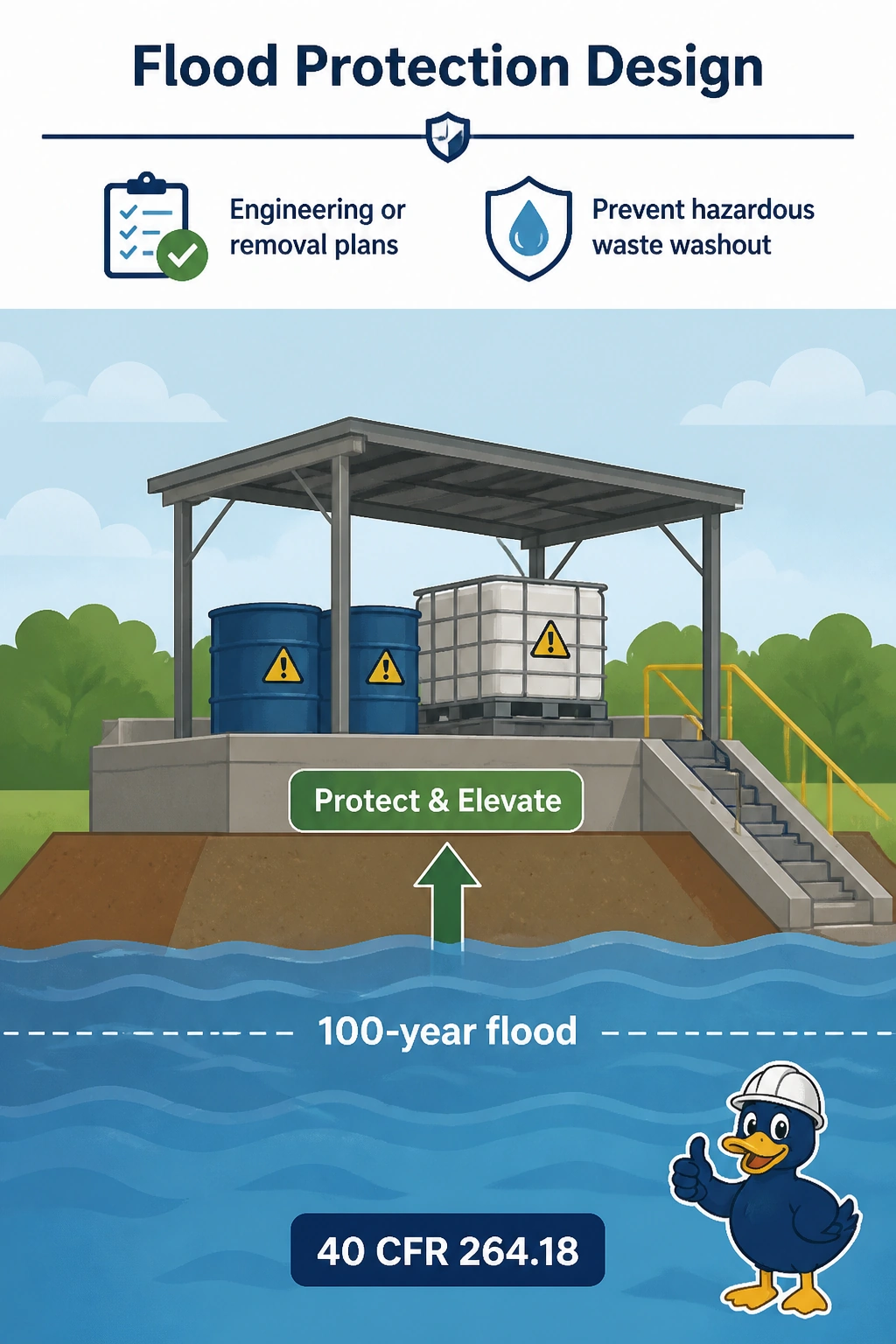
Under federal RCRA location standards in 40 CFR 264.18, a hazardous waste treatment, storage, or disposal unit located in a 100-year floodplain must be designed, constructed, operated, and maintained to prevent washout of any hazardous waste by a 100-year flood. Applicants must submit Engineering or removal plans that prevent hazardous waste washout during a 100-year flood, such as elevating containment pads above base flood elevation, constructing floodwalls, or demonstrating procedures to safely remove all waste before floodwaters reach the facility. Choosing A design that sets the pad floor one foot below the 100-year base flood elevation fails because it invites flooding and washout instead of preventing it. Selecting A written waiver from the local fire marshal instead of EPA permitting fails because local fire officials cannot waive federal RCRA Part B siting standards. Picking A plan to discharge flooded containment water directly to the river fails because releasing hazardous waste or contaminated stormwater to waters of the United States without authorization violates both RCRA and the Clean Water Act. As an exam caveat, 40 CFR 264.18 also restricts siting within 200 feet of a Holocene fault. For an operational check, overlay FEMA Flood Insurance Rate Maps against site grading plans during early permitting.
Prefer to study offline? Printable PDF study book + test engine ($7.50, unofficial). These questions stay free here.