
A specialty metal-finishing plant wants to reduce hazardous waste generation from its solvent degreasing line. During an annual planning review, the EHS manager evaluates four proposals to align with the federal pollution prevention hierarchy. Which proposal represents the highest-priority approach under that hierarchy?
Select an answer to reveal the explanation.
Short Explanation
Think of hazardous waste like a leaky roof—catching the drips helps, but fixing the hole stops the problem at the source. Under the EPA pollution prevention hierarchy, eliminating or reducing waste before it is created always outranks recycling, treatment, or disposal. The classic trap is picking on-site recycling first, because reusing solvent sounds green even though the hazardous material still circulates in your facility.
Full Explanation
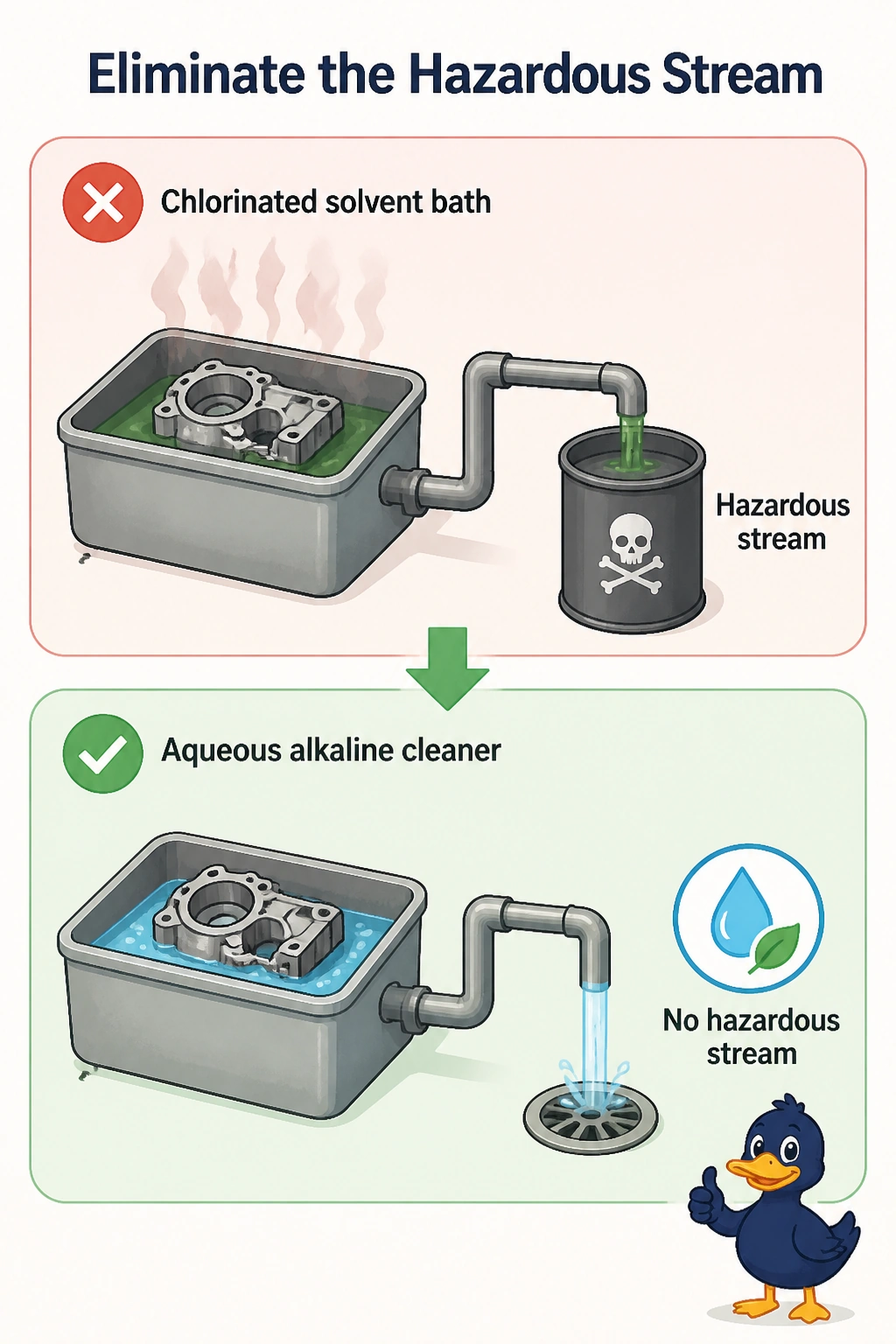
Under the Pollution Prevention Act of 1990, source reduction sits at the top of the environmental management hierarchy, ahead of recycling, treatment, and disposal. Replacing the chlorinated solvent bath with an aqueous alkaline cleaner to eliminate the hazardous stream qualifies as source reduction because it prevents hazardous waste generation at the point of use rather than managing it afterward. Installing a closed-loop solvent distillation unit to reclaim spent solvent on-site represents recycling, which ranks second because the hazardous solvent remains in use and still generates still bottoms. Sending spent solvent to a permitted off-site fuel-blending facility for energy recovery is also a secondary recovery method that manages waste after creation rather than preventing it. Adding a catalytic oxidizer to destroy volatile organic vapors before atmospheric release is end-of-pipe treatment, which ranks below both source reduction and recycling. An important caveat is that an aqueous substitute must still be evaluated for wastewater discharge limits and worker safety so hazards are not merely shifted across media. As an operational check, review the process Safety Data Sheets and annual waste generation logs to verify that the substitution actually lowers total toxicity and hazardous waste volume.
Prefer to study offline? Printable PDF study book + test engine ($7.50, unofficial). These questions stay free here.