
A chemical facility certified to ISO 14001 maintains written spill-response procedures for its bulk loading dock, but has not tested them in three years and did not update them after a minor transfer leak last month. Which ISO 14001 management-system requirement is the facility failing to meet?
Select an answer to reveal the explanation.
Short Explanation
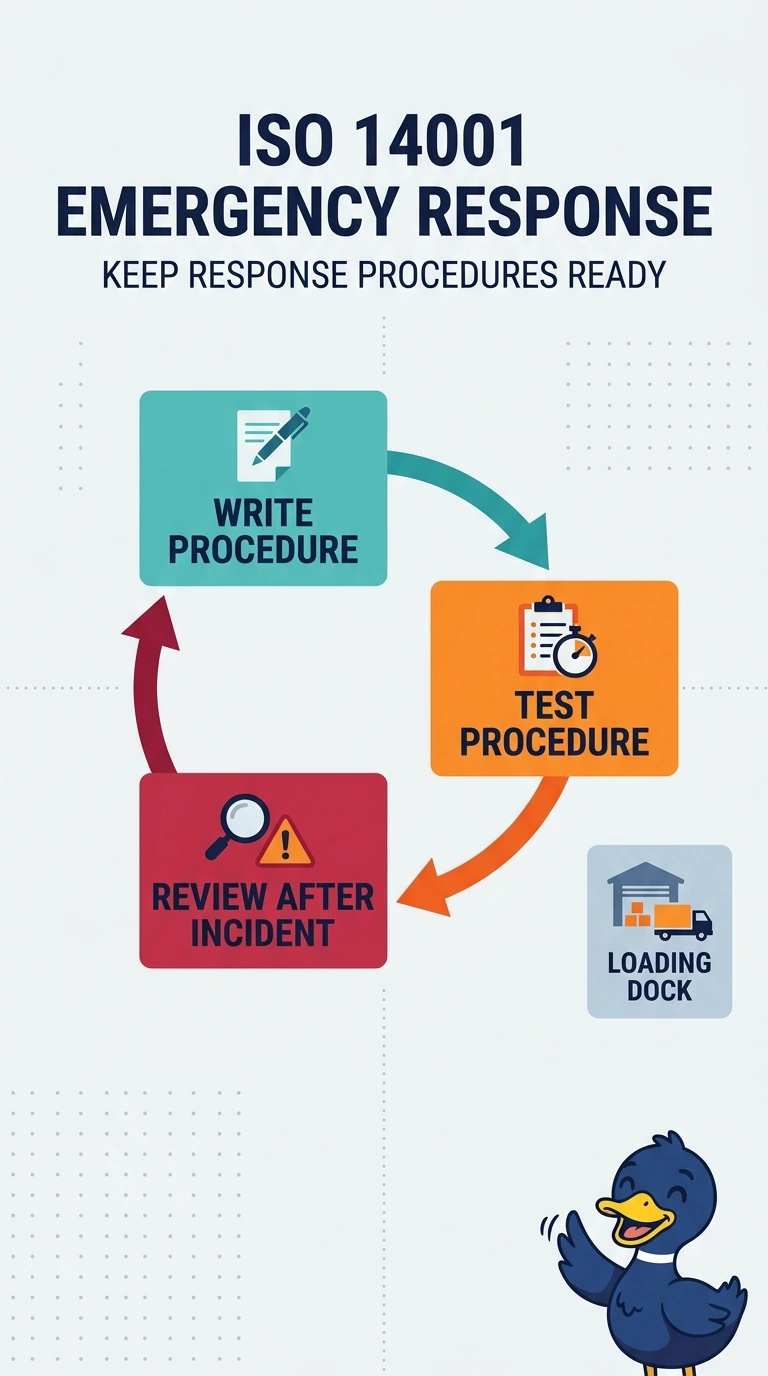
An emergency plan sitting untested in a binder is like a parachute you never inspected before jumping. The trap is assuming ISO 14001 only asks you to write spill procedures down and file them away. Under ISO 14001 emergency preparedness rules, you must periodically test response procedures and review them after real incidents.
Full Explanation
Under ISO 14001's emergency preparedness and response requirements (clause 8.2 in the 2015 edition), an organization must not only establish emergency preparedness and response processes, but also actively verify and improve them over time. Choosing Periodically testing emergency response procedures and reviewing them after incidents directly addresses both gaps identified at the loading dock, because the standard requires periodic drills where practicable and mandatory post-incident reviews to revise procedures. By contrast, choosing Publishing its internal audit findings on a public community website every calendar quarter is not required by ISO 14001, which lets organizations decide what external communications are appropriate beyond legal mandates. Similarly, choosing Submitting every internal nonconformity report directly to the state environmental agency confuses internal management-system corrective actions with statutory agency spill or permit-exceedance reporting. Choosing Replacing every regulated raw material with a nonhazardous substitute before the next surveillance audit misstates the standard, which requires managing significant environmental aspects and compliance obligations rather than banning hazardous materials. As an audit caveat, tabletop exercises can supplement field drills, but high-risk areas like bulk docks benefit from hands-on response drills. For an operational check, verify drill after-action reports and post-incident procedure revisions carry dated sign-offs.
Prefer to study offline? Printable PDF study book + test engine ($7.50, unofficial). These questions stay free here.