
A plant manager compares two metal-cleaning systems: a low-purchase-price chlorinated solvent degreaser and a higher-purchase-price aqueous washer. Why should the EHS manager include hazardous waste disposal fees, air permitting, PPE, and potential future remediation liabilities in the financial evaluation?
Select an answer to reveal the explanation.
Short Explanation
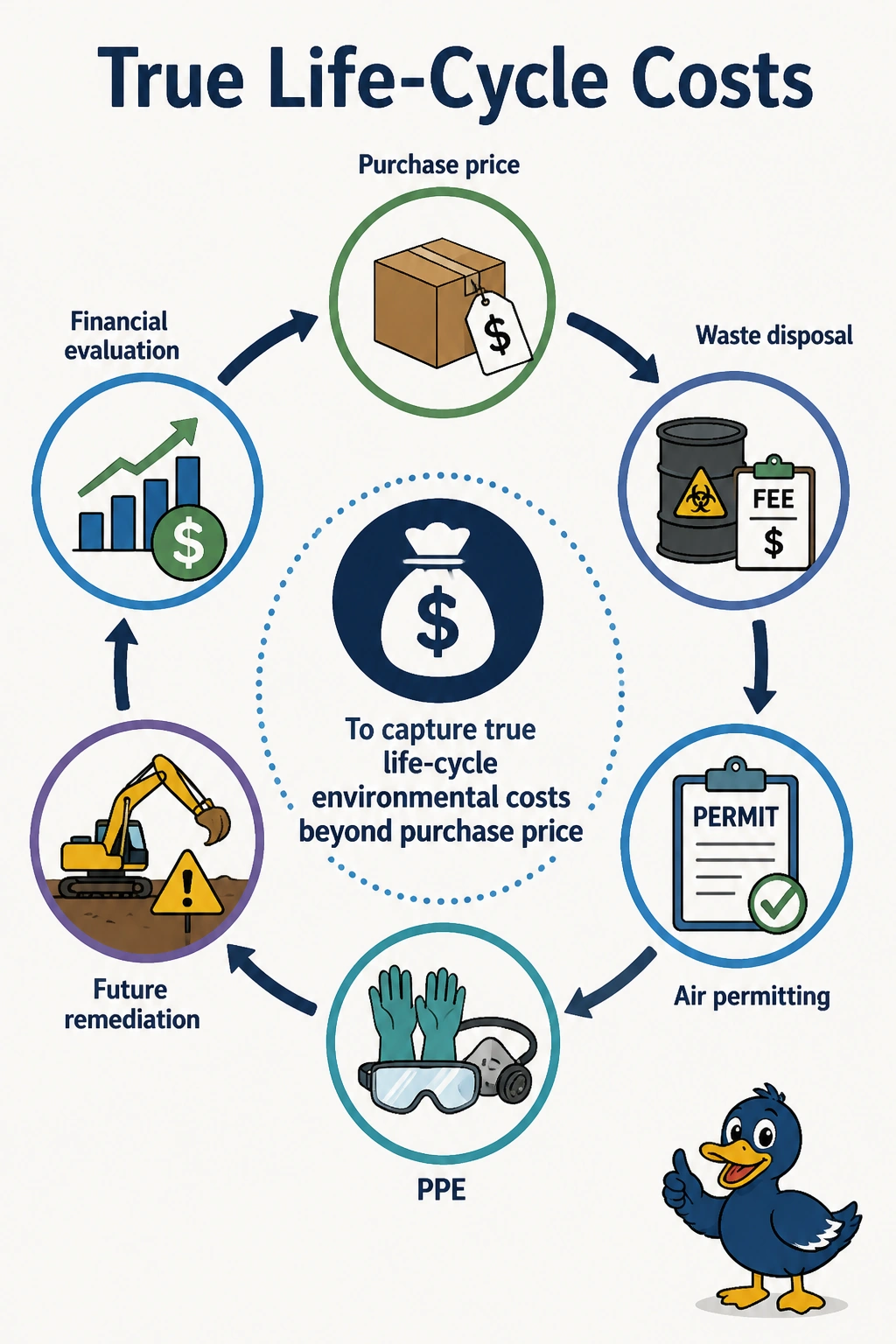
A low purchase price can become a costly headache once waste disposal, permits, and PPE add up. When you include those downstream expenses, you capture life-cycle costs rather than relying on the sticker price alone; depreciation timing, generator-registration requirements, and TRI filing rules address different issues.
Full Explanation
Traditional capital budgeting can focus on equipment purchase price and chemical unit cost, hiding substantial downstream compliance expenses. Including hazardous waste disposal fees, air permitting, PPE, and potential future remediation liabilities captures true life-cycle environmental costs beyond purchase price through total cost assessment, so decision-makers can see the full financial impact of hazardous materials over the process’s life. Deferring capital depreciation across multiple fiscal quarters is an accounting decision, not a way to allocate environmental costs. Eliminating hazardous waste generator registration and manifests is not a result of financial analysis; if regulated waste is produced, the facility remains subject to applicable RCRA generator rules. Satisfying annual EPCRA Section 313 Toxics Release Inventory filing rules is also a separate matter: TRI tracks chemical release and transfer quantities, not internal capital-project cost comparisons. As a caveat, potential future remediation liabilities are uncertain and should be documented as risk ranges rather than guaranteed figures. For a practical check, work with finance and procurement during capital requests to include waste, permitting, and PPE costs in project payback worksheets.
Prefer to study offline? Printable PDF study book + test engine ($7.50, unofficial). These questions stay free here.