
A manufacturing site implementing an ISO 14001 environmental management system wants to decide which facility activities require documented operational controls and measurable improvement objectives. Which planning step must the EHS team complete first to establish those priorities?
Select an answer to reveal the explanation.
Short Explanation
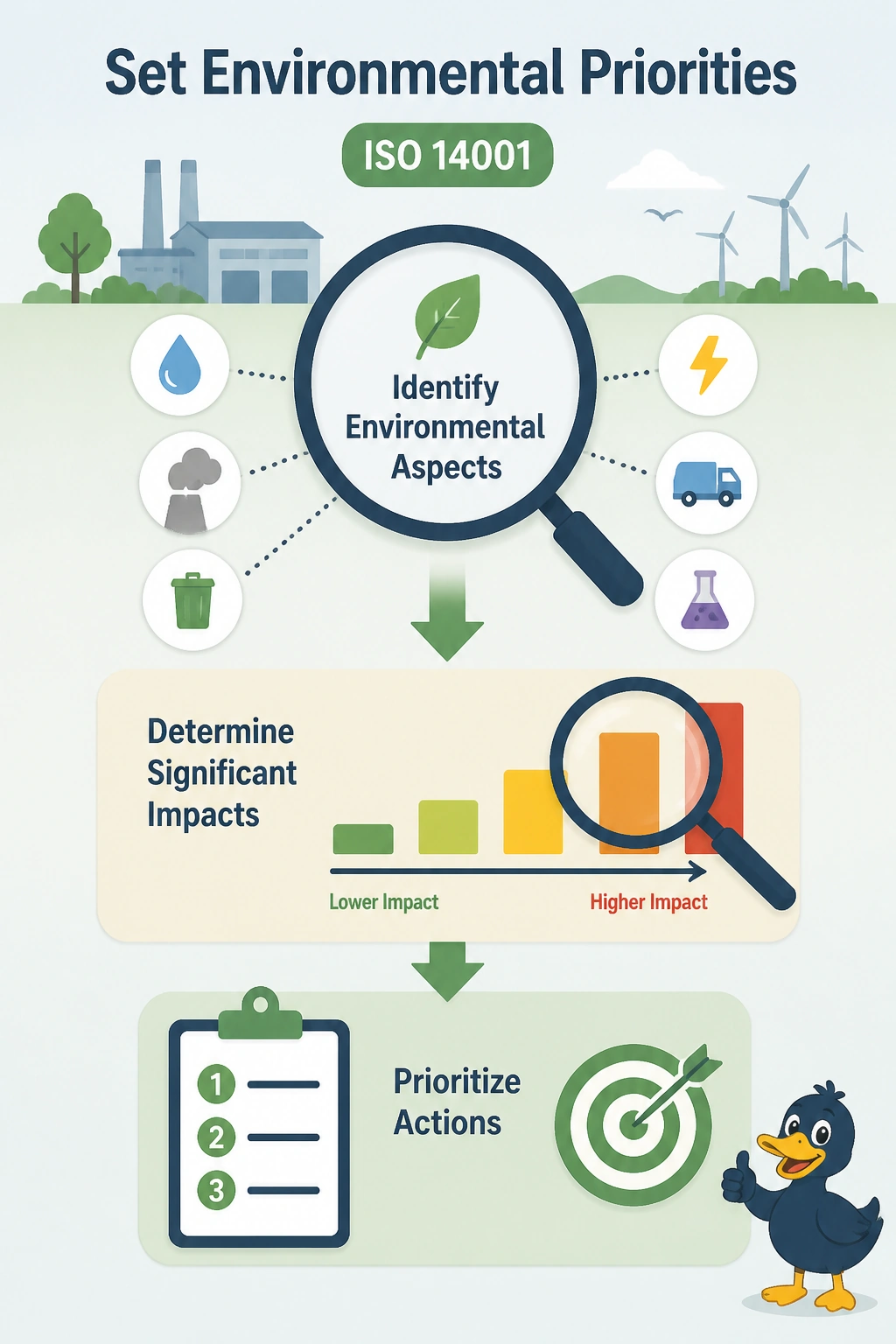
An ISO 14001 system works like a triage map: you cannot set smart targets until you know where your facility actually touches the environment. The trap is jumping straight to audits or permits before mapping your environmental aspects and significant impacts.
Full Explanation
Under ISO 14001 planning, the foundation is Identifying environmental aspects and determining which have significant impacts, because those significant aspects—such as solvent air emissions, hazardous waste generation, or stormwater runoff—dictate where operational controls and improvement objectives are needed. Conducting a third-party certification audit before any internal procedures are drafted puts the verification step ahead of system design and would result in immediate major nonconformities. Filing a formal variance request with state environmental regulators for all air permits is unnecessary and unrelated to ISO 14001 internal prioritization, as compliance obligations are evaluated alongside aspects rather than waived. Purchasing pollution-liability insurance policies for every raw-material vendor transfers financial risk but does not identify, control, or reduce the facility's own environmental impacts. Caveat: aspect evaluation must consider normal operations, abnormal conditions such as startups and shutdowns, and reasonably foreseeable emergency situations. As an operational check, review the aspects register annually and whenever new processes, chemicals, or equipment are introduced.
Prefer to study offline? Printable PDF study book + test engine ($7.50, unofficial). These questions stay free here.