
An industrial hygienist is reviewing exposure controls for a laboratory that handles a glycol ether classified as a developmental toxicant at airborne levels near the current occupational exposure limit. Why must the industrial hygienist evaluate susceptible populations separately when establishing workplace controls?
Select an answer to reveal the explanation.
Short Explanation
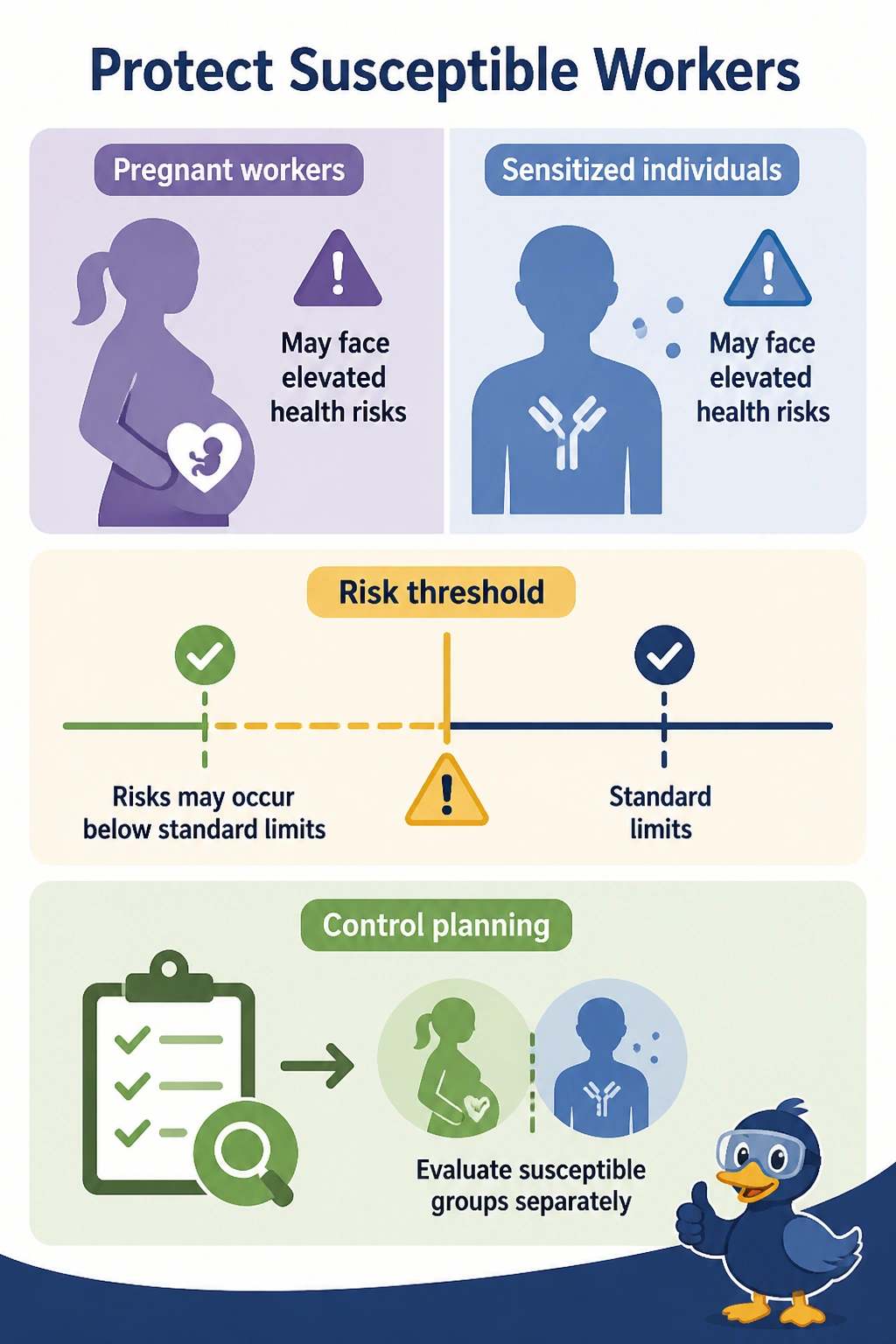
An exposure limit built for the average healthy worker does not protect everyone on your team equally. The trap is assuming compliance with a standard limit guarantees safety for all staff, when you must account for pregnant workers or sensitized individuals who face harm at much lower concentrations.
Full Explanation
Occupational exposure limits are generally established to protect most healthy adult workers over a working lifetime, which means Pregnant workers or sensitized individuals may face elevated health risks below standard limits. Evaluating susceptible populations allows the industrial hygienist to add engineering controls, substitution, or administrative protections before harm occurs. Standard occupational exposure limits automatically eliminate all developmental risks for every worker is false because many regulatory limits do not account for fetal development, immunological sensitization, or pre-existing medical conditions. Susceptible individuals only experience adverse effects when exposures exceed acute lethal concentrations confuses chronic low-dose reproductive or sensitizing effects with immediate acute lethality. Susceptible population reviews are required only for outdoor environmental releases rather than indoor tasks is incorrect because workplace industrial hygiene assessments must address vulnerable worker groups performing indoor laboratory and production tasks. As a policy caveat, protective job accommodations or medical surveillance must be coordinated with occupational health professionals while respecting worker privacy and non-discrimination rules. Operationally, review Safety Data Sheet toxicological sections for reproductive, developmental, and sensitizing hazards, and verify local exhaust ventilation capture velocities during task evaluations.
Prefer to study offline? Printable PDF study book + test engine ($7.50, unofficial). These questions stay free here.