
A chemical plant covered by OSHA Process Safety Management (29 CFR 1910.119) operates pressurized chlorine storage vessels and relief valves that have been in service for twelve years without documented thickness testing or relief-device inspections. Which PSM program element directly requires ongoing inspection, testing, and quality assurance of this critical process equipment?
Select an answer to reveal the explanation.
Short Explanation
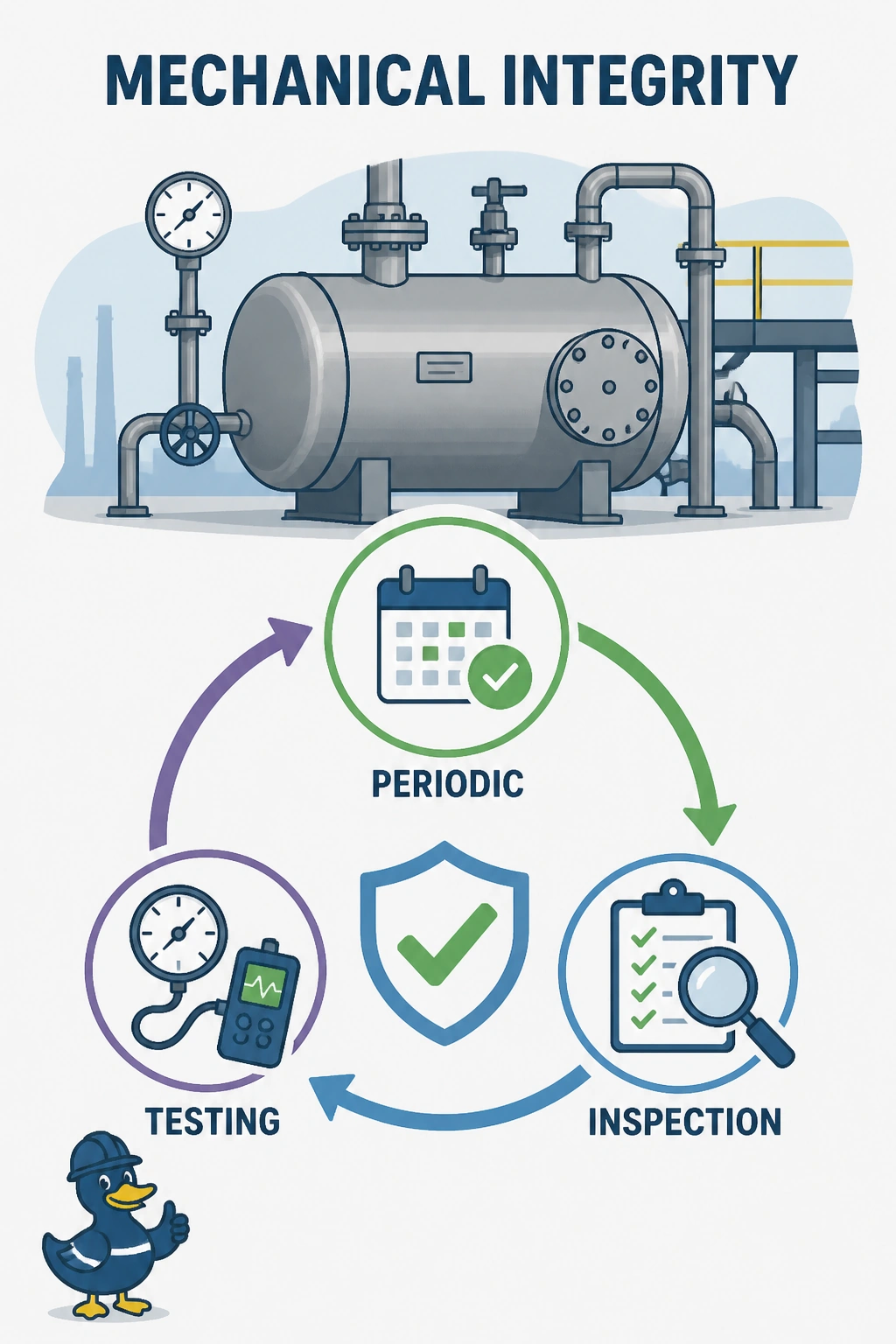
Even a well-built chlorine vessel corrodes over twelve years if nobody checks wall thickness or relief-valve set pressures. Under OSHA Process Safety Management, your Mechanical Integrity program governs ongoing inspection and testing of critical equipment. The trap is confusing routine equipment inspections with Management of Change.
Full Explanation
OSHA 29 CFR 1910.119(j) establishes Mechanical Integrity requirements to ensure that pressure vessels, storage tanks, piping systems, relief and vent systems, emergency shutdown systems, controls, and pumps remain fit for service. Applying Mechanical Integrity, which requires periodic inspection and testing of process equipment ensures facilities follow recognized and generally accepted good engineering practices to detect corrosion, fatigue, or valve fouling before catastrophic release occurs. Selecting Employee Participation, which requires operators to approve all annual capital equipment budgets misstates the rule, which requires consulting employees on PSM elements rather than granting budget-approval authority. Choosing Management of Change, which applies whenever existing equipment is inspected on its normal schedule is incorrect because Management of Change addresses modifications outside replacement-in-kind rather than routine inspections. Selecting Trade Secrets, which restricts maintenance technicians from reviewing vessel pressure ratings contradicts PSM rules requiring full access to process safety information for employees and contractors. As a caveat, deficiencies outside acceptable limits must be corrected before further use or managed safely with interim measures. For an operational check, audit the vessel and relief-valve inspection schedule against equipment asset tags and verify ultrasonic thickness and pop-test records.
Prefer to study offline? Printable PDF study book + test engine ($7.50, unofficial). These questions stay free here.