
Technicians at an electronics assembly plant regularly pour isopropyl alcohol from a 55-gallon supplier drum into smaller 1-liter squirt bottles used across multiple shifts at soldering benches. Under OSHA Hazard Communication (29 CFR 1910.1200), what is required for these secondary bottles?
Select an answer to reveal the explanation.
Short Explanation
You can use the portable-container exemption only when you fill and use up the bottle within one shift, under your exclusive control; if another technician can grab it, the label must stay on. The trap is assuming initials or a nearby binder can replace hazard warnings on the bottle.
Full Explanation
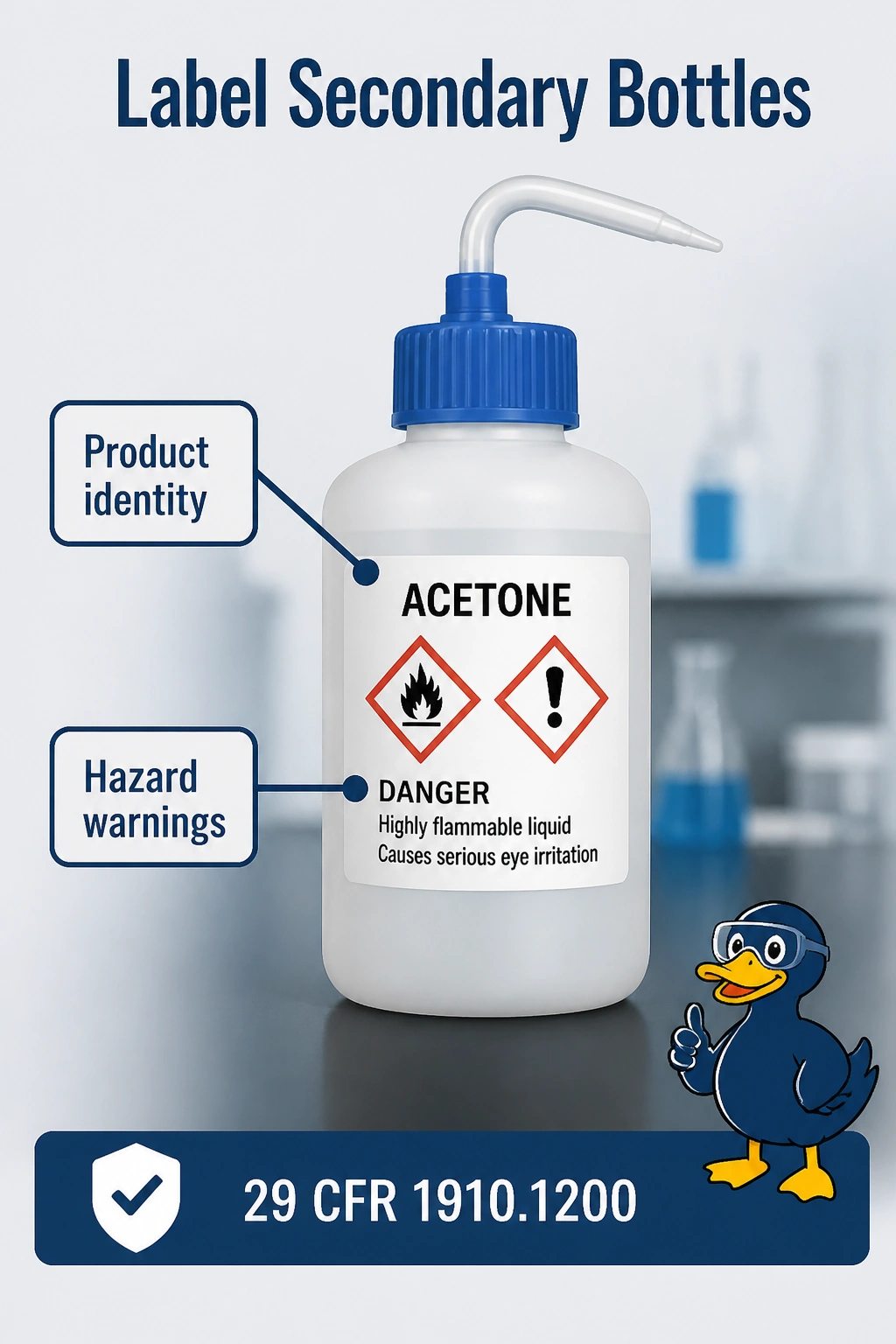
Under OSHA 29 CFR 1910.1200(f)(6), workplace containers used across shifts or by multiple employees must communicate chemical hazards, so the plant must label the secondary container with product identity and hazard warnings. The immediate-use exemption in 29 CFR 1910.1200(f)(8) applies only when a portable container remains under the exclusive control of the person who transferred the chemical and is used completely within that work shift. Leaving the secondary spray bottle unlabeled because only one shift uses it fails if multiple technicians share the bench or solvent remains at shift change. Writing only the operator’s initials and date omits the chemical identity and flammability warning needed to prevent misuse or ignition near soldering irons. Keeping the Safety Data Sheet locked in an office without container markings fails to label the bottle and does not keep the sheet readily accessible to workers on every shift. As a caveat, workplace labels may use words, pictures, symbols, or a combination to convey specific physical and health hazards alongside the product identifier. For a practical check, audit benchtop squirt bottles during routine walk-throughs to confirm their labels remain intact and legible.
Prefer to study offline? Printable PDF study book + test engine ($7.50, unofficial). These questions stay free here.