
A coatings manufacturer empties 55-gallon steel drums that held a non-acute ignitable solvent (D001) and wants to send the drums to a scrap-metal recycler without managing them as hazardous waste. Under RCRA 40 CFR 261.7, what condition must each drum meet to qualify as RCRA empty?
Select an answer to reveal the explanation.
Short Explanation
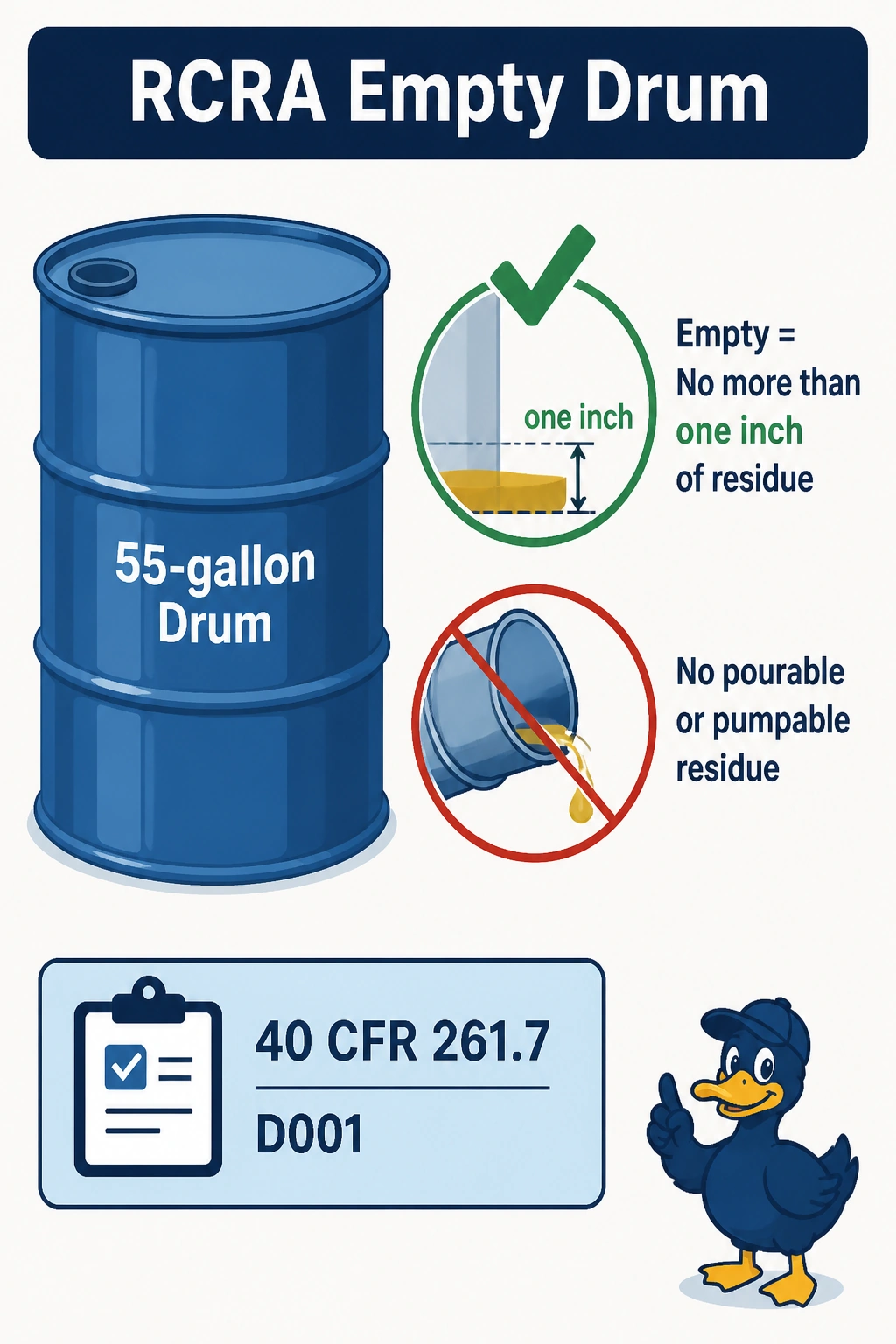
An "empty" drum under RCRA isn't just whatever looks light enough to lift—it has a strict regulatory definition. For non-acute wastes, you must remove everything you can by pouring or pumping and leave no more than one inch of residue inside. Avoid the trap of triple-rinsing into a drain or leaving drums open outdoors to evaporate.
Full Explanation
Under RCRA 40 CFR 261.7, a container that held non-acute hazardous waste is exempt from hazardous waste regulation only after it meets the federal definition of empty. Removing all pourable or pumpable residue with no more than one inch remaining—specifically, using common emptying practices such as pouring, pumping, or aspirating and leaving no more than 2.5 centimeters (1 inch) of residue (or no more than 3 percent by weight for containers of 119 gallons or less)—qualifies the drum as RCRA empty. Triple-rinsing the drum interior with potable water and discharging the rinse is required for containers that held acute hazardous waste listed in 40 CFR 261.31 or 261.33(e), not standard D001 ignitable solvents, and discharging solvent-contaminated rinsewater to a drain can violate wastewater rules. Punching drainage holes in the drum head while liquid solvent remains inside releases regulated liquid waste and creates a spill and fire hazard. Evaporating all remaining solvent outdoors until the interior walls appear dry constitutes unauthorized hazardous waste treatment and uncontrolled volatile organic compound emissions. As a caveat, containers that held acute hazardous wastes or compressed gases follow stricter emptiness criteria under 40 CFR 261.7. For an operational check, inspect emptied drums with a dipstick and flashlight before moving them to the scrap-metal staging area.
Prefer to study offline? Printable PDF study book + test engine ($7.50, unofficial). These questions stay free here.