
A US-based robo-advisory platform uses an AI-driven portfolio construction model to manage $12 billion in retail client assets. The SEC's 2023 cybersecurity and AI risk disclosure rules, combined with the Investment Advisers Act of 1940 obligations, most likely require the firm to take which of the following steps regarding its AI model?
Select an answer to reveal the explanation.
Short Explanation
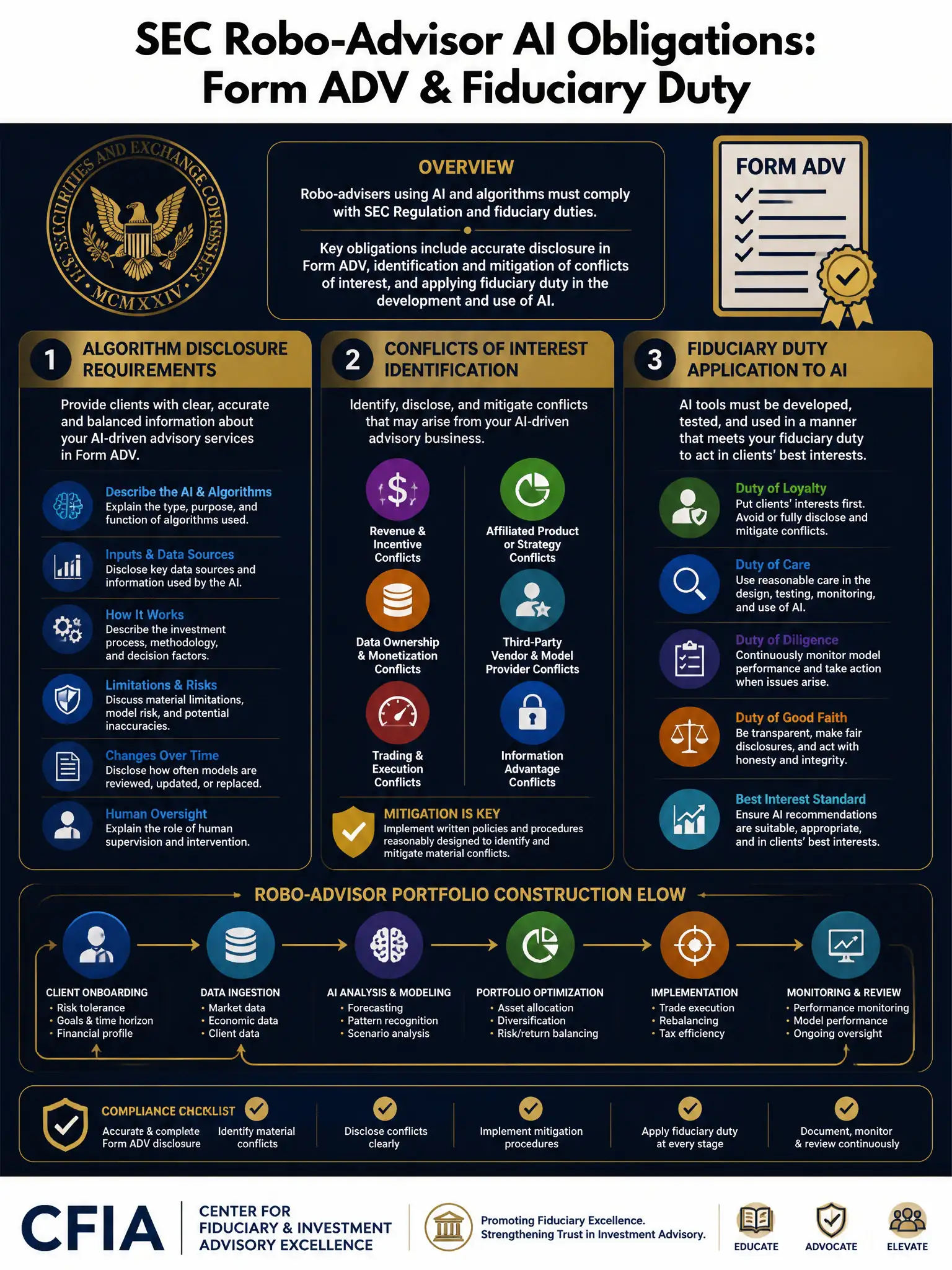
You can't hide behind algorithms to dodge fiduciary duty. Disclose how the model generates recommendations, its material conflicts, and its limitations in Form ADV, and keep compliance policies that test model-driven conflicts.
Full Explanation
The SEC has consistently applied the Investment Advisers Act of 1940 and its fiduciary framework to robo-advisors and algorithm-driven investment platforms. The 2017 IA Release 4776 ('Guidance on Robo-Advisors') clarified that AI-driven advisers owe clients the same fiduciary duty as human advisers — the duty of loyalty and duty of care — regardless of whether recommendations are generated by a human or a machine. The 2023 cybersecurity and AI risk disclosure rules reinforce that material risks and conflicts tied to the model must be disclosed.
For Form ADV Part 2A (the brochure clients receive), the SEC expects robo-advisors to clearly explain: how the algorithm constructs portfolios and what inputs it uses; any conflicts of interest embedded in the model (for example, if the model preferentially selects proprietary funds or products that generate higher revenue for the firm); and the material limitations of the algorithmic approach, such as inability to account for client-specific tax situations not captured in onboarding questionnaires. The correct step is to disclose how the AI model generates recommendations, material conflicts of interest embedded in the model, and the limitations of the model's investment approach, while maintaining adequate compliance policies to test for model-driven conflicts.
The proposal to file the AI model's source code and training datasets with the SEC as part of Form ADV Part 2A disclosures is incorrect: the SEC does not require source code or training data filings. The proposal to register the AI model with FINRA's AI Supervisory Framework and obtain pre-approval from the SEC's Division of Examinations before managing more than $10 billion in AUM fabricates a FINRA AI Supervisory Framework and an AUM threshold for pre-approval — neither exists as described. The claim that AI-driven portfolio construction models are exempt from fiduciary duty requirements because recommendations are generated algorithmically rather than by a human adviser is a fundamental misunderstanding; the fiduciary duty under the Advisers Act applies to the investment adviser entity, not to any individual human making decisions. Automation does not negate the duty.
The SEC's 2023 predictive data analytics (PDA) proposed rule (if finalized) would add further requirements around conflicts of interest embedded in AI optimization objectives. CFIA candidates should monitor SEC rulemaking in this area while anchoring exam answers in existing guidance.