
A customer asks for one sentence summarising how the five governance pillars work together. Which answer best captures it?
Select an answer to reveal the explanation.
Short Explanation
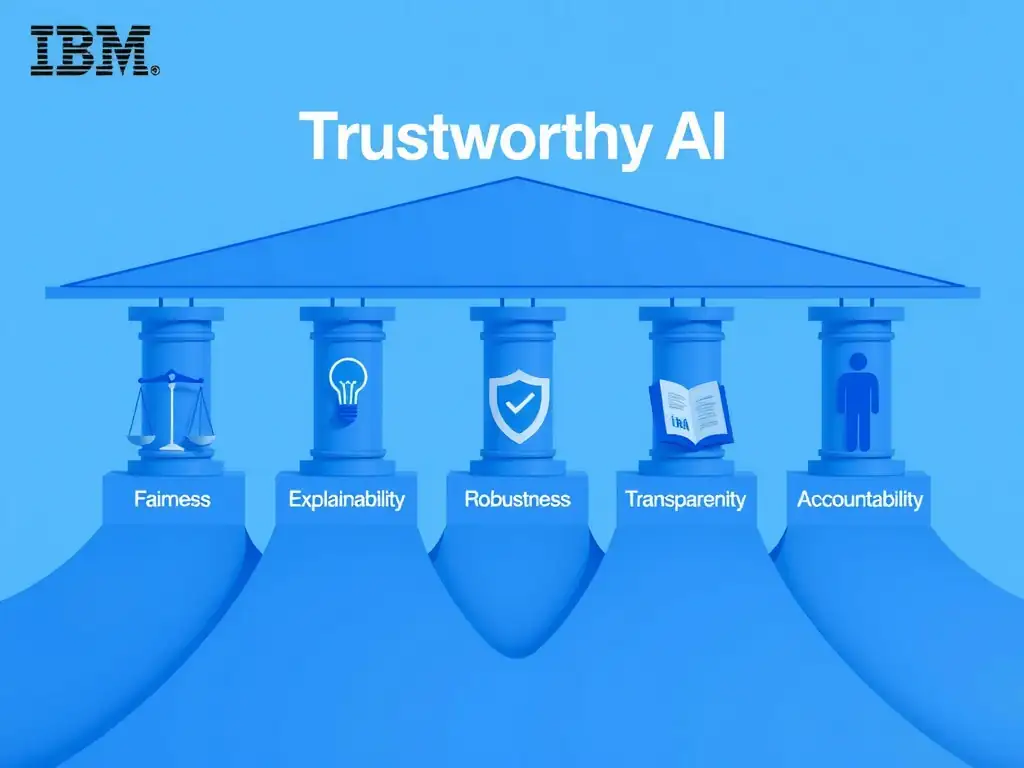
You need to treat fairness, explainability, robustness, transparency and accountability as five questions you answer about the same model. Together they show it behaves equitably, can be understood, holds up under stress, is documented, and has a responsible owner.
Full Explanation
The correct summary is the one stating that fairness, explainability, robustness, transparency and accountability together ensure a model behaves equitably, can be understood, holds up under stress, is documented, and has a responsible owner. Each pillar covers a distinct concern, and together they give complete coverage of how a model should be built, explained, tested, documented and owned. The claim that the pillars are alternative frameworks and an organisation should pick the best fit is incorrect because they are complementary dimensions, not alternatives. The claim that they apply only to generative artificial intelligence is incorrect because they apply broadly to artificial intelligence systems generally. The claim that they are satisfied after initial validation is incorrect because validation is point-in-time, while the pillars require sustained governance across the model's life. For the exam, be able to state the pillars together as a complete, complementary set.