
A use case scores high on some classification dimensions and low on others. What is the correct approach to combining them?
Select an answer to reveal the explanation.
Short Explanation
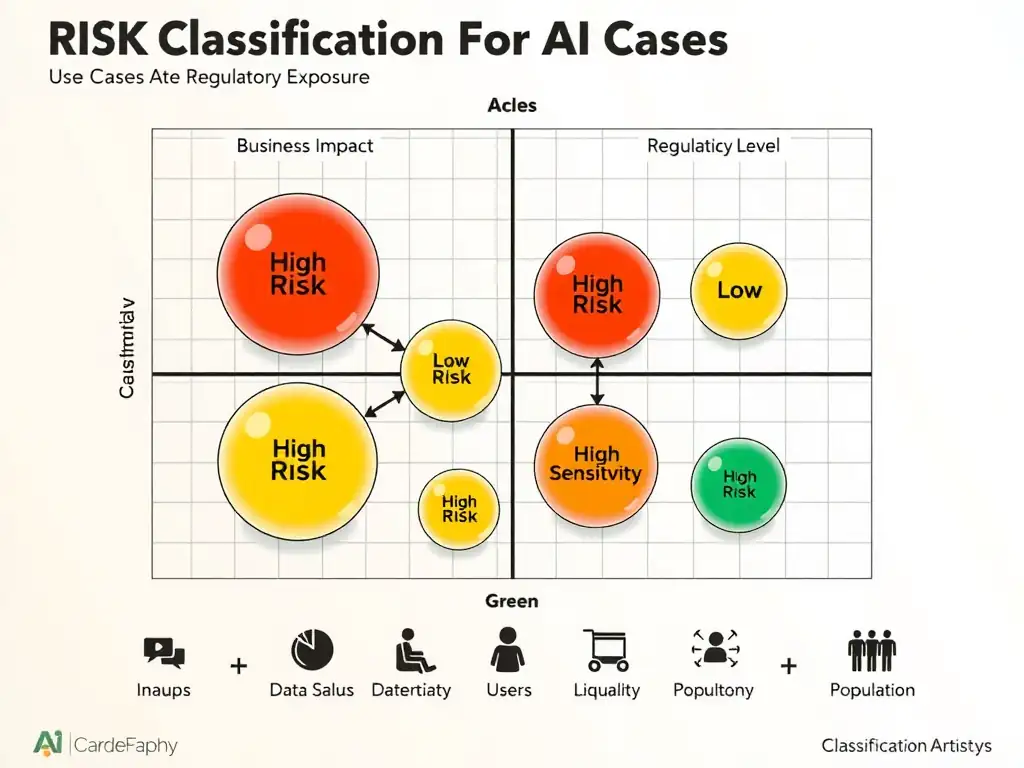
You assess all five dimensions together so a high-risk factor can't hide behind low scores elsewhere. Don't cherry-pick the friendliest number or the first one you scored.
Full Explanation
The correct approach is to assess all five dimensions together so the overall risk tier reflects the combined picture, rather than letting one low score mask a high one elsewhere. The combined view across impact, regulation, data sensitivity, automation, and population ensures a high score on any one dimension is not hidden by low scores elsewhere. Using whichever single dimension gives the lowest risk score as the final classification is incorrect because cherry-picking the most favourable dimension defeats the purpose of assessing multiple factors. Averaging the five dimensions numerically and rounding down to the nearest whole tier is incorrect because rounding down a numeric average can systematically understate risk. Classifying based only on the dimension that was assessed first is incorrect because whichever dimension happens to be assessed first has no special claim to represent overall risk. For the exam, describe classification as a combined assessment across all dimensions, not a shortcut through any single one.