
A senior engineer reviews the current monitoring plan and finds that thresholds were copied unchanged from an unrelated model in a different domain. What risk does this create?
Select an answer to reveal the explanation.
Short Explanation
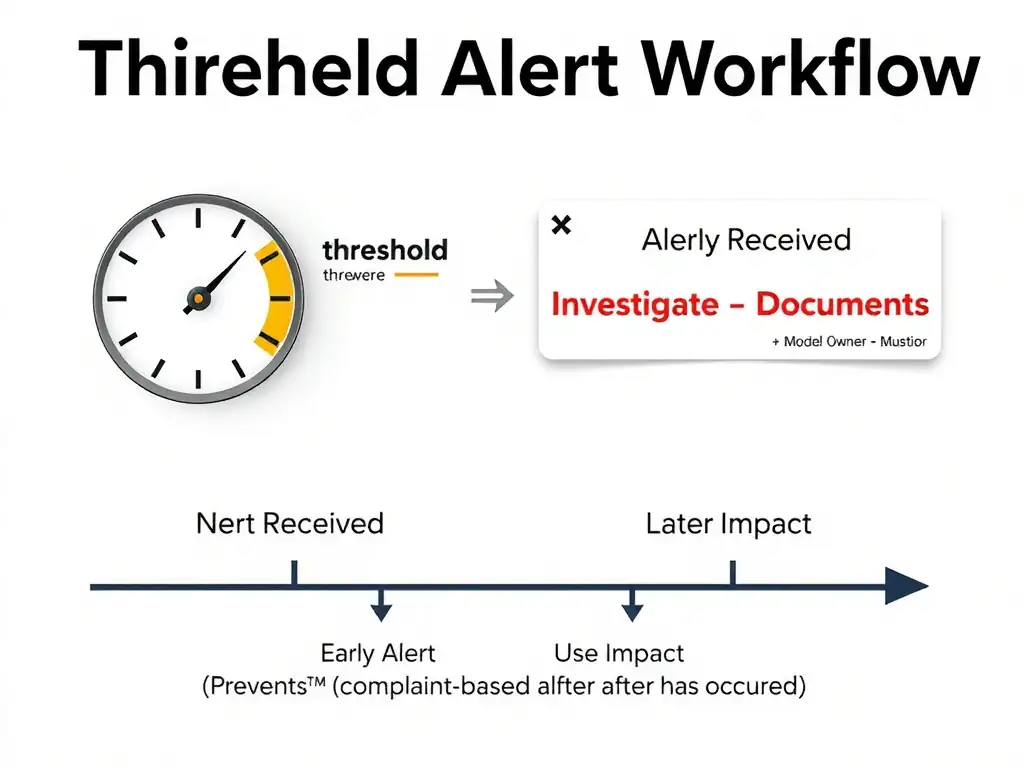
Thresholds copied from an unrelated model don't know your model's real risk. They can miss real problems or fire when nothing's wrong, so you need to calibrate them to this model.
Full Explanation
Thresholds copied from an unrelated model may not reflect this model's actual risk profile, so they could fail to trigger review when real problems occur or fire needlessly when nothing is wrong. Thresholds need calibration to the specific model's behaviour and risk context; borrowing them from an unrelated use case breaks that calibration in either direction. The claim that thresholds are universal across all models is wrong because they must be set per use case. The claim that the only risk is minor storage cost for alert logs is wrong because the real risk is missed or false alerts, not merely storage overhead. The claim that copied thresholds always make monitoring more accurate than custom ones is wrong because copied thresholds have no inherent advantage and are typically less accurate than ones set for the specific model. For the exam, treat threshold calibration as model-specific, never copied wholesale.