
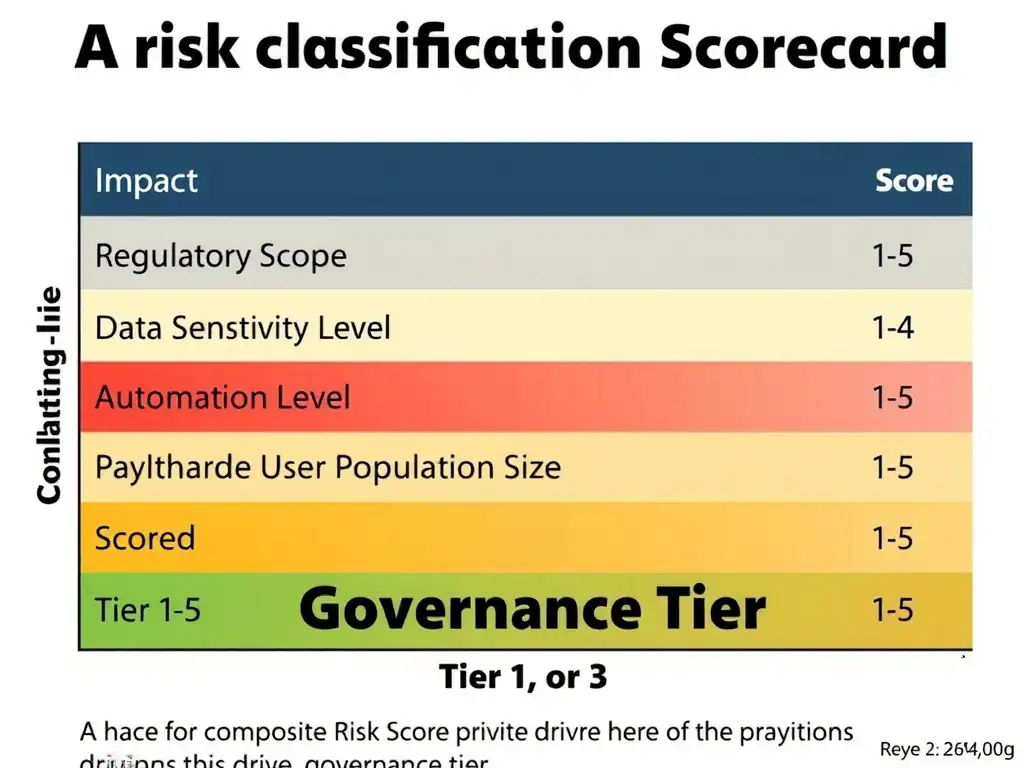
Regulatory exposure must be weighed when classifying a use case moving from proof of concept to governed status. Which use case should be treated as higher risk on this dimension?
Select an answer to reveal the explanation.
Short Explanation
Time in production, cost, and team size don't change what the law requires. You should treat the use case in regulated sectors—like credit or employment decisions—as higher risk because regulatory exposure comes from what the decision is and who it's about.
Full Explanation
Regulation as a classification dimension is about whether legal requirements attach to the type of decision being made, such as credit, employment, or housing. The use case operating in a sector with specific legal requirements for automated decisions, such as credit or employment decisions, is higher risk because regulatory exposure comes from the decision type and the people affected. The longest-running use case is not higher risk because a clean incident history does not remove or reduce underlying regulatory exposure. The most expensive use case is not higher risk because development cost is unrelated to whether legal requirements apply. The largest-team use case is not higher risk because team size has no bearing on regulatory classification. For the exam, tie regulatory risk to the nature of the decision being automated, not to project attributes.