
A customer building a scalable image-classification service argues that because the training data was anonymised, fairness testing can be skipped. How should the consultant respond?
Select an answer to reveal the explanation.
Short Explanation
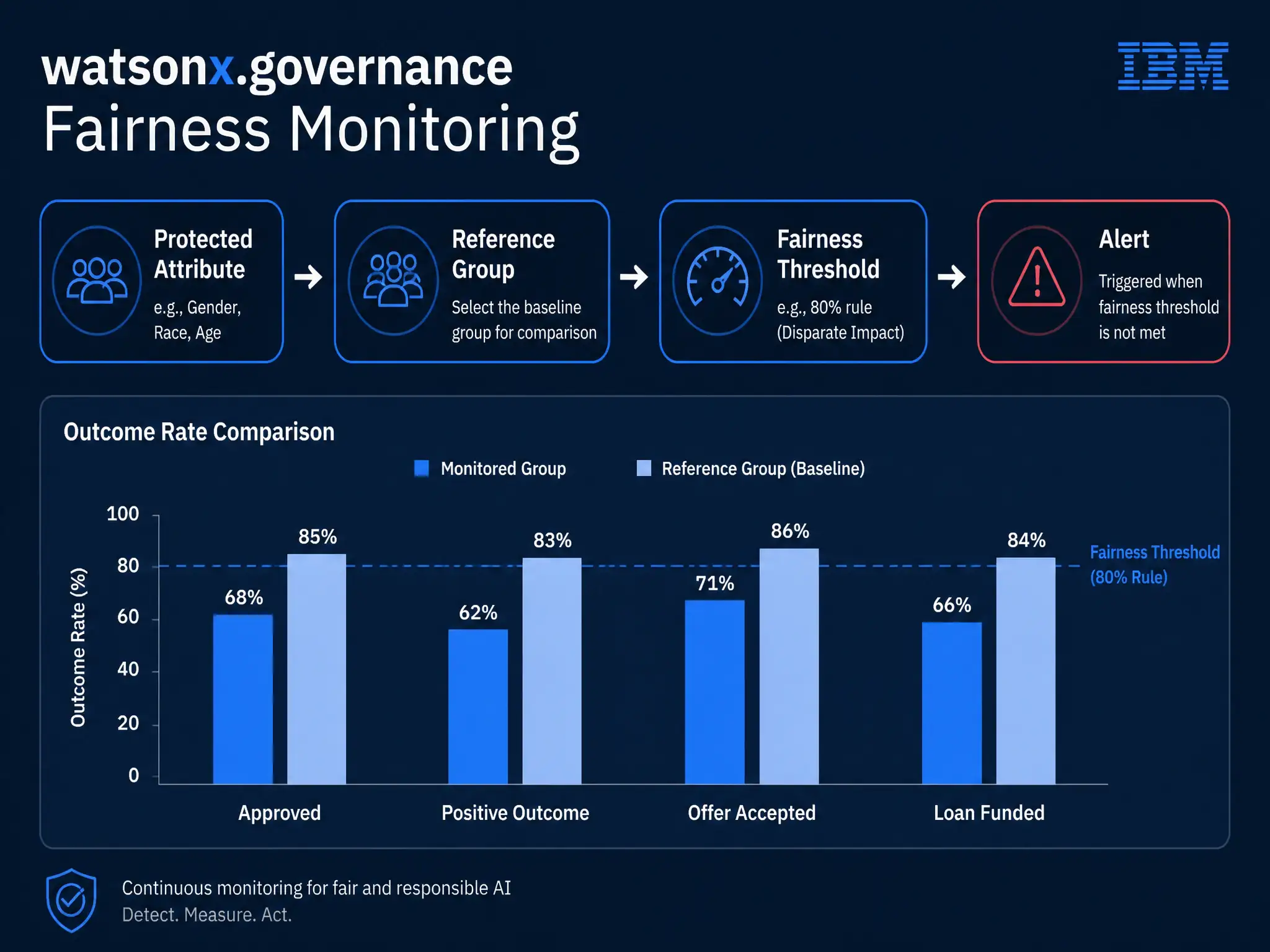
Removing names doesn't remove the pattern. If your model's outcomes still land differently on different groups, that's the fairness risk you need to check for. So you still evaluate across relevant groups wherever that risk exists.
Full Explanation
Explain that fairness risk depends on how outcomes affect people, not on whether identifying fields were removed, so evaluation across relevant groups is still needed wherever that risk exists. Anonymisation limits re-identification, but features can still correlate strongly with protected characteristics, so anonymised data can still produce disparate outcomes that only group-level evaluation will reveal.
The response agreeing because anonymised data cannot encode information correlated with protected characteristics is incorrect because correlated proxies routinely survive anonymisation; removing a name field does not remove the pattern behind it.
The response agreeing only for image data, because visual features are inherently free of demographic signal, is incorrect because image features can encode demographic signal just as tabular features can; the modality does not exempt it.
The response recommending skipping fairness testing until a regulator specifically requests it is incorrect because waiting for a regulator turns evaluation into a reactive response rather than a deployment gate.
For the exam, base fairness evaluation on outcome risk to people, not on identifying fields.